
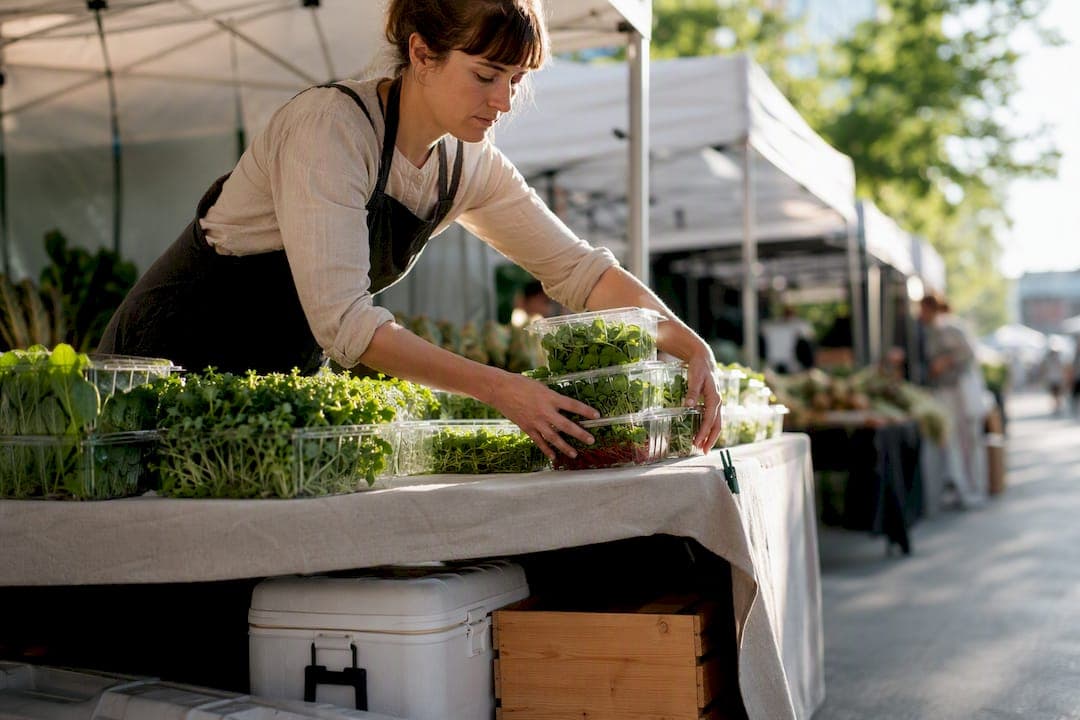
Yes, selling microgreens locally is a realistic way to earn money, and the fastest route is combining a farmers market booth with one steady restaurant account or a subscription list. Your first move: prepare a small sample tray for a chef or reserve a market slot this week, then open a preorder list before you invest in more equipment. Resources like the Penn State Extension microgreens planning guide, the free AgPlan template, and a Harvest Hub listing can carry you from first tray to repeat buyer.
TL;DR:
- Focusing on farmers markets and one restaurant account first provides the best balance of cash flow and reliability for new microgreen growers.
- Offering small trial orders to grocery and specialty stores reduces risk while testing demand before committing to long-term contracts.
- Building an active subscription list with deposits helps manage demand and smooth cash flow fluctuations during seasonal variations.
- Consistent delivery and proper handling are critical to maintaining relationships with chefs and retailers, ensuring repeat business.
- Using local resources like extension services, business templates, and digital farm stands accelerates compliance, sales, and market visibility.
Table of Contents
- How to Sell Microgreens Locally Through Each Channel
- Pricing, Packaging, and What Buyers Expect on a Label
- Legal Basics: What to Check Before Your First Sale
- Turning Sales Commitments Into a Repeatable Harvest Schedule
- Business Planning and Local Resources Worth Using
- Adjusting Your Selling Strategy Season by Season
- Keeping Microgreens Fresh From Harvest to Sale
- Common Challenges Growers Face and How to Solve Them
- Building Chef and Retailer Relationships That Last
- A Harvest Hub Contributor's Take on Getting Started Right
- List Your Farm Stand and Start Selling This Week
- Where to Verify Rules and Build Your Plan
- Sources
How to Sell Microgreens Locally Through Each Channel
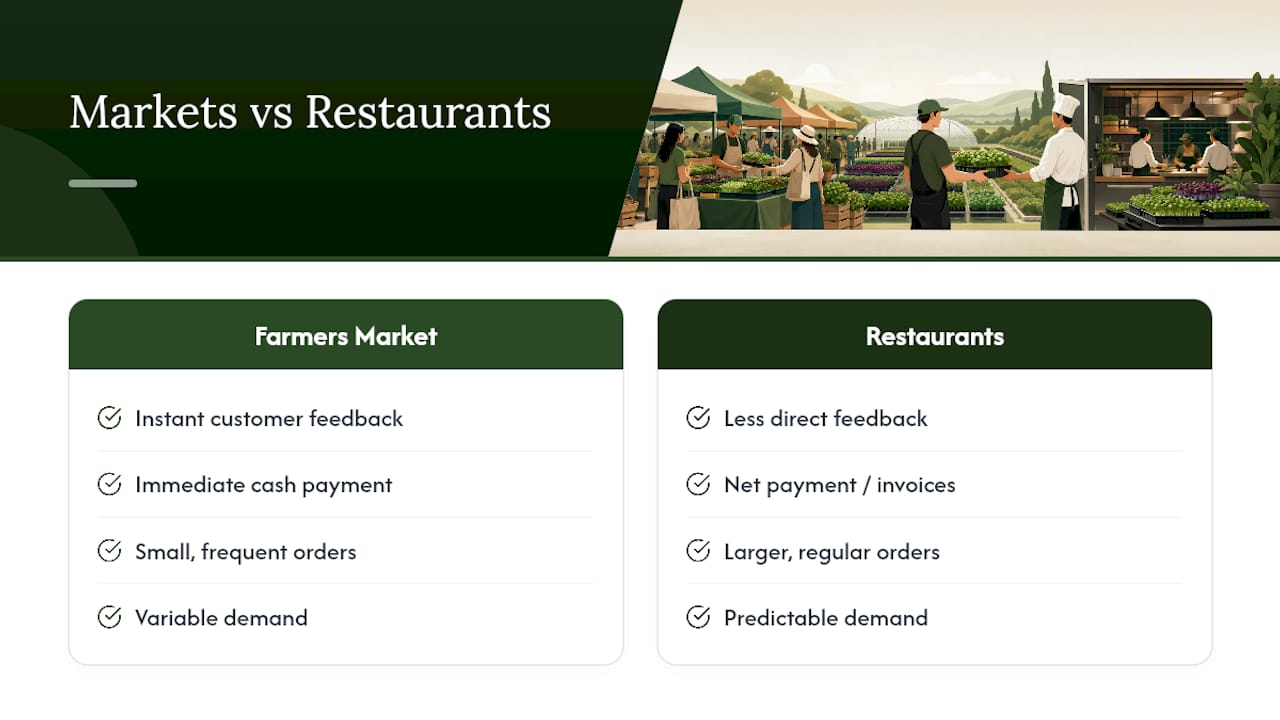
Every microgreens channel has its own rhythm, and trying to serve all of them at once is how new growers burn out in month two. The smarter approach: pick two channels that complement each other, master them, then expand. Farmers markets bring cash and instant feedback. Restaurants bring volume and predictability. Everything else fills gaps around those two.
Farmers markets: your testing ground
A market booth is the cheapest way to learn what people will actually buy and pay for. You don't need a fancy setup. A folding table, a cooler with ice packs, clear clamshells, and a simple sign naming your varieties will do the job on day one.
Sampling is what converts browsers into buyers. Cut a few stems into a small cup, hand them a toothpick, and let the peppery kick of a radish microgreen or the sweetness of a pea shoot do the selling. Keep a QR code taped to your table linking to a text or email signup. That list becomes your subscription base later.
Pitching restaurants: timing is everything
Chefs are busiest during service and easiest to reach mid-morning on a slow weekday, usually Tuesday or Wednesday. Bring a small sample bag, a one-page price sheet, and a proposed delivery schedule. Don't oversell. Chefs care about three things: flavor, consistency, and whether you'll show up on time every single week.
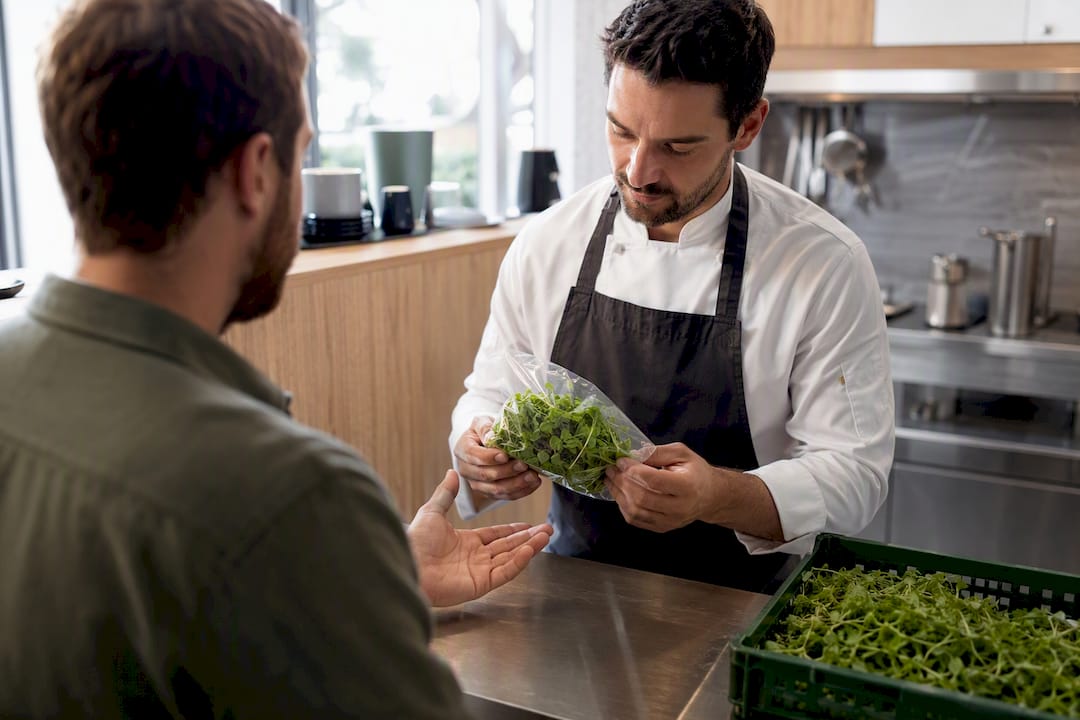
Leave the sample and walk away. A follow-up call two days later works better than waiting at the pass for a decision on the spot. Restaurant accounts pay less per ounce than retail customers but move volume, which is why farmers markets and restaurant wholesale accounts rank among the most profitable channels for small growers who run both at once.
Grocery and specialty stores: start with a trial, not a contract
Independent grocers and specialty food shops are harder to crack than restaurants because they often want consistent volume and a longer shelf life than fresh-cut microgreens can reliably offer. Propose a two-week trial with a small minimum order rather than asking for a standing shelf commitment. Some stores will take product on consignment, meaning you get paid only for what sells. That's fine for testing demand, but negotiate a firm pickup schedule so unsold trays don't rot on a shelf and sour the relationship.
Subscriptions and pre-orders: the cash-flow fix
Subscriptions solve the biggest headache in this business: growing without knowing if anyone will buy. A weekly or biweekly subscription with a small deposit lets you size your trays to confirmed demand instead of guessing. Offer a simple three-tier menu (single variety, mixed box, chef's choice) and bill either weekly or monthly. A platform like Harvest Hub's farm stand tools makes this manageable without a spreadsheet, since subscription and CSA-style listings show how growers structure recurring orders for produce buyers.
Direct-to-consumer delivery and corporate outreach
Neighborhood delivery works best once you have a cluster of subscribers on the same street or in the same apartment complex. Group deliveries by zip code or neighborhood to cut drive time, and use insulated bags with ice packs for anything over a 20-minute drive. Corporate catering and office wellness programs are a smaller but often overlooked channel. A short email to an office manager offering a weekly desk-side delivery of mixed greens can land a standing account that requires zero market setup.
- Farmers markets: fast cash, direct feedback, higher retail margin.
- Restaurants: steady volume, lower margin, requires reliability.
- Grocery/specialty stores: harder entry, test with small trial orders.
- Subscriptions: smooths cash flow, requires a signup list.
- Direct delivery: works once you have neighborhood density.
- Corporate/catering: low competition, underused by most growers.
Pro Tip: Never launch more than two channels in your first month. Nail farmers markets and one restaurant account first, then layer in subscriptions once you have a waiting list.
Pricing, Packaging, and What Buyers Expect on a Label
Retail microgreens typically sell within a moderate price range per ounce at farmers markets, depending on the variety and your region. Sunflower and pea shoots run cheaper because they grow fast and bulky; specialty varieties like amaranth or wasabi mustard command the top end because they're slower to grow and harder to source. Wholesale prices to restaurants are usually lower than retail, reflecting volume discounts expected by chefs for standing orders.
A simple cost-based formula keeps you from underpricing out of nerves. Add up your seed cost, growing medium, packaging, and labor time per tray, divide by the expected yield in ounces, then apply a markup that covers waste and profit. If a tray costs you $4 in materials and yields 10 ounces, your break-even is $0.40 per ounce. Price retail at $4 to $5 per ounce and you're covering labor and building margin. Price wholesale at $3 per ounce and a restaurant buying 20 ounces weekly still nets you a reliable $60, without the setup and teardown of a market day.
Pricing at a glance:
- Retail (farmers market): $3 to $6 per ounce
- Wholesale (restaurant/grocery): 20% to 40% below retail
- Subscription box (mixed, weekly): often priced at a slight discount to retail to reward commitment
Packaging matters almost as much as the product. Clear plastic clamshells or compostable containers let buyers see the quality before they commit, and they stack cleanly in a cooler. Every label needs the harvest date, your farm name, and the crop variety at minimum, along with basic storage instructions like "keep refrigerated, use within 5 to 7 days." Growers should register their business and consider liability insurance while labeling packaging correctly, since incomplete labels are one of the most common reasons a health inspector flags a booth. A home bakery labeling checklist covers the same core elements you'll need to adapt for produce, and our own guide to pricing farm produce walks through the math in more detail.
When you approach a chef or store buyer, bring a printed price sheet listing your varieties, unit sizes, and delivery days. Pair it with a sample so the decision isn't theoretical. Buyers remember taste; they forget verbal pitches.
Legal Basics: What to Check Before Your First Sale
Microgreens usually fall under standard produce regulations rather than cottage food laws, which mostly cover baked goods and shelf-stable items made in a home kitchen. That distinction matters because produce rules often trigger different labeling, handling, and sometimes facility requirements depending on your state and county. Rules vary enough from one county to the next that guessing is a bad strategy.
Start with three calls before you sell a single tray:
- Call your local health department and ask what's required to sell fresh-cut produce at a market or to a restaurant in your county.
- Check your state's extension office page for microgreens-specific guidance, since land-grant universities often publish state-specific rules alongside national extension resources.
- Register your business name with your state, even as a sole proprietor, since most markets and restaurant buyers will ask for a business name and sometimes a tax ID before signing a wholesale agreement.
Beyond that trio, growers should register their business and maintain liability insurance appropriate to their sales volume, since a single foodborne illness claim without coverage can end a small operation overnight. Insurance costs vary widely by state and coverage level, so get a quote from a local agent rather than assuming a national average applies.
Buyers will ask for documentation before they commit. Restaurants and grocery stores commonly request proof of liability insurance, a completed labeling sample, and occasionally proof of a food-safety training course or a health department inspection, depending on local rules. The FDA's produce safety guidance sets the federal baseline for handling practices under FSMA, and it's worth a skim even if your state hasn't adopted every provision, since many local inspectors reference it when evaluating a new vendor.
Keep simple records from day one: sales logs, harvest dates per batch, and any buyer correspondence. If a health department ever asks about a specific delivery, you want to answer in minutes, not days.
Turning Sales Commitments Into a Repeatable Harvest Schedule
The single biggest mistake new growers make is growing first and selling second. Flip that. Confirm buyers, then size your tray count to match. If you have a farmers market booth and one restaurant taking 20 ounces a week, grow enough trays to cover that plus a small buffer, not a warehouse full of speculative inventory.
Microgreens typically run a 7 to 14 day crop cycle depending on the variety, which means you can stagger plantings to harvest continuously rather than in one big batch. A simple rolling schedule looks like this:
- Week 1: Seed trays for market and restaurant orders; harvest last week's mature trays.
- Week 2: Seed the next batch; deliver to restaurant; set up market booth.
- Week 3: Repeat seeding; check subscription signups from the market for next cycle's tray count.
- Week 4: Full rotation complete; review which varieties sold out and adjust next month's seed order.
Quality control is what keeps restaurant accounts alive. Check trays daily for mold, uneven germination, or excess moisture, since a single moldy tray delivered to a chef can end the relationship permanently. Rinse gently, avoid overwatering, and make sure your growing space has enough airflow to prevent damp spots. Consistency and reliability matter as much as produce quality because restaurants drop suppliers fast when a delivery is late or a batch looks wilted.
Group your delivery routes by neighborhood or by day to cut driving time, and use a cooler with ice packs for anything spending more than 15 minutes in transit.
Pro Tip: Track which variety sells out first at every market. That's your signal to grow more of it next cycle, not a guess based on what you personally like growing.
Business Planning and Local Resources Worth Using
A one-page business plan sounds like overkill for a few trays of sunflower shoots, but it forces you to answer questions you'll otherwise dodge: how many trays can you realistically grow per week, what's your break-even price, and which channel is your priority. AgPlan, a free tool built by the University of Minnesota Center for Farm Financial Management, gives you a structured template built specifically for agricultural producers rather than a generic business plan format that doesn't fit farming.
Your local Penn State Extension office or your own state's equivalent can help with permitting questions and market research specific to your county, and SBA-backed Small Business Development Centers offer free or low-cost consulting on registration, basic bookkeeping, and growth planning. These aren't glamorous resources, but they're free, and most new growers never call them.
This is where a digital farm stand earns its keep. Harvest Hub gives you a verified profile, map-based discovery so nearby buyers can find you, and notification tools so subscribers know when a new harvest is ready. It solves the exact problem most new sellers hit: how do people who don't already know you find your farm stand?
A practical starter checklist:
- Draft a one-page plan in AgPlan covering your target channels and weekly tray capacity.
- Create your Harvest Hub farm stand listing with photos, varieties, and pickup or delivery options.
- Reserve a farmers market slot for the coming month.
- Approach one chef with a sample this week, not "eventually."
Adjusting Your Selling Strategy Season by Season
Demand for microgreens doesn't stay flat year-round, and neither should your sales approach. Summer farmers markets tend to pull the biggest foot traffic, but you're also competing with a flood of other fresh produce, so your microgreens need to stand out with strong sampling and clear signage about flavor use cases (think garnish for tacos, not just "healthy greens").
Winter shifts the advantage toward restaurants and subscriptions, since outdoor markets often shrink or move indoors with lower traffic. This is the season to lean on your subscriber list built during the summer rush. If your area has a winter farmers market or holiday pop-up event, those often draw a smaller but higher-intent crowd willing to pay a premium for fresh greens when little else local is available.
Holiday catering is a short but lucrative window. Chefs prepping for holiday menus often want visually striking microgreens for plating, and a well-timed email in early November offering a holiday delivery schedule can land a bump in orders. Adjust your tray planning ahead of these windows rather than reacting after demand spikes, since a 7 to 14 day crop cycle means you need advance notice to scale up in time.
Keeping Microgreens Fresh From Harvest to Sale
Fresh-cut microgreens are delicate, and how you handle them between harvest and sale determines whether a customer becomes a repeat buyer or never comes back. Harvest as close to sale time as your schedule allows, ideally the same morning for a farmers market or the day before for a restaurant delivery.
Refrigerate immediately after harvest at around 34 to 38 degrees Fahrenheit, and avoid washing greens until just before use unless your buyer specifically requests pre-washed product, since excess moisture speeds up decay. Clamshell containers with small ventilation holes strike the right balance between protecting the greens and preventing condensation buildup inside the package.
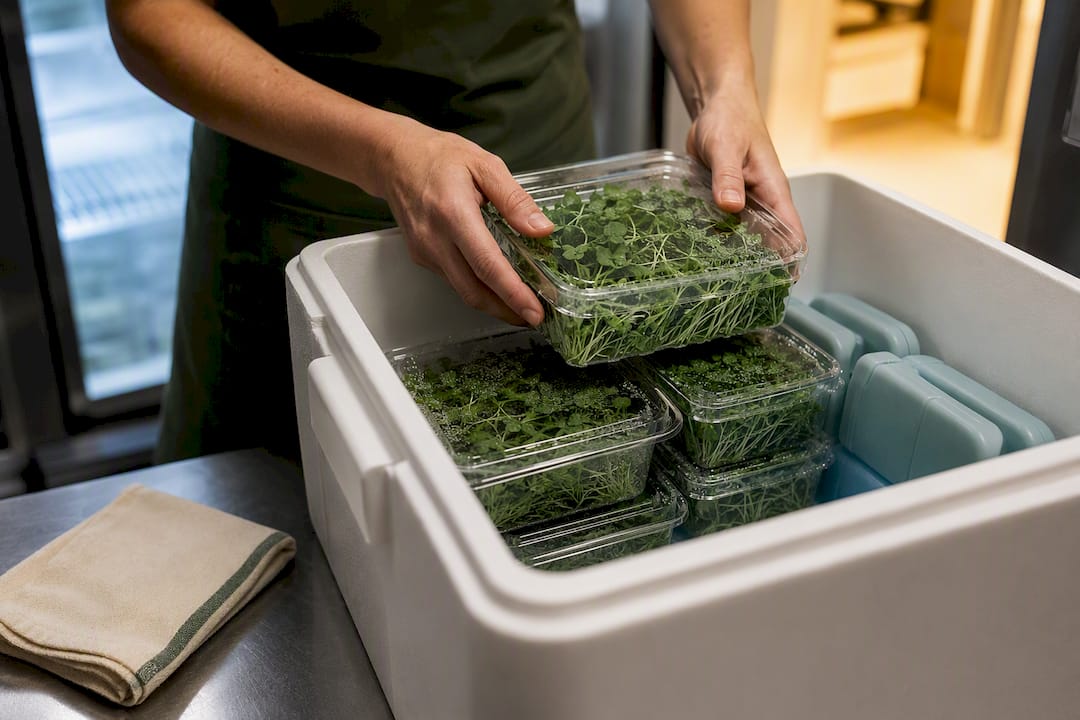
For market days, transport in a cooler with ice packs rather than loose in a car trunk, and keep the cooler in shade once you're set up. Direct sun on a clamshell for even 30 minutes can wilt a tray that looked perfect an hour earlier. If you're doing neighborhood delivery, insulated bags matter more than people expect, especially in warmer months when a 20 minute drive can mean the difference between crisp greens and a limp tray.
Teach buyers what to expect too. A quick note on your label about refrigerating on arrival and using within 5 to 7 days sets expectations and reduces the "why did this wilt so fast" complaints that come from a customer leaving product on a counter.
Common Challenges Growers Face and How to Solve Them
Inconsistent demand is the most common complaint from first-year microgreens sellers. Some weeks you sell out; other weeks half your trays go unsold. The fix isn't growing less, it's diversifying your channels so a slow market week gets absorbed by a steady restaurant order or subscription deliveries that don't fluctuate with foot traffic. Growers who spread sales across two to four channels reduce the risk of any single buyer's bad week tanking their revenue.
Mold and crop failure are the next big headache, usually traced back to overwatering or poor airflow in a cramped growing space. A small oscillating fan and a strict watering schedule solve most of this before it becomes a lost tray.
Pricing pressure from customers comparing you to grocery store prices is real, especially early on when you haven't built a reputation. The solution is education, not discounting. Explain at your booth why fresh-cut, locally grown microgreens taste different from the shelf-stable version at a chain grocery store, and let the sample do the rest of the convincing.
Finally, cash flow gaps between growing costs and payment timing catch new growers off guard, particularly with restaurant accounts that often pay on 15 or 30 day invoice terms rather than cash on delivery. Building a subscription base with upfront deposits helps smooth this out considerably.
Building Chef and Retailer Relationships That Last
One-time sales are fine, but recurring accounts are what actually make this business sustainable. The single highest-leverage move you can make is showing up in person with a sample during a slow weekday, since local market managers and extension agents often know exactly which chefs are looking for new local product, and a warm introduction beats a cold visit every time.
Once you land an account, protect it by treating consistency as non-negotiable. Deliver on the day and time you promised, every week, even if it means growing a slightly larger buffer than you think you need. A chef who gets burned by a missed delivery once rarely gives a second chance, but one who never has to think about their microgreens order will keep buying from you for years.
Check in periodically beyond just the delivery. Ask a chef what's working on their menu and whether they'd want a new variety for an upcoming seasonal dish. Retailers respond well to the same approach: a quick monthly conversation about which product moved fastest keeps you positioned as a partner rather than just another vendor on their invoice pile. Market managers deserve the same attention, since they often fill vendor cancellations and slot openings with growers they already trust.
A Harvest Hub Contributor's Take on Getting Started Right
The most common mistake new microgreens sellers make is buying equipment before confirming a single buyer. Racks, grow lights, and a commercial-grade cooler feel like progress, but they're money spent on a hope rather than a plan. A better approach: start with a few trays, a sunny shelf, and hand-delivered samples to two or three potential buyers before spending a dollar on anything beyond seed and growing medium.
The second mistake is assuming quality alone sells. It doesn't. Reliability sells. A grower with slightly less impressive greens who shows up every single week beats a grower with gorgeous trays who's inconsistent. Buyers remember who let them down, not who had the prettiest radish sprouts.
If you're weighing whether to commit real money to this, start smaller than your instincts tell you to. Validate demand first. The equipment can wait.
— Sheldon
List Your Farm Stand and Start Selling This Week
Harvest Hub is the direct alternative to cold-calling every restaurant in town or hoping foot traffic finds your market booth. It puts your farm stand on a map that neighbors and local buyers already browse, with a verified profile and real reviews that build trust faster than a folding table sign ever could.
Setting up takes less time than seeding your next tray. Create a listing with your varieties, photos, and pickup or delivery windows, the same way sellers like Happy Farmers Market present their offerings to local buyers already searching nearby. Enable order notifications so you know the moment a neighbor requests a subscription box or a one-time order, and you're not manually checking a text thread all day.
If you're ready to move past the guesswork of flyers and word of mouth, open your farm stand today, list your first two or three varieties, and turn on notifications so your next buyer finds you before they find someone else.
Where to Verify Rules and Build Your Plan
Confirm every regulatory detail with your own local authorities before your first sale, since county and state rules vary. The Penn State Extension microgreens business planning guide covers registration, insurance, and labeling in more depth than any blog can. The FDA's produce safety guidance sets the federal baseline for handling practices. SBA's network of Small Business Development Centers offers free consulting on registration and planning, and AgPlan gives you a free template built for agricultural producers specifically. Contact your local extension office or SBDC directly for guidance tied to your exact city or county rather than relying on general advice alone.
Sources
- Business planning for your microgreens operation — Penn State Extension
- FDA guidance on produce safety
- SBA resource partners — SBDCs