
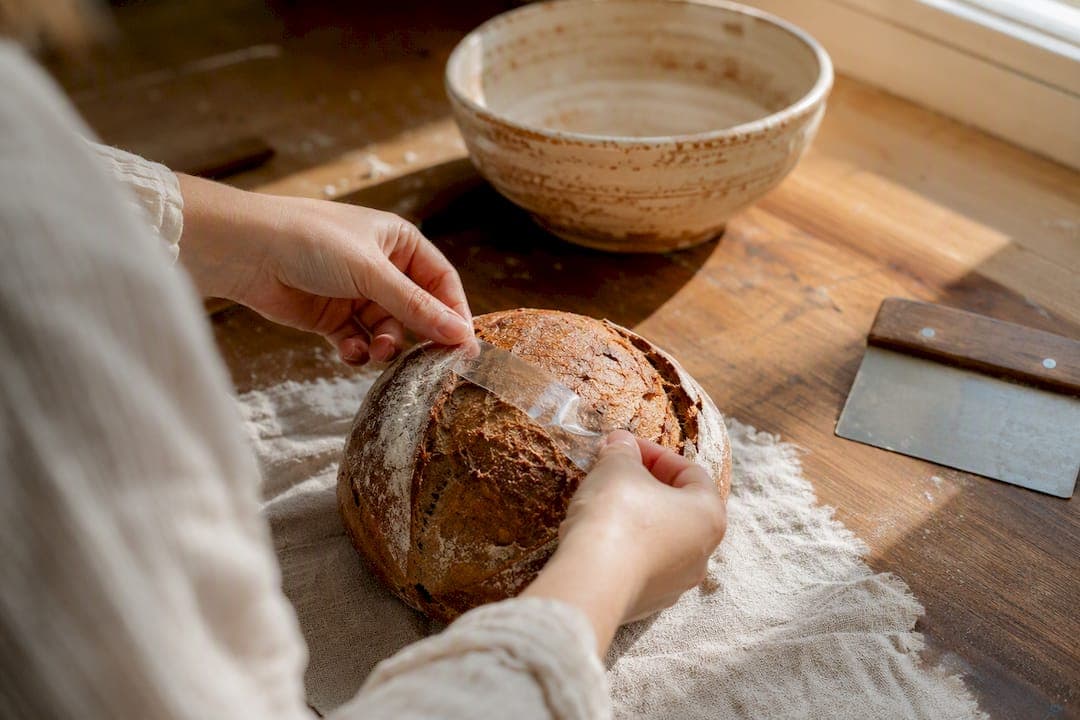
Every home bakery label needs six things: product name, ingredient list by weight, net weight in U.S. and metric units, your business name and address (or a registration number), an allergen declaration, and your state's required "home kitchen" disclaimer. Skip the nutrition facts panel unless you're making a specific nutrient or health claim, like "low sugar" or "high fiber." If you do, FDA rules under 21 CFR Part 101 kick in and you'll need the full panel.
That's the short version. The part people get wrong isn't the checklist itself. It's assuming their state's exact wording matches a template they found online.
- Product name (descriptive, not just a brand name)
- Ingredients, listed heaviest to lightest
- Net weight, in both U.S. and metric units
- Business name plus address or registration number
- Allergen declaration
- State-required disclaimer, in the minimum type size your state sets
Before you print a single label, call your county health department or check your state extension office's cottage food page. The disclaimer wording and the minimum type size (often somewhere between 10 and 12 point) aren't universal, and using the wrong phrase can get your product pulled from a market or a farmers market table.
Key Takeaways
Home bakery labeling comes down to six required elements plus one call you should make before printing anything: your state health department or extension office.
| Point | Details |
|---|---|
| Six required elements | Product name, ingredient list by weight, net weight in U.S. and metric, producer ID, allergens, and state disclaimer. |
| Verify state wording first | Disclaimer phrasing and minimum type size (often 10 to 12 point) vary by state, so copy your own state's exact language. |
| Weigh finished, cooled product | Average three units and exclude packaging for a defensible net weight claim. |
| Nutrition claims trigger FDA rules | Any "low fat" or "high protein" claim generally requires a full Nutrition Facts panel under 21 CFR Part 101. |
| Use Harvesthub for transparency | A Harvesthub farm stand lets you publish ingredient, allergen, and registration details online while keeping your address private. |
Table of Contents
- Home Bakery Labeling Requirements Explained Item by Item
- Getting Net Weight Right on Baked Goods
- How State Rules Differ on Disclaimers and Producer Info
- Allergens, Nutrition Claims, and When You Need a Full Panel
- Printing Materials, Templates, and QR Codes That Actually Hold Up
- A Simple Workflow for Your First Compliant Label
- Publishing Product Facts Beyond the Package Label
- Open Your Farm Stand and Show Buyers What's Inside
- Where to Check State and Federal Labeling Rules
- Why Most Labeling Advice Misses the Real Risk
- Sources
Home Bakery Labeling Requirements Explained Item by Item
Getting the six elements right means understanding what regulators actually want to see, not just checking a box.
-
Product name. Use the name a shopper would recognize, like "chocolate chip cookies" or "sourdough loaf," not just a whimsical brand name like "Grandma's Secret Bites." A fanciful name can sit alongside the descriptive one, but it can't replace it.
-
Ingredient list. Every ingredient goes on the label, ordered from heaviest to lightest by weight at the time you mixed the batch. If an ingredient has sub-components, like a "natural vanilla flavor" that itself contains other compounds, those go in parentheses right after it.
-
Net weight. This is the finished, cooled product's weight, not the dough, and never includes the wrapper or bag. Show it in both U.S. customary units and metric, something like "Net Wt 8 oz (227 g)."
-
Producer identification. Some states want your full street address on the label. Others let you use a registration or permit number instead, which protects your home address from public view. Check your state's specific rule before deciding which route to take.
-
Allergen declaration. List any of the nine major allergens present in the product, using clear, standard wording.
-
Disclaimer. This is the phrase your state requires to tell buyers the product came from a home kitchen, not a licensed commercial facility, printed at or above the minimum type size your state sets.
Pro Tip: Keep a printed or digital copy of your state's exact required disclaimer wording pinned near your workspace. It's easy to accidentally paraphrase it when you're designing labels late at night, and paraphrasing is exactly what gets flagged during a spot check.
Getting Net Weight Right on Baked Goods
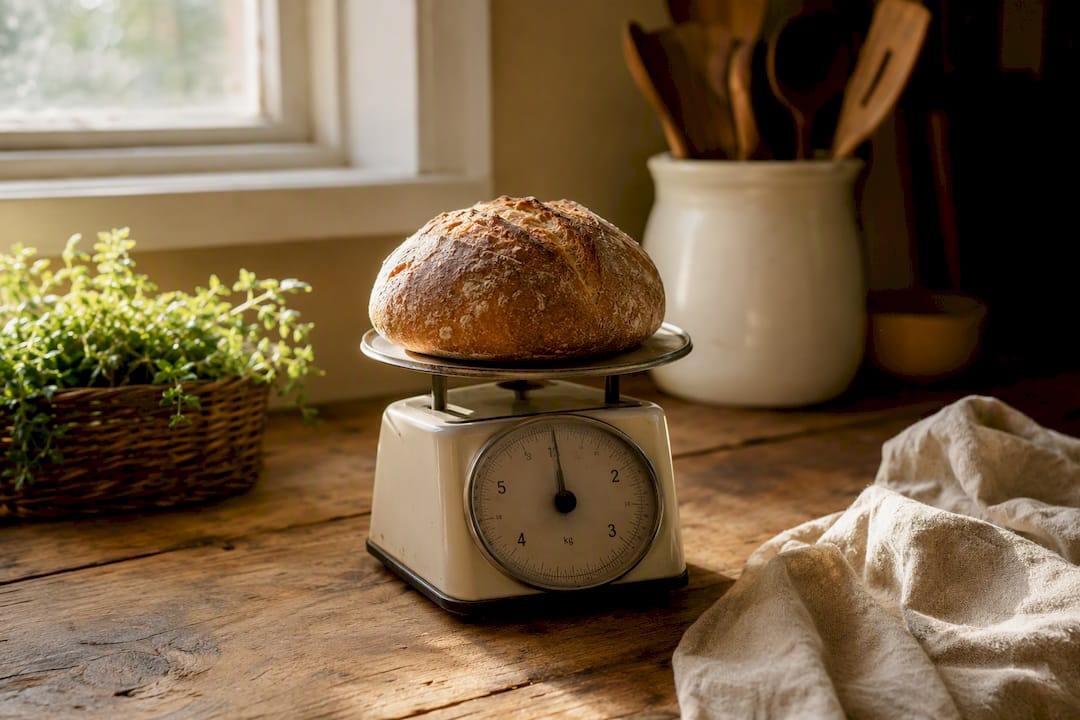
Net weight sounds simple until you realize a muffin fresh from the oven weighs more than the same muffin an hour later, once steam escapes. That's why every credible label guide tells you to weigh the finished, cooled product, never the batter or dough.
- Weigh three finished units and average the result for a more defensible number
- Exclude all packaging, bags, boxes, and twine included
- Round consistently and record your process so you can reproduce it later
For items with consistent size, like a dozen cookies, "Net Wt 8 oz (227 g)" works fine. For items that vary naturally, like hand-shaped rolls or drop cookies, some bakers switch to a "count" label (such as "Contains 12 cookies") alongside an average weight range. Extension guidance from Mississippi State recommends the three-unit averaging method specifically because a single measurement tends to skew high or low depending on oven variation.
Keep a simple log, even a notes app entry, of the weights you recorded and when. If a health inspector ever questions your net weight claim, that record backs you up.
How State Rules Differ on Disclaimers and Producer Info
The "made in a home kitchen" language isn't standardized nationally, and that trips up more new sellers than any other part of the label. UMN Extension notes that some states require language stating the product came from a kitchen "not inspected by a health department," while others accept the softer "Made in a Home Kitchen." Minimum type size commonly lands between 10 and 12 point, but a handful of states set their own thresholds.
- California and Texas guidance leans toward specific disclaimer phrasing tied to their cottage food statutes
- Minnesota and Illinois publish extension guides with sample label layouts and exact required type sizes
- Some states accept a registration or permit number plus your county or municipality instead of a full street address, a detail Illinois Extension confirms protects producer privacy without sacrificing traceability
Don't copy a disclaimer from a baker in another state, even a successful one. Pull the wording straight from your own state's extension site or health department PDF, and screenshot it for your records.
Allergens, Nutrition Claims, and When You Need a Full Panel
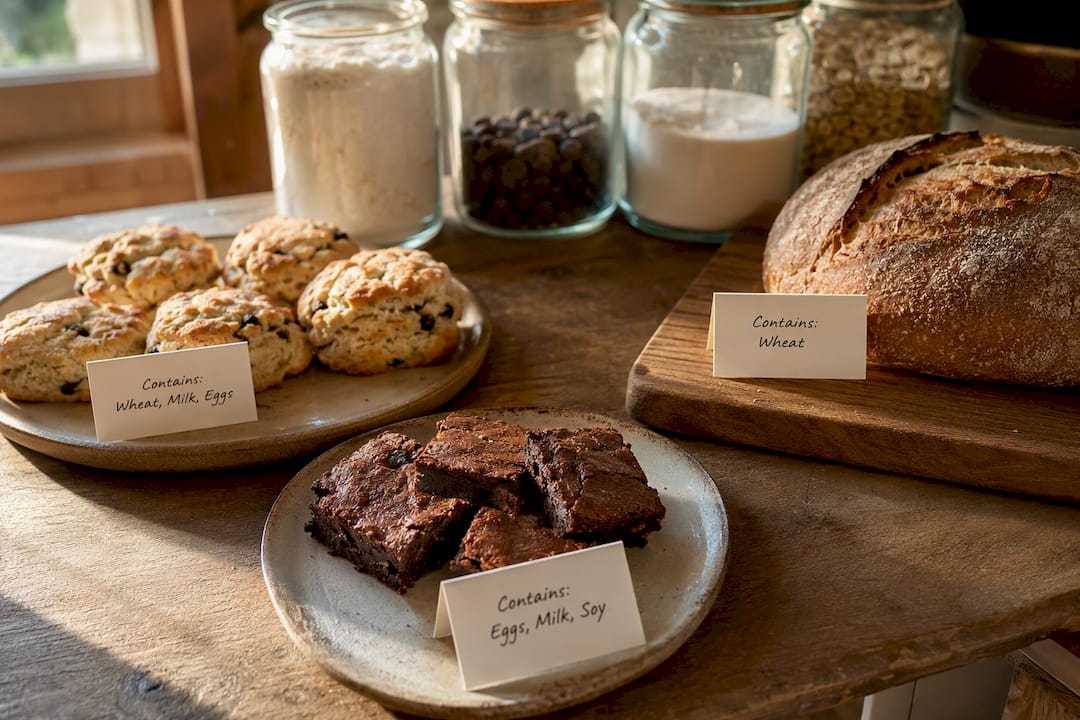
Federal allergen rules apply no matter what state you're in. You have to declare any of the nine major allergens: milk, eggs, fish, shellfish, tree nuts, peanuts, wheat, soybeans, and sesame, which was added under the FASTER Act.
- Use a parenthetical method, like "enriched flour (wheat)," right in the ingredient list
- Or add a standalone "Contains: wheat, eggs, milk" statement below the ingredients
Skip sesame at your own risk. It's a common miss on home bakery labels because bakers assume the older eight-allergen list still applies.
Nutrition claims are a separate trap entirely. Say "low sugar" or "high protein" on your label, and FDA rules under 21 CFR Part 101 generally require a full Nutrition Facts panel with verified data. Most home bakers don't have the lab testing to back that up, so the simplest move is to avoid nutrition claims altogether unless you've had your recipe formally analyzed.
Printing Materials, Templates, and QR Codes That Actually Hold Up
Baked goods sweat, leak butter, and sit in humid kitchens, so the label stock matters as much as the wording on it.
- Thermal label printers produce sharp, smudge-proof text fast, but the rolls cost more upfront than printable sheets
- Printable adhesive sheets (Avery-style) let you add color and logos cheaply, but choose a waterproof or coated stock so grease doesn't blur the ingredient list
- Pre-made generic labels save time but rarely leave room for your full ingredient and allergen text
QR codes can supplement your label with extra content, like your farm's story or a recipe card, but university extension guidance is clear that a QR code can't replace any required printed information. Every mandatory element still has to appear in print at the point of sale.
Pro Tip: Build one master template per product (SKU), with a date-prepared field baked into the design. Reusing a template across your whole product line means you fill in three or four fields instead of redesigning a label from scratch every weekend.
A Simple Workflow for Your First Compliant Label
Once you've built one label correctly, the rest of your product line is just filling in blanks.
- Bake, cool completely, and weigh three finished units. Record the average net weight.
- Draft your ingredient list in descending order by weight, then add allergen declarations using either the parenthetical or "Contains:" method.
- Add your business name and address, or your registration/permit number if your state allows it, along with the date prepared.
- Add your state's exact disclaimer at the required minimum type size, then print on grease and moisture resistant stock.
Save this as your template. Every new product just swaps the name, weight, and ingredients.
Publishing Product Facts Beyond the Package Label
A printed label covers your legal minimum, but a digital farm stand on Harvesthub lets you show buyers more before they ever pick up the item. Product pages can list full ingredient breakdowns, allergen notes, and your registration number, giving neighbors the same transparency your printed label provides, just searchable ahead of pickup.
Where state rules allow it, you can display your county and registration number publicly while keeping your exact street address private until a sale is confirmed, the same privacy approach Illinois Extension recommends for printed labels. Harvesthub's home page shows how other producers are already using verified profiles to build that kind of trust.
Open Your Farm Stand and Show Buyers What's Inside
Printing a compliant label solves half the problem. Getting local buyers to actually find your baked goods before they go stale on a shelf is the other half, and that's where a digital farm stand does more work than a label ever could.
Harvesthub gives home bakers a product page where the ingredient list, allergen notes, and registration reference already live online, so buyers see exactly what's in the box before they message you. That's the same information your printed label carries, just visible to a neighbor scrolling on their phone at 9 p.m. instead of standing at a farmers market table. You can upload a photo of your actual label template to your product page too, which gives repeat customers a fast way to double check allergens without a back and forth message.
Setting up a stand takes less time than designing your first label from scratch. Head to Open a Farm Stand to list your first product and add your compliant label details to your profile today.
Where to Check State and Federal Labeling Rules
- UMN Extension: labeling cottage food items
- Illinois Extension cottage food labeling
- Ohio Department of Agriculture home bakery resources
- LA County Public Health labeling requirements
Why Most Labeling Advice Misses the Real Risk
Most guides treat home bakery labeling like a paperwork exercise: fill six boxes, print, done. That framing misses what actually gets sellers in trouble, which isn't a missing element. It's confidence in a template copied from a Facebook group or a baker three states over.
The disclaimer wording problem deserves more attention than it usually gets. A phrase that satisfies one state's health department can be legally insufficient in another, and the penalty isn't always a fine. Sometimes it's a farmers market coordinator pulling your table setup on a Saturday morning because your label doesn't match the binder of approved wording they were handed by the county. That's a lost weekend of sales over a sentence you could have copied correctly in five minutes.
I'd also push back gently on how casually net weight gets treated. Weighing dough instead of the finished, cooled product isn't a rounding error. It's a labeling misrepresentation, and repeat offenses are exactly the kind of thing that turns a friendly health department relationship into an adversarial one. Averaging three units takes an extra two minutes per batch. Skipping it to save that time is a bad trade.
Where I think home bakers have real leverage that most labeling guides don't mention: privacy-friendly producer identification. Plenty of sellers assume they have to print their home address on every label, and some quietly avoid selling publicly because of it. States that accept a registration number or county name instead solve a real problem, not just a compliance checkbox. If you're building any kind of public-facing product page or digital storefront, that same registration-number approach carries over cleanly, letting you stay findable and trustworthy without putting your street address in front of every stranger who scrolls past.
— Sheldon
Sources
- Labeling cottage food items | UMN Extension
- Cottage food labeling (Illinois Extension)
- Home bakery resources (Ohio Department of Agriculture)
- Labeling requirements for cottage food products (LA County Public Health)