
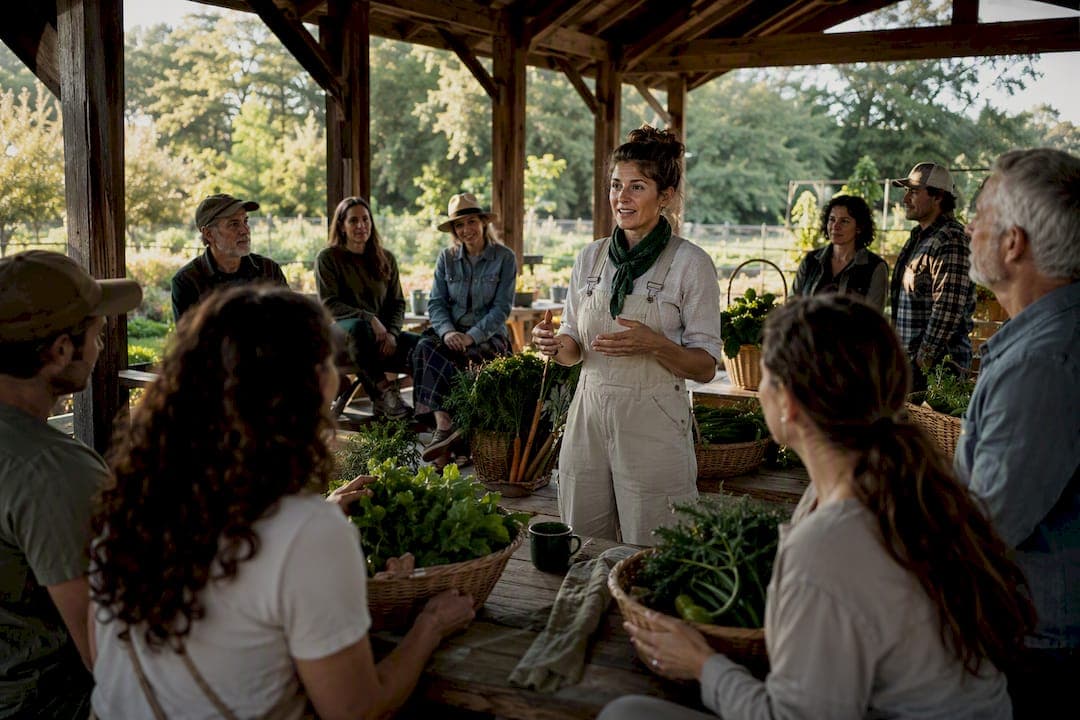
The ideas that work fastest are ambassador programs, user-generated content campaigns, and a well-run owned hub with a consistent content cadence. If you need two moves to make this week, run a "wins of the week" thread where members post recent successes, and personally recruit 10 to 20 founding members before you build anything else. Everything else in community marketing builds on that foundation.
TL;DR:
- Building a community foundation with early recruits and celebrating recent wins accelerates long-term engagement and growth.
- Owned hubs offer control and searchability but require effort to attract initial active members before migration from social platforms.
- Successful programs focus on recognition and co-creation, with clear expectations and follow-up to maintain member activity after launch.
- Segmentation by activity level and location helps tailor prompts, ensuring new members get quick wins and power users receive deeper engagement opportunities.
- Legal clarity on content rights and data privacy is essential to prevent disputes and build member trust.
Table of Contents
- Community Marketing Ideas Worth Testing First
- Where Should Your Community Actually Live?
- Building Programs That Turn Members Into Advocates
- Keeping Members Active After the Launch Buzz Fades
- Measuring Whether Any of This Is Working
- The Mistakes That Quietly Kill Most Communities
- How Harvest Hub Puts These Tactics to Work
- Segmenting Your Community So Ideas Actually Land
- Privacy and Content Rights You Can't Skip
- What I'd Prioritize in the First 90 Days
- A Marketplace-First Path to Local Community Building
- Sources
Community Marketing Ideas Worth Testing First
A few of these tactics need real infrastructure. Most need nothing more than a Tuesday afternoon and a willingness to ask people questions in public.
- Customer forums or help communities. Peer support scales in a way your support team never will. A member answering another member's question builds trust that a canned help-desk reply cannot, and it cuts response time for common questions to near zero once a few active contributors show up.
- Ambassador or advocacy programs. A structured group of vocal customers gets early access, direct input, and public recognition in exchange for referrals and content. Community-led growth case studies show brands that build this layer early tend to hit product-market fit and revenue milestones faster than those that wait.
- User-generated content campaigns. Ask for a specific thing (a photo of a finished project, a before-and-after) rather than "share your story," and you'll get usable content instead of vague enthusiasm.
- Virtual events and office hours. A 30-minute monthly session where a founder or product lead just answers questions live builds more trust than a slide deck ever will.
- Local meetups and pop-ups. These require permits or venue coordination in many cities, so build in two to three weeks of lead time before the date you want.
- Referral programs tied to recognition, not just discounts. Naming the top referrer publicly often motivates as much as the cash reward attached to it.
- Content-led clubs. A monthly theme or reading group gives members a reason to return on a schedule instead of drifting away after the first visit.
- Co-creation through product votes or beta panels. Letting members choose between two feature options turns them from an audience into a team.
- Gifting and recognition tied to contribution. Spotlighting a member's project or sending them small-batch swag costs little and creates outsized goodwill.
- Newsletters that invite replies. A newsletter that asks a real question and publishes reader answers next issue behaves more like a conversation than a broadcast.
- Microgrants or community funds. Even a modest fund that sponsors a member's side project generates disproportionate loyalty and word of mouth.
- Exclusive perks that create genuine scarcity. Early access to a new feature or product drop works because it's limited, not because it's expensive.
Where Should Your Community Actually Live?
Pick a home based on where your audience already gathers, not where you'd prefer them to be. A short survey or a week of social listening tells you more than any platform comparison chart.
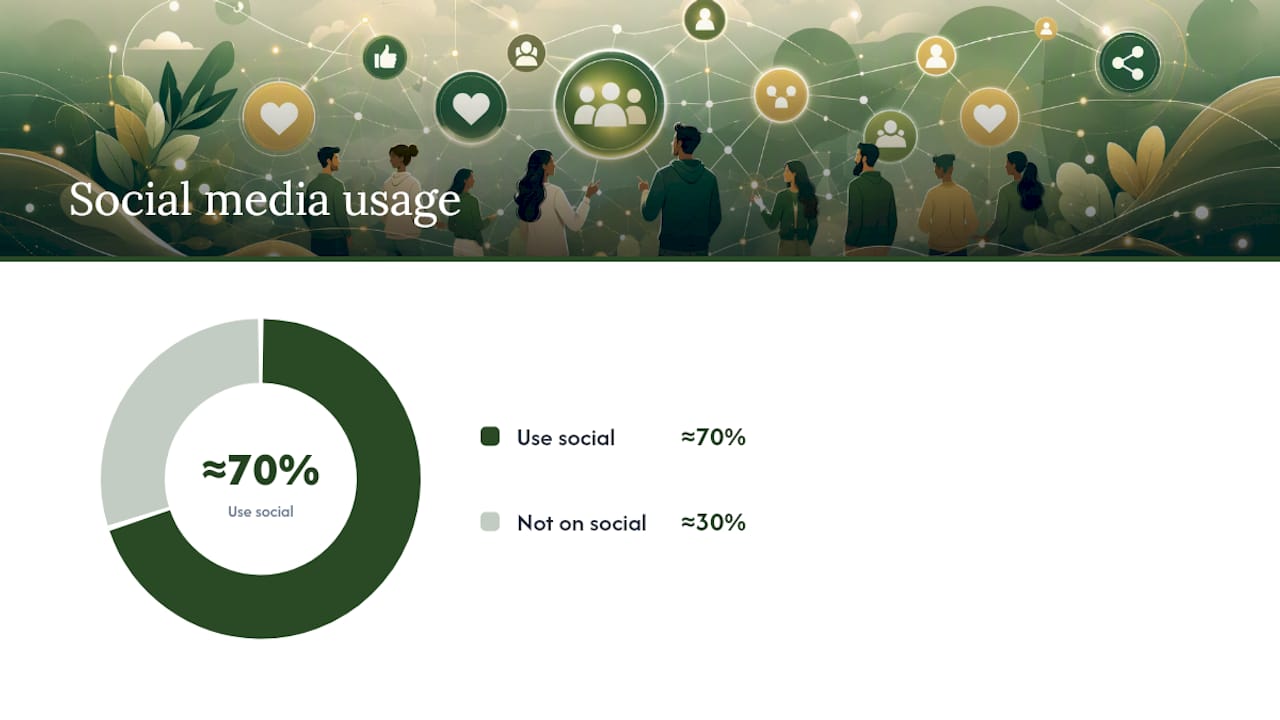
Owned hubs (a branded forum, a Circle or Discord space) give you searchable history, direct integrations with your CRM, and control over the member experience. The tradeoff is friction: people have to join something new. Social platforms remove that friction entirely, since roughly seven in ten Americans already use at least one social media site, but you're renting attention on someone else's terms, with their algorithm deciding who sees what.
Before you commit, run through this checklist:
- Who moderates, and how many hours a week can they realistically give it?
- Does the platform integrate with your CRM, or will member data live in a silo?
- What does onboarding look like for someone joining on day one versus month six?
- What's the real cost, including staff time, not just the subscription fee?
Most brands start on social to validate demand, then migrate their most active members to an owned hub once engagement is consistent; for guidance on building your social presence, see how to get more Facebook followers. Migration works best when you give people a reason to move, like exclusive content or early access, rather than just announcing a new address.
Pro Tip: Don't migrate until you have at least 20 members posting regularly without prompting. Moving an empty room to a nicer building doesn't make it less empty.
Building Programs That Turn Members Into Advocates
- Design the ambassador tier first. Set clear expectations (a monthly post, a referral goal), then attach rewards that matter to that specific group, whether that's early product access, a revenue share, or public credit.
- Write a real UGC brief. Specify the format, the rights you need, and how you'll credit the creator before you ask anyone to submit anything. Skipping the rights conversation is the fastest way to end up in an awkward legal exchange later.
- Run events with a follow-up plan. The event itself matters less than what happens the week after. Recap posts, clips, and a "what we heard" thread turn a 45-minute call into two weeks of content.
- Make co-creation visible. When you run a feature vote or a beta panel, publish the results and explain the decision, even if you didn't pick the most popular option. Members forgive being outvoted. They don't forgive being ignored.
Encouraging members to leave feedback publicly also builds the kind of social proof that new visitors trust more than your own marketing copy. If you need a starting point for prompting that kind of participation, templates for asking for reviews translate well to community spotlights and testimonials.
Keeping Members Active After the Launch Buzz Fades
The first 30 days decide whether a community survives. Send a real welcome message, not an autoresponder, and prompt every new member with a specific "introduce yourself" question rather than an open-ended one. Give them one small win fast, like a reply from a founder or a shoutout in the next newsletter.
After that, cadence keeps the room alive:
- A weekly discussion prompt tied to something timely or seasonal.
- A monthly AMA or expert session with a guest who isn't you.
- A recurring "wins of the week" post that surfaces member successes.
- Clear, published community guidelines with a couple of volunteer moderators who know the escalation path for problems.
Seeding matters more than people expect. Recruit 20 to 50 founding contributors by direct message before you open the doors publicly, and set the tone with them first. A room that starts with 40 engaged people feels alive on day one. A room that starts empty and waits for organic growth usually stays quiet for months.
Measuring Whether Any of This Is Working
Track three layers of metrics, not just one.
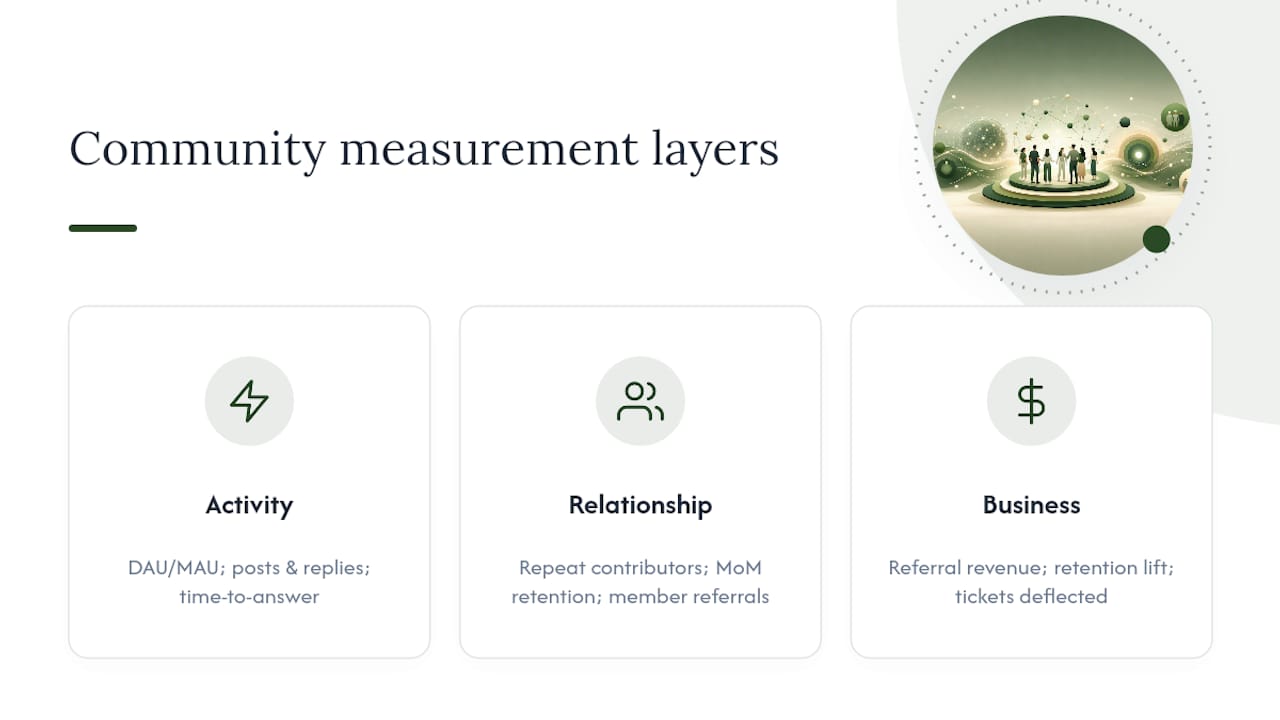
Activity metrics show whether people are showing up: daily and monthly active users, posts and replies per week, and time-to-first-answer on new questions.
Relationship metrics show whether people are staying: repeat contributor rate, month-over-month member retention, and how many referrals come from active members versus lurkers.
Business metrics are what leadership actually cares about: referral revenue, retention lift among community members versus non-members, and support tickets deflected by peer answers instead of your team. Mapping community member IDs into your CRM is what makes this connection possible, turning "500 active members" into "these 500 members retain at a higher rate and generate this much referral revenue."
HubSpot's guidance on community marketing treats this CRM tie-in as the difference between a community that gets funded next year and one that gets cut. A recent consumer experience study found that positive brand experiences carry nearly as much weight as the product itself in driving loyalty, which is exactly the kind of soft signal a good dashboard needs to translate into hard retention numbers for a monthly leadership report.
The Mistakes That Quietly Kill Most Communities
The most common failure is harvesting too early: asking a community to buy, refer, or convert before it has received months of free value, spotlights, and genuine attention. HubSpot's research is blunt about this: community marketing only lowers acquisition costs when it's run as a long-term strategy, not a campaign with a launch date and an end date.
- Don't monetize a community before members have had at least a few months to build trust in it.
- Avoid full dependence on a single rented platform. Diversify your presence and build toward an owned hub over time.
- Staff appropriately: one community manager can realistically support a few thousand active members with volunteer moderators and templated content, but not without either.
Pro Tip: If your only measure of success is "did they buy," you'll burn through goodwill in a single quarter. Measure participation first, revenue second.
How Harvest Hub Puts These Tactics to Work
Some platforms run on several of the tactics above natively. Verified producer profiles can function like an ambassador layer, giving trusted sellers visibility and social proof. Digital farm stands can act as owned hubs for each producer, and member spotlights and local events can replicate the recognition and gathering tactics that build loyalty elsewhere.
Some of the easiest tactics for local or marketplace brands to copy include verified profiles for trust, spotlighting active contributors, and running small local events tied to their platform. Three takeaways transfer directly: recognition costs little and pays disproportionately, trust signals need to be visible not just implied, and local events feed content for weeks afterward. See how Harvest Hub works for the mechanics behind these features.
Segmenting Your Community So Ideas Actually Land
A tactic that works for your most active advocates will fall flat with a first-time visitor, so group your community before you pick your next campaign. New members need low-friction onboarding prompts and quick wins, not an invitation to a beta panel they have no context for. Established, regular contributors respond better to recognition, deeper co-creation opportunities, and early access than to another welcome sequence.
Then there's your highest-value segment: ambassadors and repeat referrers, who typically want influence and status more than another discount code. Local or geography-based segments matter too, especially for brands with a physical footprint. A neighborhood-specific event announcement outperforms a generic national one every time, because it signals relevance before the reader even opens it.
Practically, this means tagging members by activity level and location inside your CRM or community platform, then tailoring your prompts accordingly. A new member gets an "introduce yourself" nudge. A power user gets an invite to your next beta panel. A local segment gets an event they can actually attend. Trying to run one campaign for everyone is how you end up with mediocre engagement across every group instead of strong engagement in at least one.
Privacy and Content Rights You Can't Skip
Every community campaign involving member content touches two legal questions: whose data is it, and whose content is it. Get explicit, written permission before republishing a member's photo, testimonial, or story anywhere beyond the original post, even if they posted it publicly. A UGC brief should state upfront how you plan to use the content, for how long, and whether the creator gets credited or compensated.
On the data side, treat community platform data with the same care as any other customer data you hold. If you're piping community activity into a CRM to power the measurement work covered earlier, tell members that's happening in your terms or community guidelines rather than burying it in a policy nobody reads. Asset-based community engagement guidance also stresses accessibility and inclusive participation as an ethical baseline, not an afterthought, meaning your sign-up flow, event formats, and content should work for people with different devices, languages, and abilities.
Moderation policy is part of this too. Members need to know what happens to their contributions if they leave the community, and what recourse they have if content is removed. A clear, published policy prevents the kind of disputes that erode trust faster than any campaign can rebuild it.
What I'd Prioritize in the First 90 Days
Community marketing rewards patience in a way most marketing channels don't. The payoff isn't a spike in week two, it's a compounding curve that starts paying off around month four or five, once the founding members have created enough content and trust for new people to want in.
If I had 90 days, I'd spend the first 30 recruiting founding members by hand, the next 30 building a weekly cadence with the people already there, and the last 30 setting up the CRM tie-in so you can actually prove the thing is working before anyone asks you to.
— Sheldon
A Marketplace-First Path to Local Community Building
If you'd rather skip building an owned hub from scratch, Some platforms provide producers a local community structure rather than a blank forum to fill. Digital farm stands can function as mini owned hubs with verified profiles, reviews, and buyer-following features baked in, making trust-building a native part of the platform rather than something configured manually.
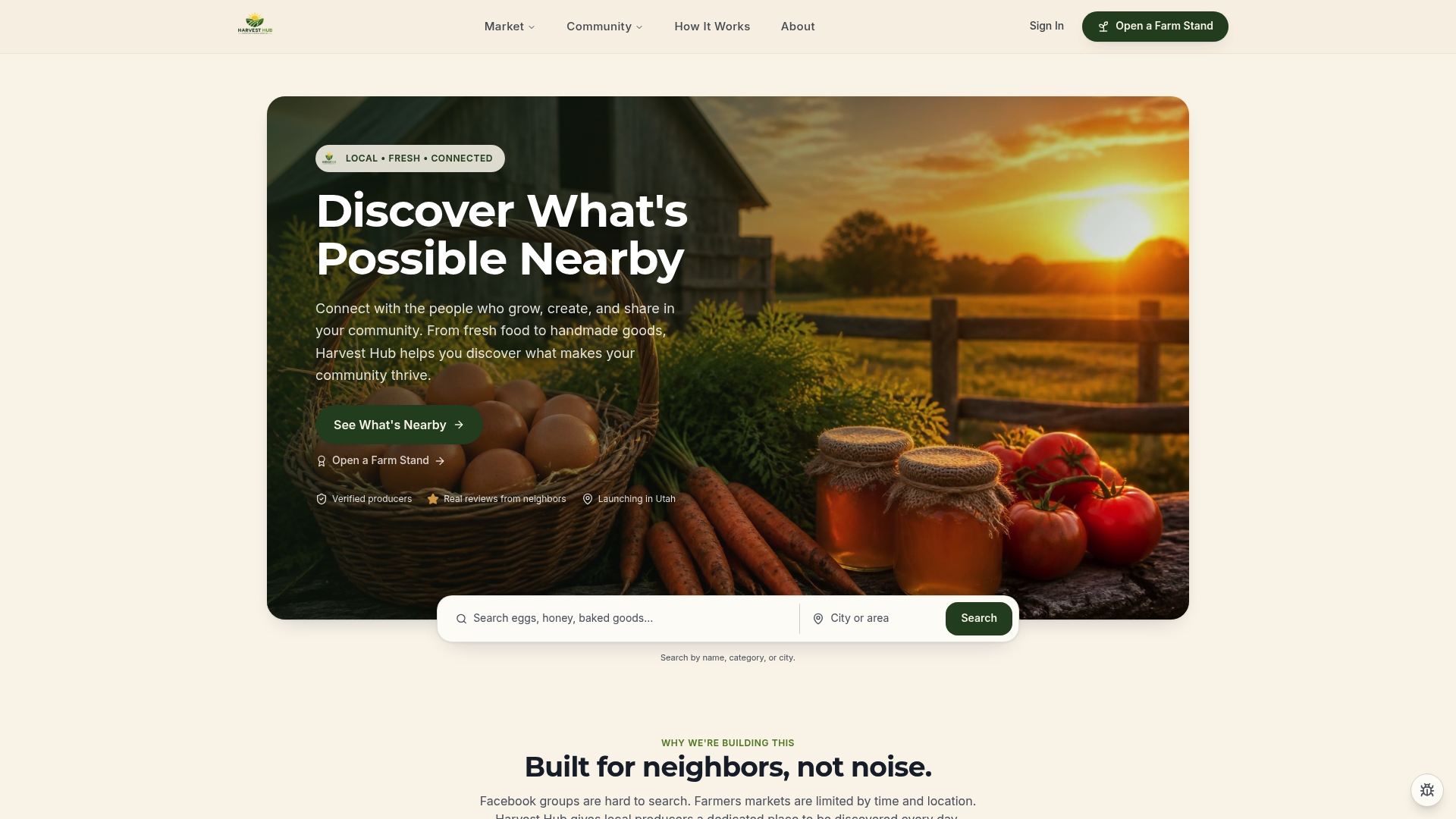
This fits best for local producers, home bakers, gardeners, and makers who want the visibility of a community without managing moderation, onboarding flows, or a separate CRM integration themselves. If you're running a standalone brand community, an owned hub still makes sense. If you're a local seller trying to build a customer base without a marketing team, a marketplace does that work for you. Producers can open a digital farm stand and start building the kind of local following that took other examples like Moon Farms Country Market months of manual outreach to earn.
Sources
- Gensler — U.S. Consumer Experience Report 2024
- Pew Research Center — Social media use report (2025)
- HubSpot — Marketing statistics and insights (2026)
- Shopify — Community-led growth (2026)