
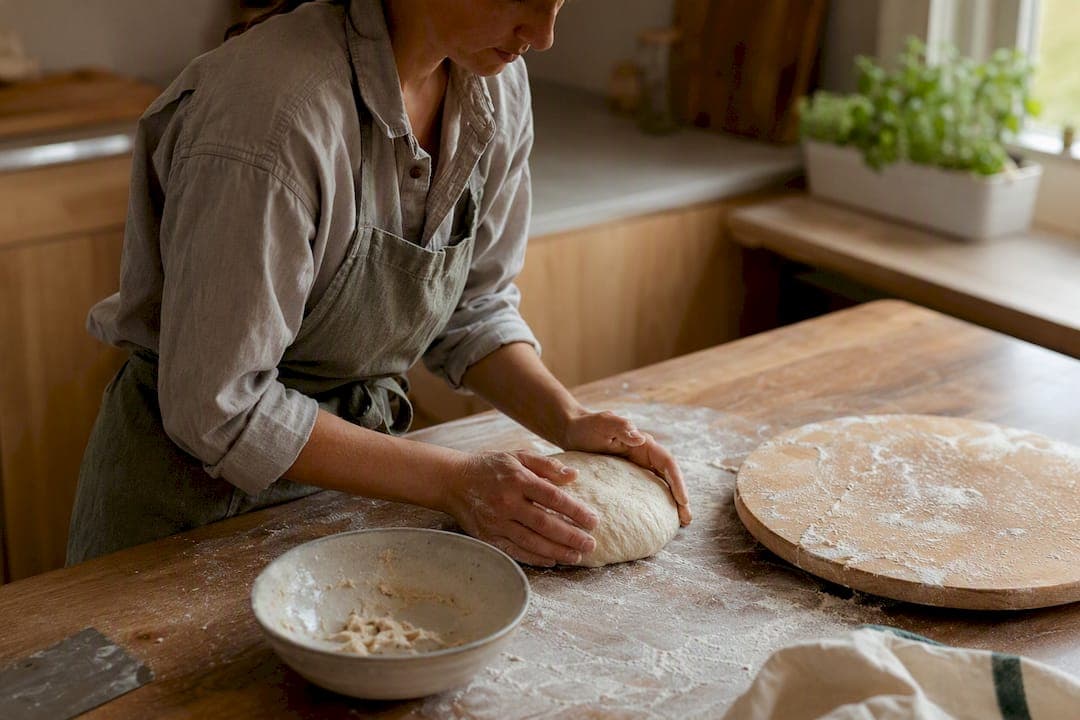
Yes, most home bakers can sell sourdough legally, and the fastest low-risk route is a narrow menu sold by preorder or local pickup once you've confirmed your state's cottage food rules. Check your state's cottage food law first, pick one or two loaves to perfect, and open a short preorder window before you touch pricing or packaging. Everything else, including platforms and shipping, comes after that.
TL;DR:
- Most states require accurate labeling that includes product name, full ingredients, allergens, net weight, and a home-kitchen disclaimer to stay compliant.
- Home bakers should confirm local rules on online sales, sales caps, and shipping restrictions, using official state resources as the main reference.
- Starting with preorder sales and local pickup minimizes risk, helps plan fermentation, and avoids unsold loaves, especially when keeping to one or two signature breads.
- Baking practice batches and understanding oven, fridge, and labor capacity are essential before scaling up or adding sales channels.
- Shipping is challenging due to moisture and crust fragility, so most bakers rely on local pickup, delivery, or short-range courier services for fresh, high-quality bread.
Table of Contents
- What Do Cottage Food Laws Require Before You Sell Sourdough?
- What Equipment and Practice Do You Need Before Taking Orders?
- How Should You Price Sourdough for Sale?
- What Belongs on Your Sourdough Label and Packaging?
- Where Should You Actually Sell: Preorders, Markets, or Platforms?
- How Do You Schedule and Scale Without Losing Your Weekends?
- How Do You Market Sourdough Without a Marketing Budget?
- What Does a Four-Week Sourdough Launch Look Like?
- Can a Local Marketplace Actually Replace a Farmers Market Table?
- What Are the Best Ways to Ship Sourdough Bread?
- How Do You Keep Bread Fresh From Oven to Doorstep?
- What Customer Service Habits Matter Most for a Home Bakery?
- What Payment Methods Should You Accept and How Do You Keep Them Secure?
- Why Compliance and Preorders Beat Hustle Every Time
- Ready to Open Your Own Digital Farm Stand?
- Where to Verify the Rules Before You Bake
- Sources
What Do Cottage Food Laws Require Before You Sell Sourdough?
Cottage food laws exist in nearly every state, and they're the reason your kitchen table can legally become a bakery without a commercial permit. But "cottage food" isn't one uniform rule. Some states cap your annual sales revenue. Others restrict where you can sell (farmers markets only, versus direct home pickup, versus shipping within state lines). A few require a food handler's card or a one-time kitchen inspection before you sell a single loaf.
The one constant across almost every state is labeling. Nearly all cottage food laws require your label to include the product name, a full ingredient list with allergens called out, the net weight, and a disclaimer stating the item was made in a home kitchen not inspected by a health department. Skip any of these and you're not just risking a warning. You're risking fines or a shutdown order if a health inspector or a competitor files a complaint.
Statistic: Labeling and allergen disclosure are the most commonly cited compliance failures among new cottage food sellers, according to state guidance compiled by the USDA's National Agricultural Library.
Before your first sale, confirm these five things against your state's actual statute, not a blog post about it:
- Whether your state allows online sales, local pickup, farmers markets, or all three
- Whether there's an annual gross sales cap that limits how big you can grow before needing a commercial license
- Whether a food handler's card, kitchen inspection, or registration fee applies in your state
- The exact label elements your state requires, since some add specifics beyond the federal baseline
- Whether your state permits shipping baked goods across state lines (most restrict this to in-state sales only)
The USDA National Agricultural Library's cottage food laws index is the closest thing to a single reliable starting point, since it links out to each state's actual regulatory text rather than a paraphrase. Bookmark your state's page. Rules change, and a summary from three years ago may already be outdated.
What Equipment and Practice Do You Need Before Taking Orders?
You don't need a commercial kitchen to start, but you do need to know your actual capacity before you promise loaves to strangers. Here's the realistic starting list.
- A reliable home oven with consistent heat. Whatever you're used to baking with is fine, as long as you know its quirks. An oven that runs hot in the back or cold near the door will bite you the first time you're baking six loaves instead of two.
- Enough fridge space for cold proofing. Sourdough's slow fermentation means your dough often sits in the refrigerator for 12 to 24 hours before baking. If you only have room for two proofing baskets, that's your real ceiling, not your oven.
- A digital scale accurate to the gram. Sourdough recipes live and die on hydration ratios. Eyeballing flour and water works for a hobby loaf. It doesn't work for a customer who expects the same loaf every week.
- A mature, consistent starter. This is the one thing you cannot rush. If your starter's activity swings week to week, your crumb and rise will too, and repeat customers notice inconsistency faster than almost anything else.
- Basic packaging supplies. Paper bags, twist ties, and printed labels get you through your first month. You can upgrade later.
Pro Tip: Run practice bulk batches of six to twelve loaves before you take a single paying order. This is the single most repeated piece of advice from experienced sellers, and for good reason: it's the only way to find out how many loaves your oven, fridge, and schedule can actually handle before you're accountable to a customer.
Once your starter and recipe are consistent across multiple bakes, consider optional business protections: general liability insurance (often available through cottage food associations for under $100 a year) and a food handler's certificate, which some states require and others simply recommend as a trust signal.
How Should You Price Sourdough for Sale?
Price by cost plus labor, not by guessing what feels fair. A simple formula: (ingredient cost + labor hours × your hourly rate + overhead) divided by loaves per batch, then add your margin.
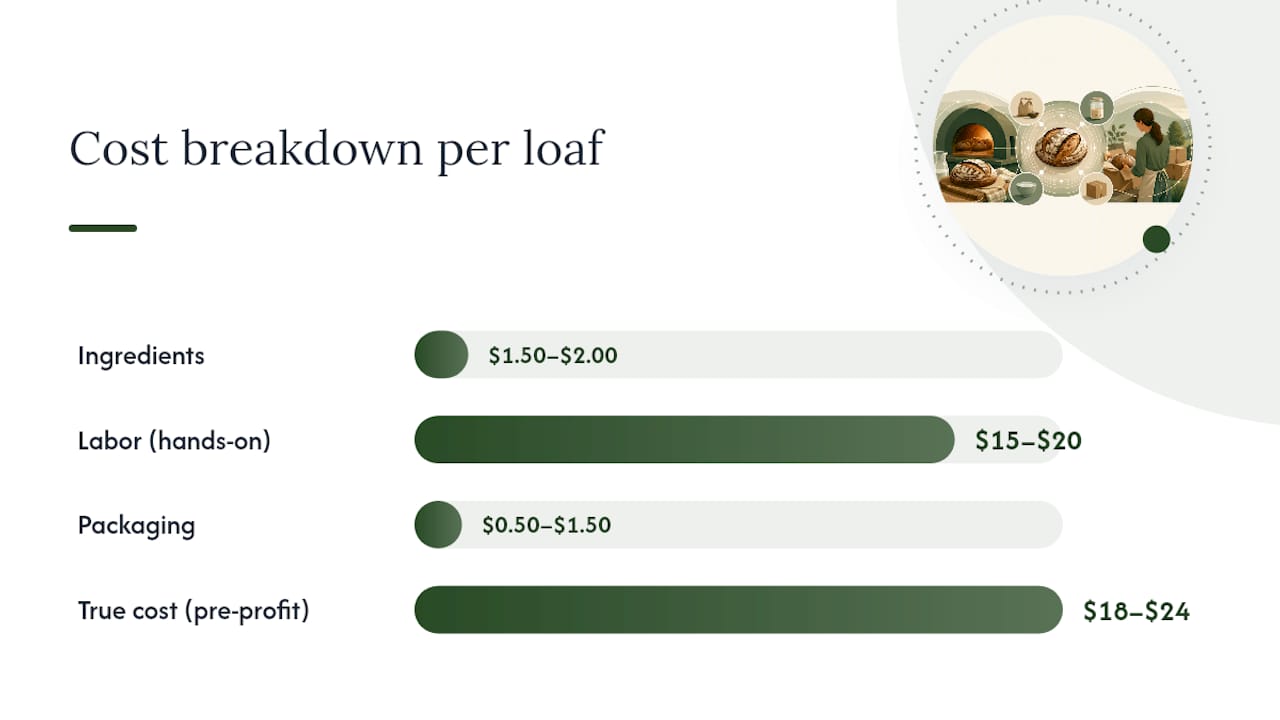
Here's a worked example for a basic country loaf. Flour, water, salt, and starter run roughly $1.50 to $2.00 per loaf in ingredients. Labor, including mixing, shaping, and baking, tends to run 45 minutes to an hour of hands-on time per loaf when you factor in a full batch, plus overnight proofing you're not actively working. At $20 an hour for hands-on labor, that's $15 to $20 in labor per loaf. Add packaging and a small overhead allowance for your electric bill and starter maintenance, and your true cost often lands between $18 and $24 per loaf before profit.
Market data backs this up: artisan sourdough typically sells for $9 to $14 per loaf at farmers markets, with specialty variants like seeded or filled loaves pricing higher. If your true cost is running above that range, you're either overvaluing your labor time or underpricing based on what you see other sellers charge instead of what your own numbers say.
A few factors shift your break-even point:
- Farmers market booth fees, which commonly run $15 to $50 per market day and need to be divided across your expected loaf sales
- Packaging upgrades (paper vs. printed bags with a window) that add $0.50 to $1.50 per loaf
- Whether you're baking for a guaranteed preorder list versus baking on speculation and hoping to sell out
Preorders solve the profitability problem better than any pricing trick. When someone pays before you bake, you eliminate the waste that eats into margin, and sellers using preorder-first models commonly report healthy profit margins, often reported by sellers who use preorder-first models because they're never baking loaves that go unsold. Standing weekly subscriptions push that further by giving you predictable batch sizes weeks in advance. Harvest Hub's subscription pricing for sellers is worth reviewing if you're weighing platform costs against what a booth fee or marketplace commission would run you elsewhere.
What Belongs on Your Sourdough Label and Packaging?
Your label is your legal defense and your marketing copy at the same time, so it's worth getting right the first time instead of reprinting after a complaint.
Every label needs five things, in plain language a customer can actually read without a magnifying glass:
- Product name, written clearly (e.g., "Classic Country Sourdough" rather than just "Bread")
- Full ingredient list, in descending order by weight, with allergens like wheat and any tree nuts or dairy called out explicitly rather than buried in a general ingredient name
- Net weight, stated in ounces or grams, measured after baking and cooling
- Home-kitchen disclaimer, phrased along the lines of "Made in a home kitchen that is not inspected by the state health department," since this is the phrase most states specifically require rather than a vaguer substitute
- Your business name and contact information, so a customer can reach you with a question or issue
Ingredient transparency deserves extra attention. Allergen omissions are consistently the top cause of consumer complaints against home bakers, not underbaked crumb or a lopsided loaf. A customer with a wheat sensitivity checking your label before buying is doing exactly what you want them to do.
For packaging, paper bags with a printed label taped or stapled on strike the right balance between crust preservation and visibility. Plastic traps moisture and softens the crust within hours, which matters if you're proud of that shatter-crisp exterior. A small cellophane window in an otherwise paper bag lets buyers see the crumb without sacrificing crust texture.
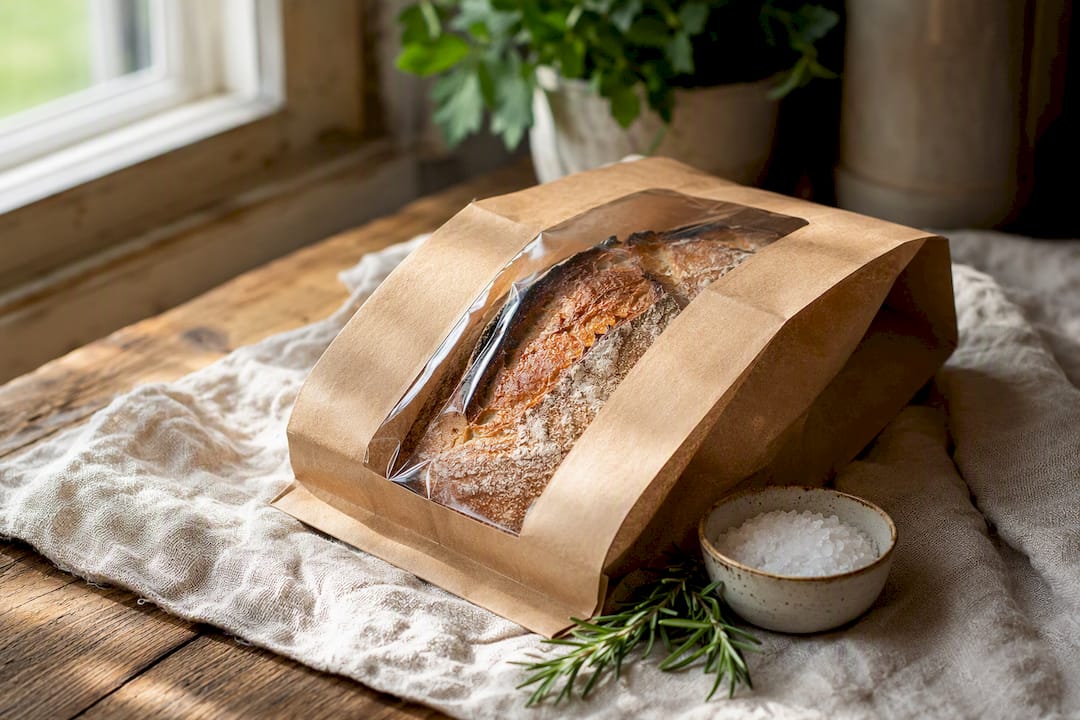
Pro Tip: Add a batch date and a simple allergen card (a small printed insert listing "Contains: wheat" in bold) even if your state doesn't strictly require it. It builds trust fast and heads off the one question every new customer has.
Shipping across state lines is usually not allowed under cottage food law, since most states restrict sales to intrastate transactions only. If you want to reach buyers outside your immediate area, local pickup and delivery within your own state are almost always your only compliant options.
Where Should You Actually Sell: Preorders, Markets, or Platforms?
Preorders are the right first channel, full stop. They eliminate the guesswork of baking on speculation, they let you plan your fermentation schedule around confirmed demand, and they mean you're never standing at a market table at 2 p.m. wondering what to do with four unsold loaves.
A simple preorder cadence to copy: open orders Monday through Wednesday, close Wednesday night, bake Thursday and Friday, deliver or open pickup Saturday morning. That gives you three full days of lead time for a proper cold proof and lets buyers plan their weekend around a fresh loaf.
- Preorders and local pickup — lowest risk, easiest to compliance-check, and the model most cottage food guides recommend starting with before anything else.
- Farmers markets — real foot traffic and instant cash sales, but booth fees, setup time, and unsold inventory risk make this a step up in complexity, not a starting point.
- Local online marketplaces — extend your preorder model to buyers who'd never find you otherwise, without the standing overhead of a weekly booth.
- CSA-style subscriptions, pop-ups, or wholesale to cafes — realistic once you've proven you can hit a consistent weekly volume without burning out.
If you do take a market table, bring only what you can sell in the first ninety minutes plus a small buffer. Overbuilding your table looks impressive for a photo and terrible for your margin.
When evaluating a local online pickup platform, prioritize a few specific features over general polish:
- Inventory caps that stop you from accidentally overselling a sold-out batch
- A calendar view for setting defined pickup windows instead of open-ended "message me" arrangements
- Built-in messaging so buyer questions about allergens or pickup logistics don't scatter across texts, DMs, and email
- Verified seller profiles and reviews, which do more to convert a first-time buyer than any photo
A live example: browse how sellers like FarmBox SF or Sweet Home Meats structure their farm stand listings, complete with pickup details and product photos, to get a sense of what a functioning storefront looks like before you build your own.
How Do You Schedule and Scale Without Losing Your Weekends?
A single-baker preorder model runs on a repeatable weekly rhythm, not heroic one-off effort. Here's a sample structure that works for most home bakers running one to two bake days a week.
- Monday to Wednesday: Preorder window open. Mix your starter feed schedule around whatever volume you're seeing come in.
- Wednesday night: Orders close. Mix dough for a Thursday or Friday bake, staggering start times if your batch size exceeds what one bulk fermentation container handles comfortably.
- Thursday: Shape and begin cold retard in the fridge, staggering shaping in waves if your fridge space is limited so nothing overproofs while waiting its turn.
- Friday morning: Bake in waves based on how many loaves fit in your oven at once. Most home ovens handle two to four loaves per bake, which sets your real daily ceiling.
- Saturday: Pickup window, delivery, or market day.
Track three numbers weekly: fridge proofing slots, oven throughput per bake day, and your actual hands-on hours. When you're consistently maxing out all three and still have unfilled preorder requests, that's your signal to scale, not before.
Pro Tip: Don't scale your loaf count before you've scaled your fridge space. Oven capacity is usually the second bottleneck people hit, but fridge proofing room is almost always the first, and it's the one nobody thinks to plan for.
When home capacity genuinely maxes out, your realistic next steps are renting hours in a licensed commercial kitchen, bringing on a second baker to split shaping and baking duties, or investing in a commercial-grade oven like those from Vesuviano if volume justifies the equipment cost.
How Do You Market Sourdough Without a Marketing Budget?
Presentation sells bread before flavor does. A cut loaf showing an open, glossy crumb structure on your table, stand, or photo does more work than any caption you write. Stack whole loaves in a linen-lined basket, prop one cut half upright to show the crumb, and add a small handwritten or printed card naming your flour source or fermentation time. It reads as craft, not just carbohydrate.
A few merchandising and pricing moves that reliably move loaves:
- Offer a half-loaf option at a proportionally slightly higher per-ounce price. It lowers the buy-in for first-time customers who aren't ready to commit to a whole loaf.
- Run a limited weekly specialty variant (rosemary, seeded, or a seasonal add-in) alongside your standard loaf. Scarcity moves undecided buyers.
- Ask every satisfied customer directly if they want a standing weekly order. Most bakers undersell this ask and lose recurring revenue they could have locked in with one sentence.
For visuals, look at how a farm stand like Moon Farms Country Market photographs and organizes its product listings. The same display logic that works at a physical market table (clean backgrounds, a sense of scale, honest color) works for online photos too. If you sell at a market table, borrow display tricks from adjacent craft vendors. Ideas built for craft fair booths around signage and stacking translate directly to a bread table.
Pro Tip: Text and email lists outperform social media for repeat bread sales, because customers who already bought from you once are far easier to convert into a standing order than strangers scrolling past a post. Ask for a phone number or email at your first sale, every time.
Collect reviews wherever your sales channel supports them, and let the star rating and comment count speak for your consistency rather than writing your own testimonials.
What Does a Four-Week Sourdough Launch Look Like?
Move through this in order, and resist the urge to skip ahead to marketing before your legal and product foundation is solid.
- Week 1: Confirm your state's cottage food law and label requirements. Bake your starter into full, reliable consistency across at least three test bakes.
- Week 2: Run a practice bulk batch of six to twelve loaves. Time your oven cycles, count your fridge slots, and finalize your label design.
- Week 3: Open your first preorder window with a minimum viable menu of one or two loaves. Promote it to friends, neighbors, and any local group that allows it.
- Week 4: Fulfill your first paid preorder batch, collect direct feedback from every buyer, and lock in your Monday to Wednesday order, Saturday pickup cadence going forward.
A preorder form only needs a name, phone number or email, loaf choice, and pickup time slot. Anything more complicated slows down the one thing you actually need, which is a confirmed count before you start mixing dough.
Can a Local Marketplace Actually Replace a Farmers Market Table?
Not entirely, but it solves a different problem: discovery. Harvest Hub gives home bakers a digital farm stand with verified seller profiles, map-based discovery, and built-in preorder tools, so nearby buyers can find your loaves without you needing a standing booth every Saturday.
The features that matter most for a sourdough seller specifically:
- Verified profiles and reviews, which do the trust-building work a first-time buyer needs before ordering from a stranger's kitchen
- Preorder and pickup-window tools, matching the exact preorder cadence this guide already walked through
- Category browsing and map search, so buyers actively looking for baked goods nearby find your stand instead of scrolling past it
Statistic: Cottage food sellers who rely on a single sales channel, whether that's one market or one social feed, are structurally more exposed to a bad week than those layering preorders across multiple discovery points, based on the operational patterns described across cottage food seller guidance.
A listing on a marketplace like this complements rather than replaces your existing channels. It sits alongside your farmers market table and your neighborhood group posts, catching the buyers those channels miss. If you want to try it, the fastest path is to open a farm stand, list one to three signature loaves, and set your first weekly preorder window before you touch anything else.
What Are the Best Ways to Ship Sourdough Bread?
Shipping bread well is harder than shipping almost any other food product, because sourdough's crust and crumb are both fragile and highly sensitive to moisture. Most cottage food sellers avoid shipping entirely, both because state law often restricts it and because the logistics rarely pay off for a single loaf.
If your state does permit in-state mailing and you decide to try it, a few practices matter more than others. Ship early in the week, so the loaf doesn't sit in a warehouse over a weekend. Use a rigid outer box, not a padded envelope, since bread crushes easily under stacked packages. Wrap the loaf in a paper bag before boxing rather than plastic, which traps condensation and turns a crisp crust soft and gummy within a day.
Overnight or two-day shipping is worth the added cost if you're charging enough to cover it, because standard ground shipping introduces too many variables in temperature and handling time for a product with no preservatives. Most successful home bakers who do ship limit it to a tight radius and a guaranteed one or two day delivery window, treating it as a premium add-on rather than a core sales channel.
For nearly everyone starting out, local delivery or pickup remains the more reliable and lower-cost path. It sidesteps the shipping compliance questions entirely and keeps your loaf in the buyer's hands within hours of coming out of the oven, not days.
How Do You Keep Bread Fresh From Oven to Doorstep?
Sourdough starts losing its best texture the moment it leaves the oven, so the gap between bake and delivery is the single biggest freshness variable you control. Bread baked and picked up the same morning will always beat anything sitting in transit overnight, regardless of packaging.
Let loaves cool completely, at least two hours, before bagging. Bagging a warm loaf traps steam inside the bag, which softens the crust and can encourage mold growth within a day or two. This is one of the most common mistakes new sellers make when they're rushing to hit a pickup deadline.
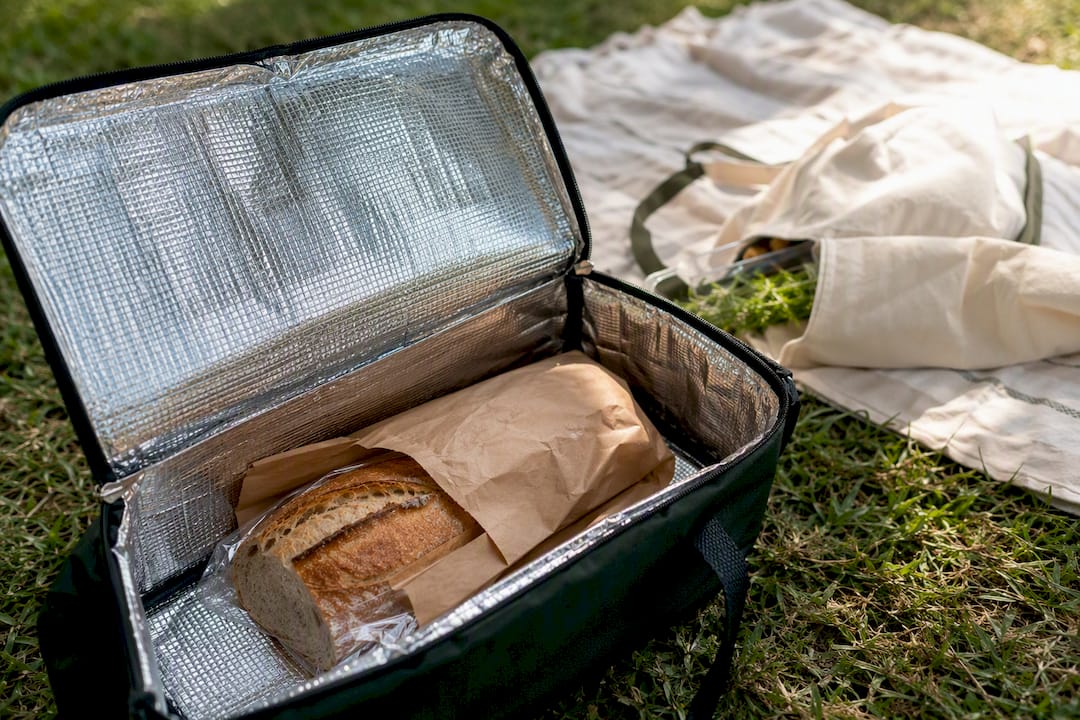
Once cooled, a simple paper bag preserves crust texture best for same-day or next-day pickup. If a loaf needs to hold for two or three days before it reaches a buyer, a partial wrap (paper against the crust, with a light plastic outer layer only near the cut end) slows staling without fully softening the exterior.
Temperature during transit matters more than most sellers assume. A loaf left in a hot car for a few hours will sweat inside its packaging and turn gummy far faster than one kept at room temperature. If you're delivering in warm weather, a simple insulated bag in your car makes a real difference.
Tell buyers plainly how long their loaf will hold at peak quality, typically one to two days at room temperature, and when to freeze it instead. Setting that expectation upfront heads off the "it went stale too fast" complaint before it happens, and it signals that you know your product well enough to be trusted with the next order too.
What Customer Service Habits Matter Most for a Home Bakery?
Baked goods carry a trust problem that most products don't: a customer can't taste before they buy, and any inconsistency between batches reads as a broken promise rather than a minor variation. Your customer service needs to close that trust gap before and after the sale.
Before the sale, be specific about what a buyer is getting. State the loaf size, crust style, and crumb texture honestly, and mention if a particular batch might run slightly denser or lighter due to weather affecting fermentation that week. Sourdough varies more than commercial bread, and buyers who understand that upfront are far less likely to complain about it later.
After the sale, respond to messages quickly, ideally within a few hours during your active selling days. A slow response to an allergen question or a pickup-time change reads as unreliable, and unreliability is the fastest way to lose a repeat customer in a category built on trust.
When something goes wrong, whether a loaf arrives underbaked or a pickup gets missed, offer a concrete fix rather than a vague apology: a replacement loaf on the next bake day, a partial refund, or store credit toward a future order. Home bakers who handle mistakes generously tend to keep customers who might otherwise have walked away for good, because a fast, fair resolution often builds more trust than a flawless transaction would have.
Ask directly for feedback after the first few orders from any new customer. Most buyers won't volunteer criticism unprompted, but they'll answer honestly if you ask a simple question like whether the crust held up or the size felt right for the price.
What Payment Methods Should You Accept and How Do You Keep Them Secure?
Cash still works at a farmers market table, but it's the least useful option for preorders, since it gives you no confirmed commitment until the buyer physically shows up with money in hand. Digital payment collected at the time of order is what actually protects your margin.
Mobile payment apps that support person-to-person transfers work for casual, low-volume selling, but they weren't built for business use, and mixing personal and business funds through them gets messy fast, especially at tax time. A dedicated payment processor built for small sellers, the kind built into most local marketplace and e-commerce platforms, gives you a cleaner paper trail and often a lower effective fee than juggling multiple personal payment apps.
Whatever processor you use, look for a few baseline security features: encrypted transaction handling, so card details are never stored on your own device, and buyer protection policies that reduce chargeback disputes. Most established payment processors already meet PCI compliance standards, meaning you don't need to build any security infrastructure yourself. You're relying on theirs.
Collecting payment at the time of preorder, not at pickup, is the single change that protects you most. It converts a soft commitment into a real one, and it means you're never baking a loaf on the hope that someone remembers to bring cash. If a buyer cancels after paying, decide your refund policy in advance (many sellers offer store credit rather than a cash refund for late cancellations) and state it plainly on your order form so there's no ambiguity when it comes up.
Why Compliance and Preorders Beat Hustle Every Time
The conventional advice on this topic leans hard into marketing hustle: build a following, post daily, chase virality. That advice is backwards for a cottage food seller. The bakers who actually last a year aren't the ones with the best Instagram feed. They're the ones who nailed their labeling before their first sale and never overcommitted past what their fridge could hold.
What gets underrated constantly is the boring stuff: reading your actual state statute instead of a summary, running a real practice batch before promising loaves to strangers, and pricing from your true costs instead of copying a number you saw at a market. Those three habits prevent more failures than any marketing tactic fixes.
If you're starting today, prioritize in this order: confirm your state's law, run one practice batch, then open a tight preorder window. Skip the temptation to build a full online shop before you've proven you can bake the same loaf twice in a row. A marketplace listing on a platform like Harvest Hub can extend your reach once that foundation is solid, but it can't substitute for it.
— Sheldon
Ready to Open Your Own Digital Farm Stand?
Most home bakers piece together sourdough sales from a patchwork of text threads, Instagram DMs, and a notebook of who ordered what. That works for a month. It falls apart the first week you get more preorders than you can mentally track. Harvest Hub gives you one place to list your loaves, set a weekly preorder window, and let nearby buyers find you without you chasing down every comment and message yourself.
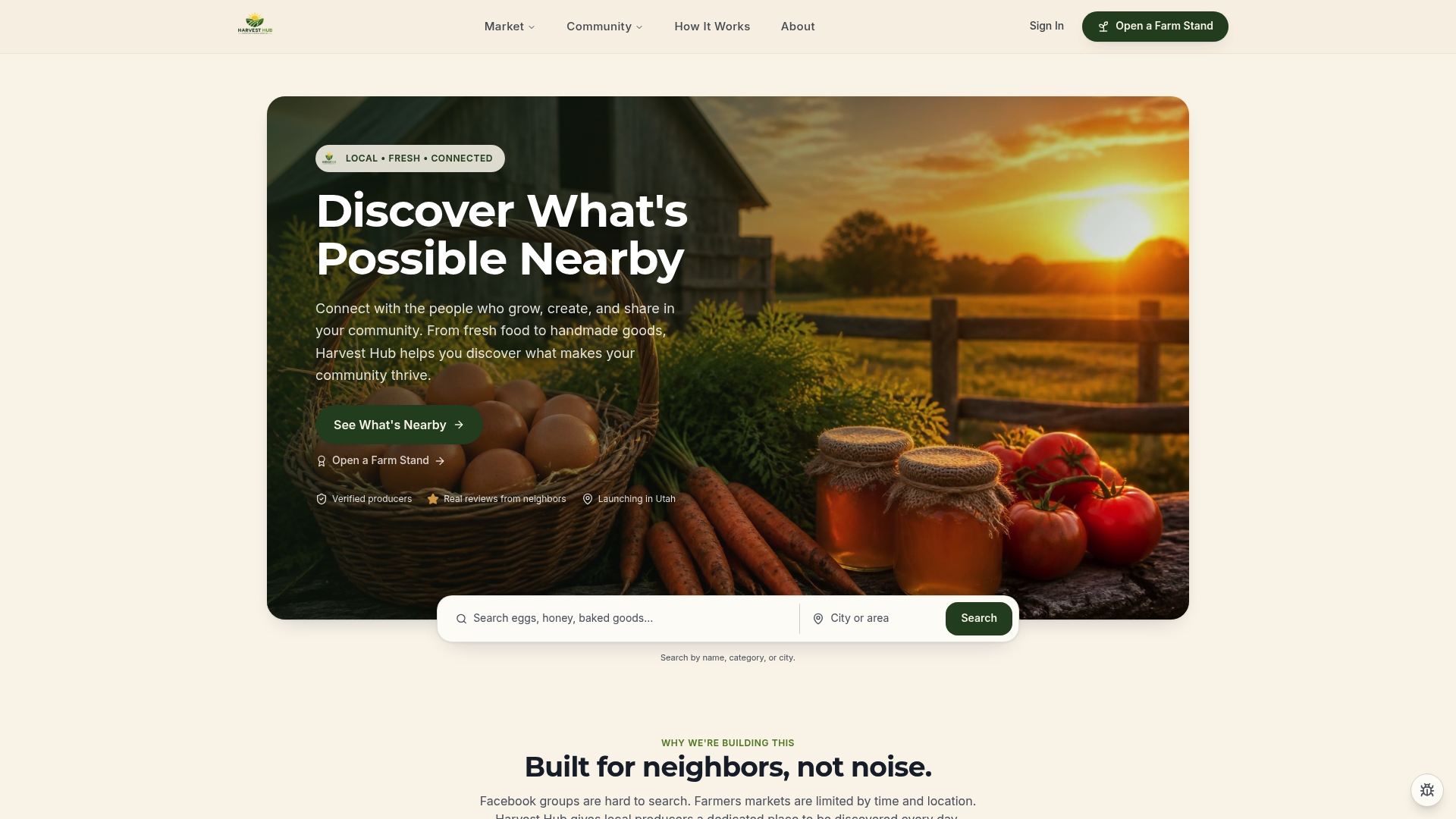
Opening a farm stand gets you a verified profile, a preorder calendar, and direct messaging with buyers, the same tools this guide walked through building manually. You control your menu, your pickup windows, and your pricing. Buyers browse for free, so there's no barrier stopping a neighbor from finding your listing between now and Saturday.
Start by opening a farm stand, list your one or two signature loaves, and schedule your first preorder pickup window this week. Everything else in your launch plan slots in around that first listing.
Where to Verify the Rules Before You Bake
Check these before your first sale, not after:
- Caroline Bower's practical pre-launch checklist on testing capacity before taking paying orders
- Butter and Sage Market's farmers market pricing guide for current price bands and margin benchmarks
Sources
- 4 Things to Do Before You Sell Your First Loaf of Sourdough | Episode 133 — Caroline Bower
- How to Start Selling Sourdough at the Farmers Market in 2026 — Butter and Sage Market