
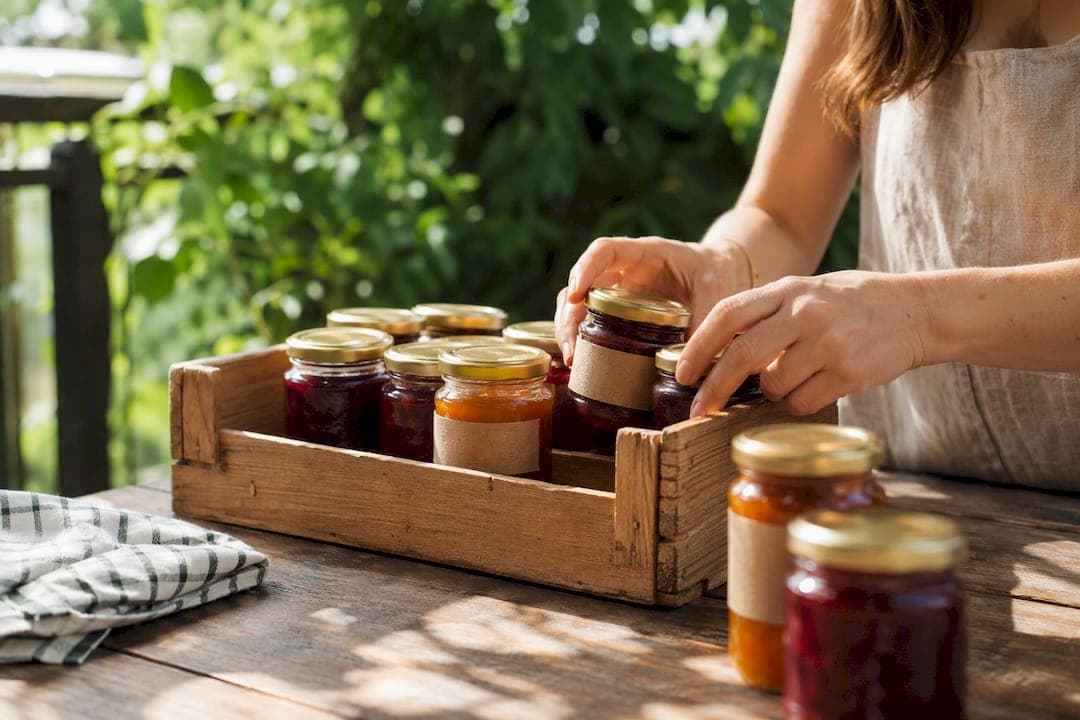
Yes, you can sell jam, and most states let you make it in your home kitchen under cottage food law because jam is high-acid and shelf-stable. The catch is that rules on online sales and shipping vary widely by state, so your first move is checking your state's cottage food list, not building a website. From there, three things matter most: compliant labels, tested processing methods from a source like the National Center for Home Food Preservation, and a sales channel, such as Harvest Hub, that fits your state's limits on shipping and delivery.
TL;DR:
- Most states allow home-based jam sales under cottage food laws, but online sales and interstate shipping are often heavily restricted or vary by state.
- Compliant labeling requires product name, net weight, ingredient list, allergens, producer details, and a specific cottage food disclaimer per state rules.
- Using tested recipes and proper acidity levels (pH below 4.6) ensures shelf stability and safety without the need for a licensed commercial kitchen.
- Accurate cost calculation must include labor, ingredients, packaging, and fees, with pricing typically set at several times the true cost of goods sold for profitability.
- Selling online through local marketplaces like Harvest Hub simplifies setup, builds trust via verified profiles and reviews, and avoids the need for shipping permission in restrictive states.
Table of Contents
- How to Sell Jam Online Legally Under Cottage Food Law
- What Does a Compliant Jam Label Need to Say?
- Why Does pH Matter for Shelf-Stable Jam?
- How Should You Price a Jar of Homemade Jam?
- Where Can You Actually Sell Your Jam?
- What Equipment Do You Need to Start?
- Setting Up to Sell Jam Online, Step by Step
- Harvest Hub's Take on Selling Jam Locally Online
- What the Data Actually Tells Home Jam Sellers
- Start Selling Jam Locally With a Digital Farm Stand
- Where to Verify the Details
- Sources
How to Sell Jam Online Legally Under Cottage Food Law
Every state runs its own cottage food program, and jam almost always makes the approved list because it's classified as a high-acid, shelf-stable product once processed correctly. That classification is the whole reason home jam making is legal in the first place. Low-acid foods like canned green beans or salsa without enough vinegar carry botulism risk and typically require a licensed commercial kitchen. Jam, jelly, and fruit preserves don't carry that same risk when made with a tested recipe, which is why the NCHFP and nearly every state extension office treat them as a starter category for home food entrepreneurs.
That doesn't mean every state treats jam the same way once it leaves your kitchen. Some states cap your annual sales revenue. Others require you to register your kitchen, pass a short food safety course, or list your product with the state agriculture department before you sell a single jar. A handful require nothing more than a label that meets their disclosure rules.
Where states really diverge is online sales and shipping. Several states restrict cottage food sales strictly to in-person transactions, meaning farmers markets, farm stands, and direct pickup, with no mailing jars across state lines. Other states allow online ordering as long as the transaction and handoff happen within state borders, which is exactly the kind of local pickup model a platform like Harvest Hub supports. A smaller number of states permit interstate shipping of shelf-stable cottage foods, though shipping perishable-adjacent goods still comes with its own packaging headaches.
Before you list a single jar, work through this checklist:
- Find your state's cottage food law page (usually hosted by the state department of agriculture) and confirm jam is listed as an approved category.
- Check whether your state requires kitchen registration, a food handler permit, or a food safety training course.
- Confirm whether online ordering is allowed and whether shipping across state lines is permitted or restricted to local pickup and delivery.
- Note any annual gross sales cap tied to your cottage food exemption.
- Save digital or paper copies of your registration, any course completion certificate, and your approved label template.
- Keep a simple batch log from day one. It costs nothing and saves you if a customer ever has a question about a specific jar.
If your state restricts you to in-person or in-state sales, that's not a dead end. It just means your online presence should function more like an order-ahead and pickup tool than a shipping storefront, which is precisely how most cottage food sellers use community marketplaces.
What Does a Compliant Jam Label Need to Say?
A jam label isn't just branding. It's a legal document, and most cottage food programs are specific about what must be on it. Missing one required line is the most common reason a first-time seller gets flagged at a market or by a state inspector.
Here's what to include, in the order most extension programs expect it:
- Product name stated plainly, such as "Strawberry Jam" or "Peach Jalapeño Preserves."
- Net weight, listed in both ounces and grams (for example, "8 oz (227 g)"). You typically don't need a full nutrition facts panel as a cottage food producer, since that requirement usually kicks in only above certain production volumes or for licensed commercial kitchens.
- Full ingredient list, in descending order by weight, exactly as used in the recipe.
- Allergen statement, calling out any of the major allergens present, including tree nuts if you're making something like a fig and walnut preserve.
- Producer name and address, which most states require as your actual home address or a registered business address, not just a brand name.
- Cottage food disclaimer, worded per your state's exact language, such as "Made in a home kitchen not inspected by the state" or similar wording your program specifies.
Getting the wording right matters more than getting the design right, but design still sells the jar. A tamper-evident seal or shrink band across the lid signals care before a buyer reads a word. If you're building gift sets, a simple secondary box with tissue paper turns a moderately priced jar into a higher-value three-pack without much added cost. Skip the nutrition panel debate entirely if your state doesn't require one, and instead spend that label space on something that actually moves buyers: where the fruit came from, what season it's from, or a one-line story about the recipe.
Pro Tip: List the farm or orchard your fruit came from right on the label. A line like "Peaches from Miller's Orchard, picked in July" does more for perceived value than any font choice will.
Why Does pH Matter for Shelf-Stable Jam?
Acidity is what keeps jam safe on a shelf without refrigeration, and it's the single most important thing to get right before you sell a jar to a stranger. Jam sits safely in the high-acid category (generally below pH 4.6) because of the combination of fruit acid, added lemon juice or citric acid, and sugar concentration, which together stop the growth of Clostridium botulinum, the organism behind botulism. Mess with the sugar ratio or swap in a low-acid fruit without adjusting, and you can quietly push a batch into unsafe territory even though it looks and tastes fine.
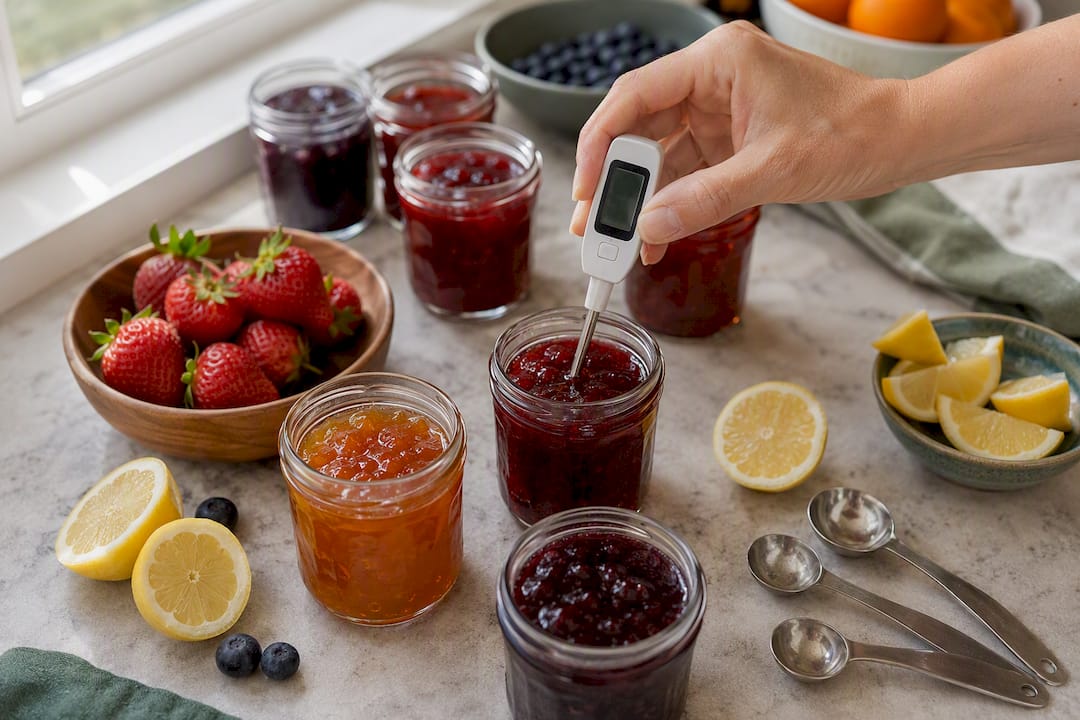
That's why extension experts are consistent on one point: use a tested recipe, don't improvise. The NCHFP's tested recipe collection exists specifically so home producers aren't guessing at ratios. If you want to modify a recipe (less sugar, a new fruit combination, added herbs), get the base pH tested through your local extension office or a food safety lab rather than assuming it's fine because it worked once.
Water-bath canning covers the rest of the safety equation:
- Sterilize jars and lids before filling, either in boiling water or a dishwasher's sanitize cycle.
- Fill jars to the correct headspace, usually a quarter inch for jam, per the recipe you're using.
- Process in a boiling water bath for the time specified by the recipe, adjusted for your altitude.
- Check seals after cooling. The lid should not flex when pressed in the center.
- Label any jar that fails to seal properly and refrigerate it for near-term use instead of selling it.
Virginia Cooperative Extension's guide on preparing jam and preserves walks through exact processing times and sterilization steps, and it's worth bookmarking regardless of which state you're in, since the physics of canning doesn't change at state lines.
One habit separates hobbyists from sellers who last: a batch log. Record the date, recipe version, processing time, jar count, and fruit source for every batch. If a customer ever has a concern, that log turns a vague "which jar?" conversation into a two-minute lookup.
How Should You Price a Jar of Homemade Jam?
Most new sellers underprice their jam because they only count the fruit and sugar, then wonder why the business doesn't grow. Real cost accounting includes every input that touches the jar, and skipping labor is the single biggest pricing mistake home makers make.
Work through this order for every batch:
- Ingredient cost: fruit, sugar, pectin, and any add-ins, divided by the number of jars a batch yields.
- Packaging cost: jars, lids, labels, and any shrink bands or boxes, per jar.
- Fee cost: farmers market vendor fees or marketplace subscription costs, averaged across your typical jar volume.
- Labor cost: time spent prepping, cooking, processing, and cleaning, valued at a real hourly rate, even if that rate is just what you'd pay someone else to do it.
- Add it all up for your true cost of goods sold, or COGS, per jar.
Many small food producers price their jars at a few times COGS to achieve an adequate margin. Local honey jam or a small-batch fig preserve with orchard provenance justifies a higher price, while basic strawberry jam with grocery-store fruit is priced more affordably.
| Pricing lever | Effect |
|---|---|
| Multi-pack sets (3 jars) | Raises average order value and reduces per-unit shipping or packaging waste |
| Seasonal or limited fruit | Supports premium pricing, often 20 to 40 percent above your standard line |
| Gift packaging | Adds perceived value disproportionate to actual added cost |
| Wholesale to a local shop | Requires a lower wholesale price, usually near your COGS times 1.5, to leave the shop room to mark up |
Track every input in a simple spreadsheet or a lightweight cost-tracking app from your very first batch. Pricing decisions get a lot less emotional once the numbers are already sitting in front of you instead of being reconstructed from memory.
Where Can You Actually Sell Your Jam?
Farmers markets remain the classic starting point, and for good reason: most states allow cottage food sales there without extra permitting beyond your basic registration, and the direct customer interaction teaches you fast what sells. The tradeoffs are real too. Vendor fees eat into margin, you're limited to market hours, and weather can wreck a Saturday.
Farm stands and consignment placement in local shops extend your reach without adding market-day labor. A shop typically wants a 20 to 40 percent wholesale margin, so price your wholesale rate with that markup already factored in, not as an afterthought. Consignment deals shift risk to you (unsold stock might come back), so start small with any new shop relationship.
Online ordering with local pickup is where the legal picture gets specific to your state, but it's also where growth tends to come from once you've proven demand at markets. A local online listing lets a customer discover your farm stand, place an order, and pick it up on a set schedule, all without you needing shipping permission your state might not grant.
Before committing to a channel, test demand cheaply:
- Post a few product photos on social media with a simple preorder link or comment-to-reserve system.
- Try one pop-up table at a community event before committing to a season-long market spot.
- Ask your first buyers directly what price they'd pay and what flavors they'd want next.
On market day itself, keep a short checklist: clear price signage per jar size, sample cups if your market allows sampling, a card reader or payment app that works without reliable cell service, and packaging sturdy enough to survive a tote bag ride home.
What Equipment Do You Need to Start?
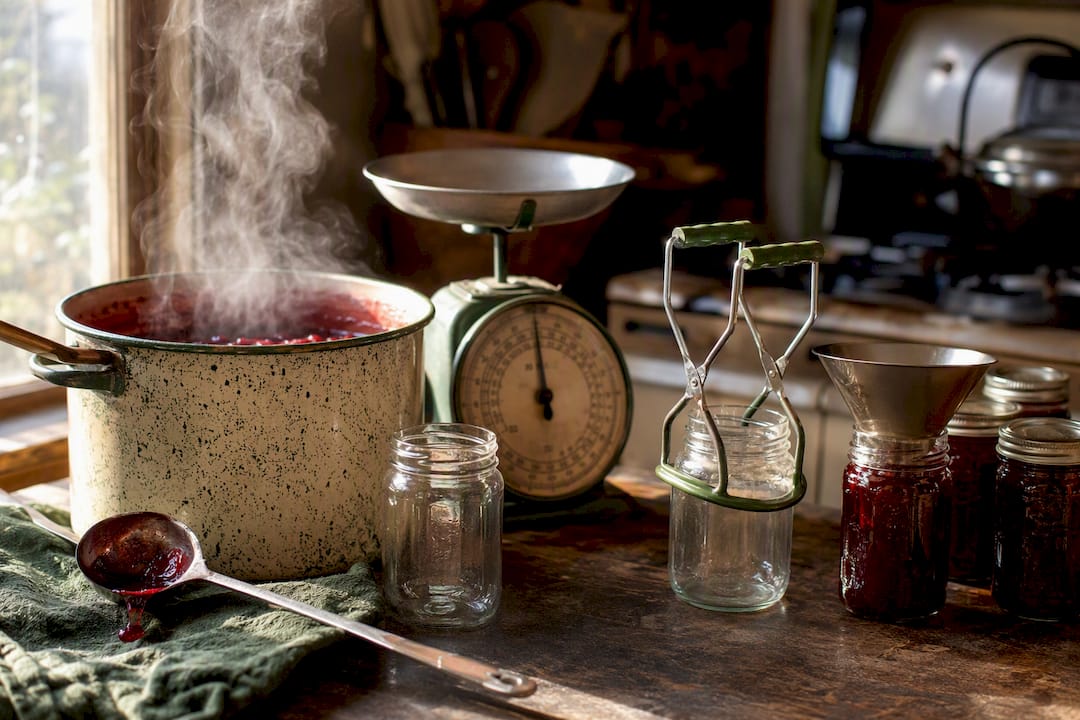
You don't need a commercial kitchen to start selling jam, but you do need the right handful of tools done correctly. A large stainless preserving pot, a calibrated candy or digital thermometer, an accurate kitchen scale, a water-bath canner or a deep pot with a rack, wide-mouth funnels, a ladle, and jar lifter cover the actual canning process. Add a decent label printer or a local print shop relationship, and you're equipped for legitimate production.
Startup costs for most home jam makers land in a modest range, typically covering jars, lids, a scale, a thermometer, and a basic canner setup, according to public startup guides for cottage food businesses. This cost level is much lower than that of a commercial buildout, making jam a common first product for home food entrepreneurs.
A few operational habits pay off early, including deciding on a lingonberry jam flavor among your lineup to attract customers:
- Batch in consistent sizes so your costing and timing stay predictable week to week.
- Build a cleaning and sanitizing routine into your schedule, not as an afterthought after a long cooking session.
- Buy jars and lids in bulk once you know your flavor lineup, since per-unit cost drops meaningfully at larger case quantities.
- Keep a simple inventory count so you know exactly what's sitting on your shelf before your next market or online listing goes live.
Setting Up to Sell Jam Online, Step by Step
Once your legal groundwork is solid, the online setup itself is straightforward. Start by deciding your model: a local marketplace like Harvest Hub for pickup-based orders, a simple storefront tool if your state allows broader online sales, or full direct-to-consumer shipping only if your cottage food law explicitly permits it. Most new sellers start local, because community marketplaces reduce the discovery problem that sinks a lot of standalone websites before they ever get traffic.
From there:
- Create a listing for each flavor with size, price, and a short, honest description, including your cottage food disclaimer.
- Set clear pickup windows, since most cottage food rules favor local handoff over shipping.
- Connect a payment method that settles quickly, whether that's a marketplace's built-in checkout or a standalone payment processor.
- Draft two or three short customer message templates: order confirmation, pickup reminder, and a simple thank-you that invites a review.
- Package for the handoff, not for a truck. Local pickup means you can skip heavy shipping insulation and focus on a clean, presentable jar.
Handle refunds the same way any small food seller should: replace or refund a broken jar without argument, and log the incident in case it points to a packaging problem worth fixing.
Pro Tip: Your first ten online orders matter more than your first hundred dollars. Ask every one of those early buyers for a quick review. A handful of honest reviews on a verified profile does more for your next fifty sales than any ad spend would.
Harvest Hub's Take on Selling Jam Locally Online
A digital farm stand on Harvest Hub works the way a good market table does, just open every day instead of one Saturday morning a month. You create a profile, list your jam by flavor and size, set the pickup windows that work for your kitchen schedule, and buyers browsing nearby discover you through map search or category browsing instead of stumbling on a random social post.
The trust layer is what makes a stranger click "order" from someone they've never met. Verified profiles and real reviews from neighbors do a lot of the persuasion work a brand-new standalone website simply can't do on day one, since there's no history behind it yet. A jam seller like Elderberry Edibles CSA & Market Garden shows how a small producer profile builds that credibility through consistent listings and buyer follows over time.

A reasonable first-month workflow: list two or three flavors, set two pickup windows a week, respond to every order and message quickly, and ask each buyer to leave a review once the jar is in hand. That cadence is enough to start building the local reputation that turns a first sale into a repeat customer.
What the Data Actually Tells Home Jam Sellers
Most advice on selling jam online focuses on marketing tactics: better photos, catchier labels, an Instagram strategy. That's not wrong, but it's not where new sellers actually fail. They fail on the boring stuff first: not checking their state's cottage food rules before printing labels, or pricing a jar at $5 because that's what felt fair instead of what the real labor and packaging cost demanded.
The overlooked lesson here is that legal compliance and pricing math aren't obstacles standing between you and sales. They're the foundation that makes sales sustainable past the first few markets. A gorgeous label on a jar priced below cost still puts you out of business in a year. A plain jar with the right pH, the right disclaimer, and a price that accounts for your actual hour of labor keeps you in business long enough to build the reputation that eventually lets you charge more.
If you're starting today, do the unglamorous work first: read your state's cottage food page, run your recipe against a tested source, and build your cost sheet before you build your Instagram grid. The marketing gets easier once the fundamentals are actually correct.
— Sheldon
Start Selling Jam Locally With a Digital Farm Stand
Harvest Hub gets your jam in front of local buyers without the months of website building or the shipping-rule guesswork that trips up new sellers trying to go fully direct-to-consumer. You skip the cold-start problem of a brand-new storefront with zero traffic, because buyers are already browsing nearby farm stands for exactly what you're making.
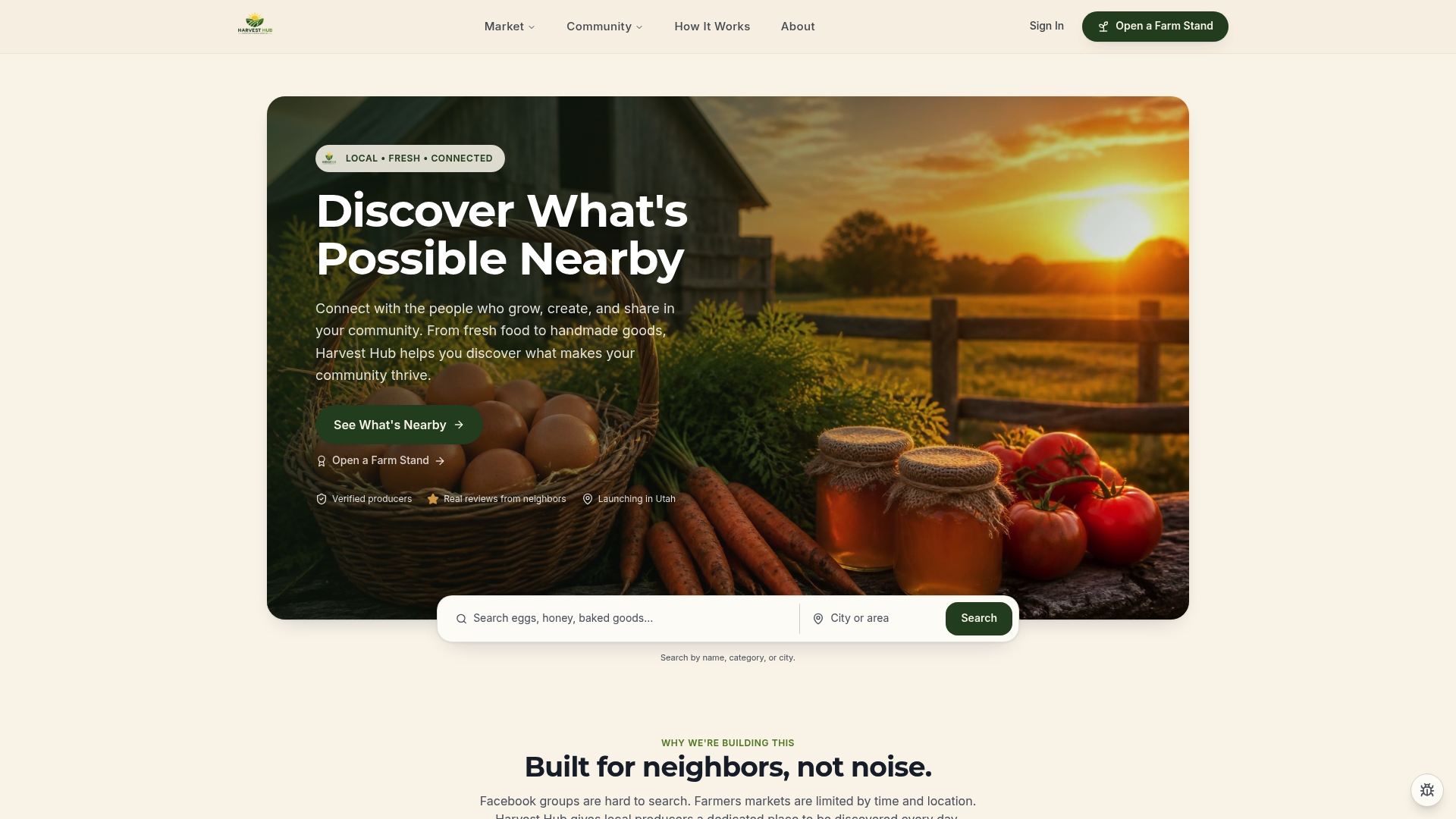
Setting up takes an afternoon, not a launch plan. Open a farm stand, upload your first few jam listings with sizes and prices, and set the pickup windows that fit your kitchen schedule. Verified profiles and buyer reviews start working for you from your very first sale, building the local trust that usually takes a solo website months to earn. If you want to see the subscription tiers that unlock added visibility and analytics as you grow, the Harvest Hub pricing page lays out the options. Ready to get your jars in front of neighbors this week? Open your farm stand and list your first batch today.
Where to Verify the Details
For tested jam recipes and safe processing steps, go straight to the National Center for Home Food Preservation, the standard reference extension offices point to nationwide. For a full walkthrough of sterilization and water-bath timing, Virginia Cooperative Extension's jam and preserves guide is worth bookmarking regardless of which state you sell in.
Sources
- National Center for Home Food Preservation (NCHFP)
- Virginia Cooperative Extension — How to prepare jam and preserves (FST-301)
- Start online food business home guide (EcommerceWebsiteCreate)