
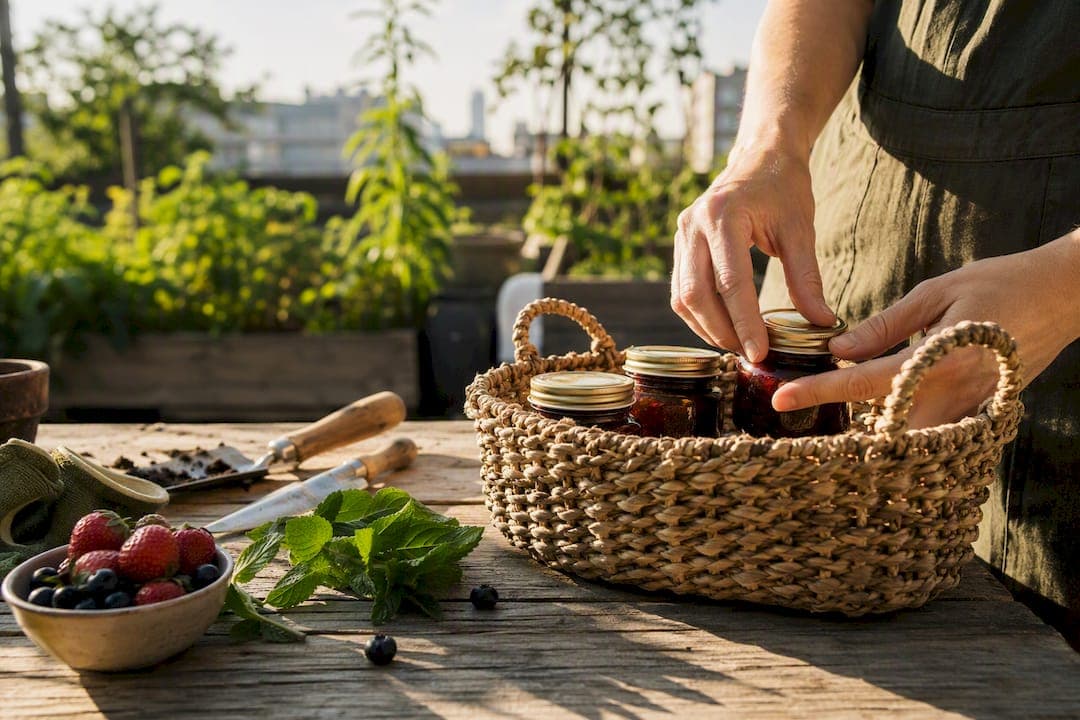
Yes, you can sell food on Etsy if your product qualifies as shelf-stable, complies with your state's cottage food law, and carries proper labeling. Etsy permits a wide range of food and edible items, but the platform puts the entire compliance burden on you. Etsy will not check your permit status, your labels, or your state's sales cap before your listing goes live.
Before you build a single listing, run through this:
- Confirm your specific product (not just the category) is permitted under your state's cottage food law.
- Nail down the labeling and allergen disclosures your state and the FDA require.
- Check whether your state allows you to ship out of state, since some cottage food laws restrict sales to in-state buyers only.
Etsy's role stops at hosting your storefront. Everything legal is on you.
Key Takeaways
Selling food on Etsy legally comes down to matching your product to your state's cottage food law before you ever touch a listing template.
| Point | Details |
|---|---|
| Confirm legality first | Check your state's cottage food law for allowed items, sales caps, and interstate shipping rules before listing. |
| Label everything correctly | Include ingredient list, allergen declaration, net weight, and any required cottage food disclosure statement. |
| Budget for Etsy's real fees | Combined listing, transaction, and payment processing fees run roughly 10 to 12% of each sale. |
| Ship only shelf-stable food | Reserve perishable or refrigerated items for local delivery or pickup instead of standard carriers. |
| Consider a local channel too | Harvesthub gives producers a pickup-friendly farm stand for neighbors who don't want to pay shipping. |
Table of Contents
- Which Foods Can You Sell on Etsy?
- What Does a Legal Compliance Checklist Look Like?
- How Do You Set Up an Etsy Shop for Food?
- How Should You Ship Food Safely?
- When Is Etsy the Wrong Fit for Your Food Business?
- What I'd Tell a First-Time Seller
- A Local Alternative Worth Running Alongside Etsy
- Sources
Which Foods Can You Sell on Etsy?
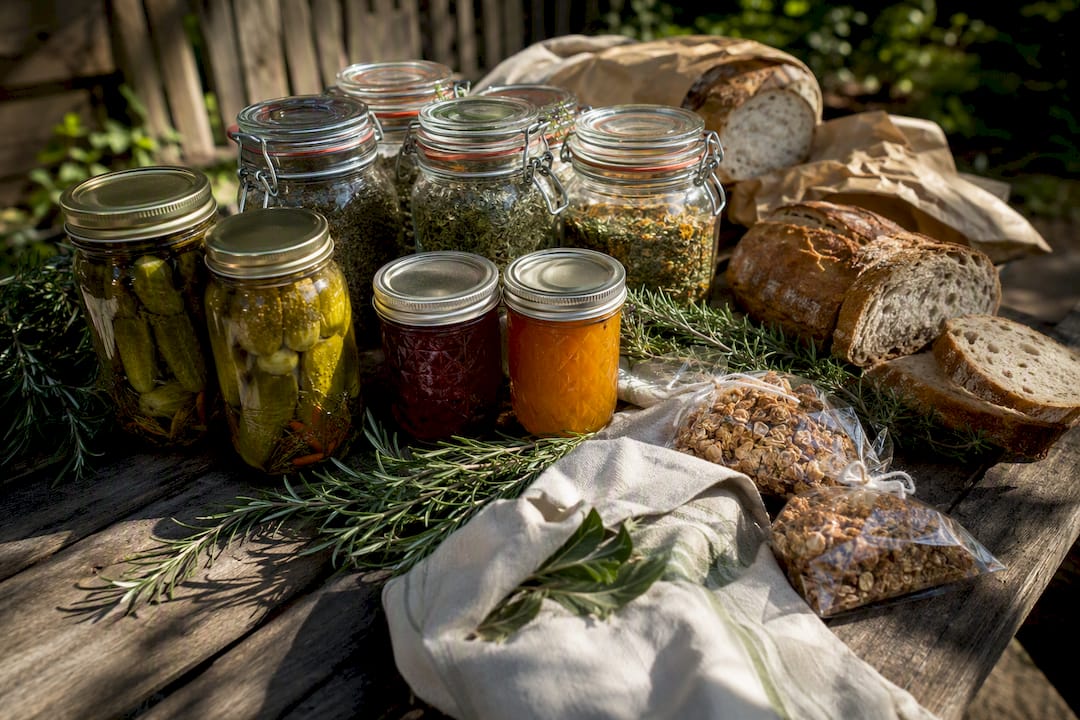
Shelf-stable, low-risk foods are the easiest path. Jams and jellies, baked goods like cookies and shelf-stable breads, dry spice blends, granola, dry baking mixes, hard candy, and infused honey all fit the profile Etsy generally welcomes and most state cottage food laws cover without a commercial kitchen requirement.
Other categories look simple but trigger commercial licensing almost everywhere. Refrigerated items, fresh dairy products, low-acid canned vegetables, home-canned salsas without verified pH testing, alcoholic products, and most meat or poultry products fall outside typical cottage food exemptions because of botulism or spoilage risk. A soft cheese or a bottled salsa without a lab-tested pH level can put you outside legal cottage food territory even if the recipe is delicious and the kitchen is spotless.
Common categories that usually work:
- Jams, jellies, and fruit preserves
- Cookies, cakes, and shelf-stable baked goods
- Spice blends, dry rubs, and seasoning mixes
- Granola, trail mix, and dry snack mixes
- Infused honey and shelf-stable syrups
- Hard candy and some confections
Categories that usually need a commercial permit:
- Refrigerated or frozen prepared foods
- Fresh dairy, including soft cheeses
- Low-acid canned goods
- Alcohol-infused or alcoholic products
- Cured or smoked meats
Pro Tip: Before you commit to a product line, search "[your state] cottage food law list" and look for the actual document from your state's department of agriculture or health, not a summary blog post. State lists change, and a spice blend allowed in Ohio might require a permit in California.
What Does a Legal Compliance Checklist Look Like?
Every state runs cottage food law differently, so start with the source document, not a general Etsy article. Search your state's department of agriculture or health website directly.
- Pull your state's cottage food law and read for five specifics: allowed food categories, whether you need a home kitchen inspection, allowed sales channels (some states bar online or shipped sales entirely), whether interstate shipping is permitted, and your annual gross sales cap.
- Build your label around five required elements: the product's common name, net weight or volume, a complete ingredient list in descending order by weight, an allergen declaration covering the FDA's major allergens, and your business name and address. Many states also require a specific cottage food disclosure statement printed on the label, something like "Made in a home kitchen not inspected by the state."
- Determine whether you've outgrown cottage food status. If your product needs refrigeration, your state caps your sales below what you're doing, or you want to sell wholesale or across state lines, you likely need a licensed commercial kitchen and a health department permit.
- Get food-safety trained. A ServSafe or state-approved food handler course is cheap insurance and, in some states, mandatory before you can register your kitchen.
- Set up basic bookkeeping and a state tax registration so gross sales tracking (which matters for your cottage food cap) isn't a scramble in December.
Two more things worth doing even when they aren't legally mandatory:
- Get your recipe pH-tested by a food scientist if you're making anything acidified, like salsa or pickles.
- Look into product liability insurance, since a single allergic reaction claim can cost more than years of Etsy fees combined.
How Do You Set Up an Etsy Shop for Food?
Pick a shop name that reflects your brand but check whether your state requires a "doing business as" filing if the name differs from your legal name. Etsy asks for your shop location, a bank account for payouts, and billing information for fees. None of this takes more than twenty minutes, but the listing itself is where sales actually get made or lost.
Your listing title should lead with the product and its most searched trait: "Small Batch Blackberry Jam, Homemade, 8oz Jar" beats "Delicious Jam Made With Love." Use all 13 available tags. Etsy's marketplace hosts millions of active sellers, which means vague titles and half-filled tag fields get buried fast.
The first one to two sentences of your description carry the most weight. Lead with what it is, the size, and key attributes (organic, gluten-free, small-batch), then repeat your allergen and storage information clearly. That repetition matters: putting the same clear safety summary on the physical label and in the listing description reduces buyer confusion and doubles as a compliance safety net.
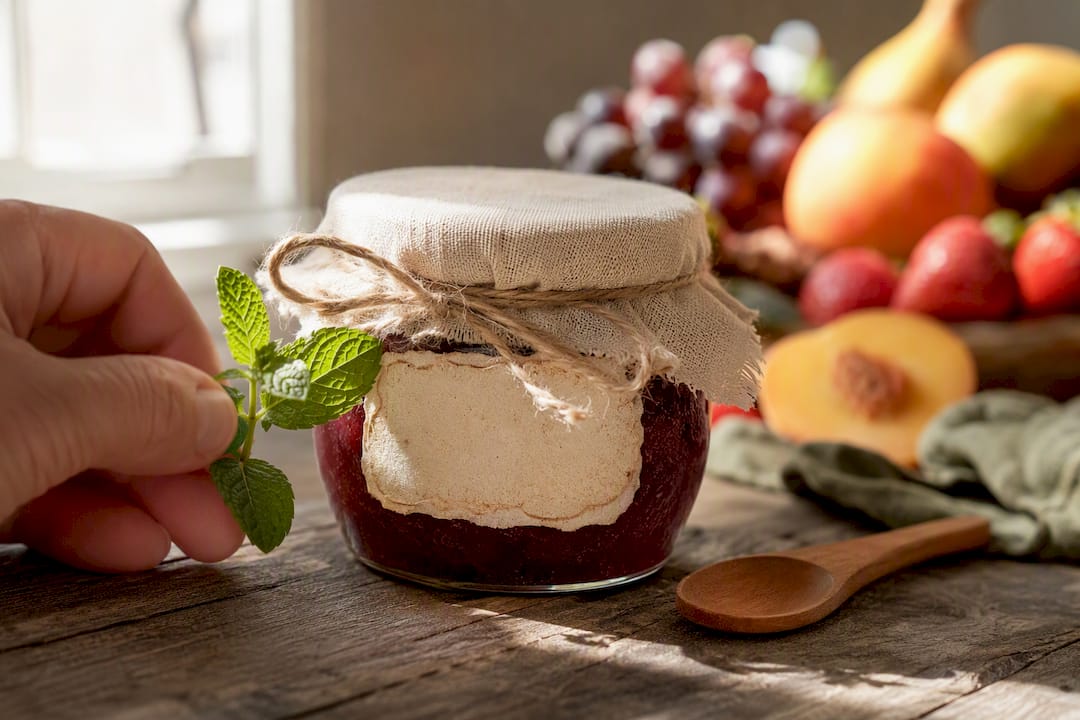
For photos, shoot in natural light, include something for scale (a hand or a coin next to the jar), show the ingredient label clearly, and photograph the actual packaging buyers will receive.
Now the math. Etsy charges a $0.20 listing fee, a 6.5% transaction fee on the total sale including shipping, and payment processing around 3% plus $0.25 per transaction. On a $15 jar of jam with $6 shipping, that stacks up to roughly 10 to 12% of your total sale once every fee is added. Price your product with that math built in, not as an afterthought once orders start rolling in.
Set your processing time honestly. Small-batch food often needs 3 to 5 days, and an accurate window prevents the late-shipment complaints that hurt your shop's standing.
How Should You Ship Food Safely?
Shelf-stable food ships well. Perishable food is a different problem entirely, and shipping it through standard channels without cold packaging is how you end up refunding a customer and eating a bad review.
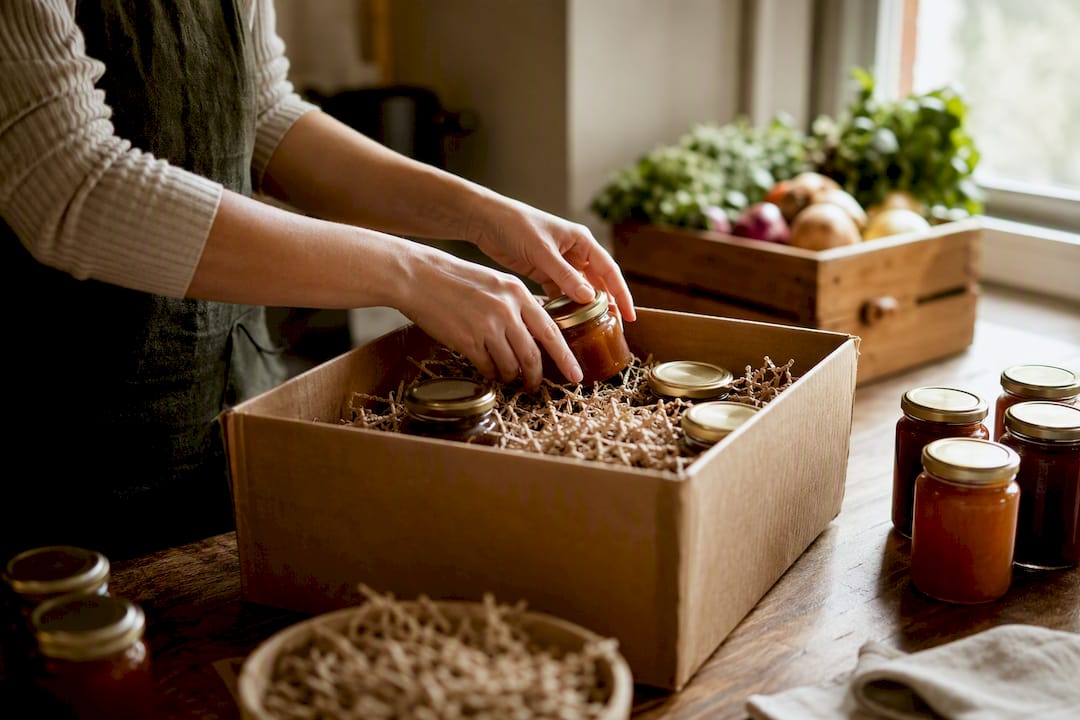
USPS offers guidance specifically for mailing food items, and Priority Mail is generally the practical choice for shelf-stable goods that need to arrive within a few days. Avoid shipping anything that requires refrigeration unless you've built in insulated packaging, gel packs, and a shipping window that guarantees delivery before spoilage risk sets in.
Packaging checklist for food shipments:
- Leakproof inner packaging (double-bag liquids or semi-liquids like honey and syrup)
- Food-grade materials that won't transfer odors or chemicals
- Cushioning to prevent breakage of jars and glass containers
- Tamper-evident seals on anything edible straight from the package
- Clear shelf-life and storage instructions printed on both the label and the listing
Add tracking on every order and consider signature confirmation for higher-value orders, since "it never arrived" disputes are common with food shipments and much harder to resolve without proof of delivery. Write your return policy with food safety in mind: most sellers reasonably don't accept returns of opened perishable items, but do offer replacements for anything damaged in transit.
Pro Tip: If more than half your orders come from buyers within driving distance, local pickup solves your shipping headaches entirely, and it's worth building that option into your sales mix instead of forcing every order through a shipping carrier.
When Is Etsy the Wrong Fit for Your Food Business?
Etsy wasn't built for neighbors finding neighbors. There's no proximity-based discovery, no built-in scheduling for pickup orders, and arranging a local pickup means manually messaging back and forth for every single order. On a $12 loaf of bread, a combined 10 to 12% fee plus shipping costs can also eat more margin than the sale is worth.
Ask yourself three questions before committing Etsy as your only channel:
- Are most of your orders small, local, and recurring, rather than one-time gift purchases from strangers?
- Do repeat customers matter more to your business than new discovery?
- Would a subscription or standing weekly order actually work better than one-off listings?
If your business leans heavily local, Etsy works best as a secondary channel for gift buyers and out-of-state fans, paired with a local marketplace built for pickup and repeat customers.
What I'd Tell a First-Time Seller
Compliance first, always. I've seen too many home bakers build a beautiful shop around a product that their state doesn't actually permit for cottage sale, and that's a fix nobody wants to make after they've already got orders coming in. Get your labels and permits sorted before you touch your listing photos.
Once you're compliant, put your energy into one hero listing rather than spreading effort across ten mediocre ones. Week one is compliance and labels. Month one is getting that single listing live and gathering your first reviews, since organic traffic tends to pick up once a shop has a real review history. Month three is when you decide whether to expand your product line or add a local pickup option alongside Etsy.
— Sheldon
A Local Alternative Worth Running Alongside Etsy
Etsy is a solid channel for shipped, giftable food, but it has no answer for the baker whose real customers live fifteen minutes away and want to swing by every Saturday. That's the gap Harvesthub was built to close.
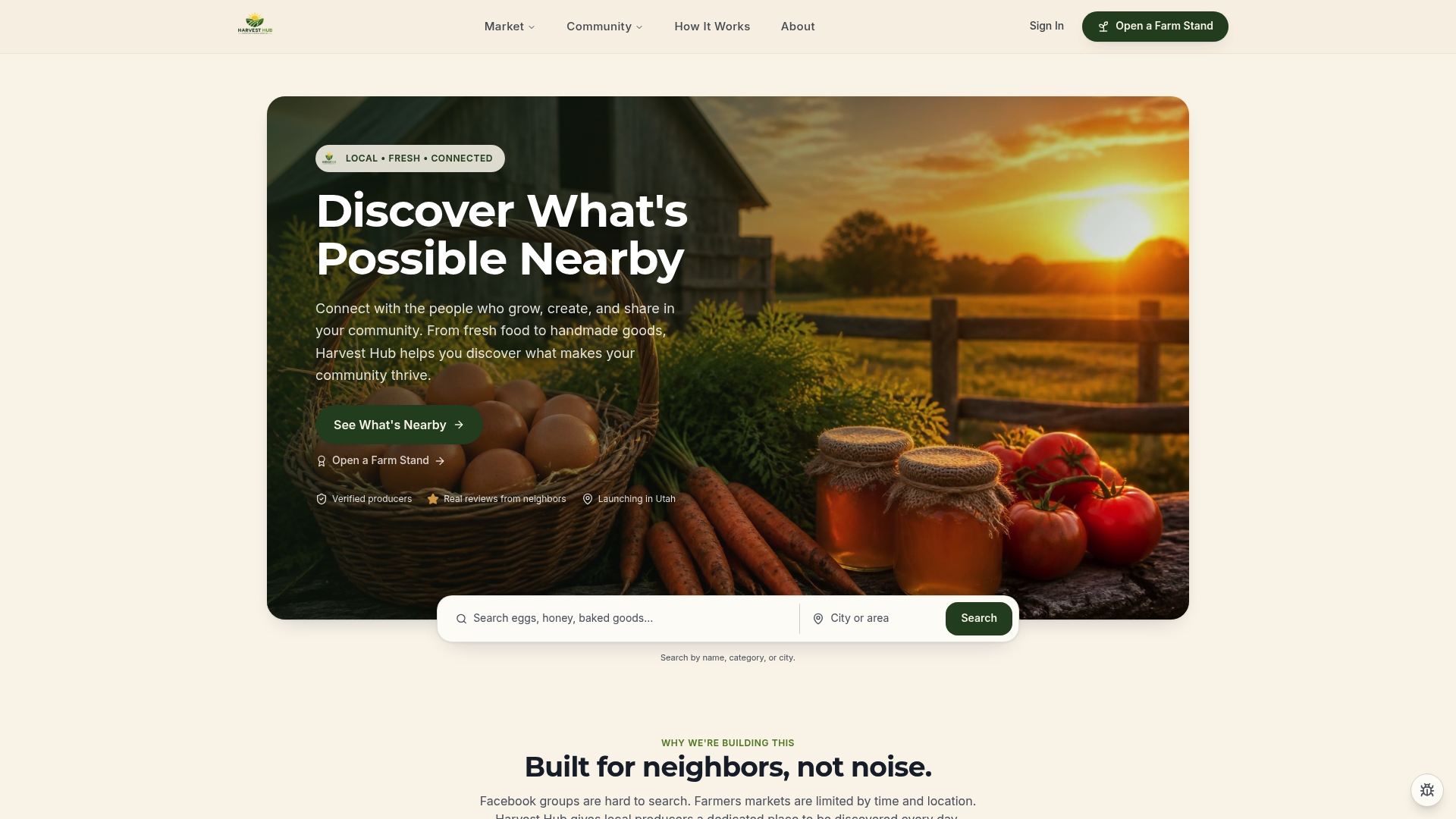
Harvesthub gives local producers a digital farm stand with verified profiles, real neighbor reviews, and pickup scheduling built in, none of which Etsy offers natively. You can see how sellers already present their products on profiles like Moon Farms Country Market or Elderberry Edibles CSA & Market Garden, where repeat buyers follow a farm stand the same way they'd follow a favorite market vendor.
For a lot of small food producers, the strongest setup runs both channels together: Etsy for the shipped jam and cookie orders from people who'll never meet you in person, Harvesthub for the neighbors who want fresh bread every Friday without paying shipping on a loaf. If most of your sales already come from people nearby, Harvesthub can serve as your primary channel from day one. Open a farm stand and see how it fits your product mix.