
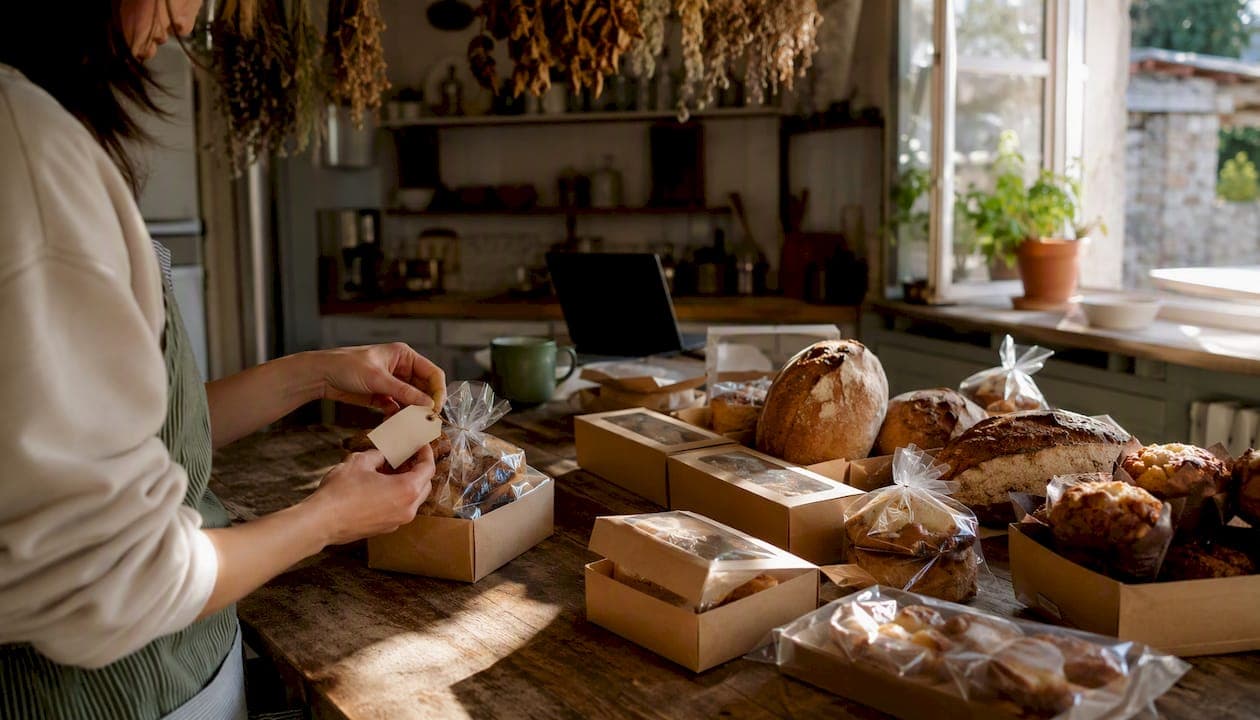
You can sell baked goods online to local customers right now. The first step isn't building a website or buying packaging. It's checking your state's cottage food law, because that single document determines what you can legally sell, where you can sell it, and how much you can earn before you need a commercial kitchen.
Most U.S. states allow home bakers to sell non-potentially-hazardous baked goods (think cookies, breads, brownies, and shelf-stable cakes) directly to consumers without a commercial license. The catch: cottage food rules vary widely by state. Some cap annual revenue at a few thousand dollars; others allow significantly higher amounts. Many states restrict sales to direct-to-consumer only, which means no retail stores and often no shipping. A handful prohibit online sales entirely and require in-person transactions.
Sales tax is a separate question. Most states exempt direct food sales from sales tax, but you may still need a seller's permit or business registration depending on your state. Check your state's Department of Revenue website alongside the cottage food rules.
To verify your state's rules in under five minutes: search "[your state] cottage food law" plus your state's Department of Agriculture or Health website. Save the URL. That page is your legal foundation.
Key Takeaways
Selling baked goods online as a home baker comes down to three things done in the right order: confirm your legal footing, set up a simple order system, and market locally before you think about scaling.
| Point | Details |
|---|---|
| Check cottage food law first | Verify your state's allowed products, revenue cap, and venue rules before taking any paid order. |
| Start with 3–5 products | A tight menu reduces waste, simplifies pricing, and lets you batch efficiently from day one. |
| Price for full cost recovery | Include ingredients, packaging, overhead, and your hourly labor rate — not just ingredient cost. |
| Use pre-orders to reduce waste | Pre-orders tell you exactly what to bake and eliminate the risk of unsold inventory. |
| Harvesthub for local reach | Create a digital farm stand on Harvesthub to reach local buyers with pickup scheduling and verified reviews. |
Table of Contents
- What does a 30-day plan to start selling baked goods online look like?
- Where should you sell baked goods, and which channel fits your situation?
- What legal steps do you need to take before selling baked goods from home?
- How do you price baked goods for profit and package them for safe pickup?
- How do you take orders, accept payments, and manage pickup and delivery?
- How do you write product listings that actually get customers to buy?
- How do you find local customers and keep them coming back?
- Where do you find official state cottage-food rules fast?
- What new home bakers usually get wrong (and how to avoid it)
- Harvesthub gives local bakers a ready-made community to sell into
- Authoritative resources to bookmark
- Sources
What does a 30-day plan to start selling baked goods online look like?
A tight, ordered checklist beats a sprawling business plan when you're starting out. Here's a five-step sequence that gets you to a first paid order within 30 days.
-
Week 1, Days 1–3: Confirm your legal status. Pull up your state's cottage food law (your state's Department of Agriculture or extension office is the fastest source). Record the allowed product list, revenue cap, labeling requirements, and venue restrictions. This takes 30–60 minutes and protects everything that follows.
-
Week 1, Days 4–7: Lock in your product line. Pick 3–5 items you can make consistently and that ship or hold well for local pickup. Cookies, brownies, quick breads, and biscotti are reliable starters. Avoid anything requiring refrigeration at this stage — most cottage food laws disqualify it anyway. A tight menu reduces ingredient waste and lets you batch efficiently.
-
Week 2: Price every item. Use the full cost formula (ingredients + packaging + overhead + your hourly labor rate, multiplied by your target markup). Underpricing is the most common early mistake. If your numbers feel uncomfortable, they're probably right.
-
Week 2–3: Choose one sales channel and set it up. A simple online storefront with pickup scheduling and built-in payments is the lowest-friction starting point for most local bakers. A local marketplace like Harvesthub, a farmers market table, or a link-in-bio order form all work. Pick one and get it live before you worry about the others.
-
Week 3–4: Take your first paid order. Announce to your neighborhood group, post on Instagram, or set up a pre-order drop. Pre-orders are worth prioritizing here: they tell you exactly what to bake, reduce waste, and confirm real demand before you spend money on ingredients.
Why pre-orders matter: A pre-order model means you bake what's already sold. That's a fundamentally different cash-flow position than baking a full batch and hoping it sells. Starting with 10–15 pre-orders at a farmers market or through a local platform validates your product line before you scale anything.
Where should you sell baked goods, and which channel fits your situation?
There's no single right answer here. The best channel depends on your product mix, how much time you have, and whether you want to ship or stay local. Most successful home bakers start with one channel and add a second once the first is running smoothly.
Local marketplace (community farm-stand style)
Platforms built for local producers let you list items, set pickup windows, and connect with neighbors who are already looking for local food. Harvesthub is built exactly for this: a digital farm stand where buyers in your area can find your baked goods, read verified reviews, and schedule pickup. The setup cost is low, and you're reaching people who specifically want to buy local rather than browsing a national marketplace.
Your own online storefront
A standalone store (built on platforms like Squarespace or a simple order form) gives you full control over branding and customer data. The tradeoff is that you're responsible for all your own traffic. Practical setup steps for a home bakery storefront include building your product pages, connecting a payment processor, and configuring local pickup or delivery options. This works well once you have an existing audience to drive to it.
Social media and DM orders
Instagram and Facebook are free and effective for local discovery, but managing orders through DMs gets chaotic fast. A better approach: use social posts to drive traffic to a single order link, not to collect orders in comments. This keeps your order flow organized and reduces the chance of missed or double-booked orders.
Farmers markets and pop-ups
Markets are often the fastest route to early sales and real customer feedback. You learn quickly what sells, what's priced wrong, and what customers actually want. The overhead is low, and the face-to-face interaction builds trust faster than any online listing. The downside: you're tied to a fixed schedule and location.
Retail and wholesale partnerships
Selling to a local coffee shop or boutique grocery is appealing, but it requires consistent volume, commercial-kitchen compliance in most states, and pricing that leaves margin for the retailer. This is a later-stage move, not a starting point.
Start local-first. Pre-orders plus a local pickup window require the least infrastructure and the lowest legal risk. Add a second channel once your first 20–30 orders have taught you your actual production capacity.
What legal steps do you need to take before selling baked goods from home?
Legal compliance isn't optional, and misunderstanding cottage food rules — especially around refrigerated items — is one of the most common reasons home bakeries close early. Here's what to verify before you take a single paid order.
Cottage food law basics
Cottage food laws allow home bakers to sell certain non-potentially-hazardous foods without a commercial kitchen license. Allowed products typically include cookies, cakes, breads, muffins, brownies, candies, and jams. Items that require refrigeration (cream-filled pastries, cheesecakes, anything with fresh dairy or meat) are almost universally excluded. Sales are usually limited to direct-to-consumer, meaning you sell directly to the end buyer, not through a retailer.
Revenue caps exist in many states. Some are as low as $5,000 annually; others have no cap at all. Exceeding the cap usually means you need a licensed commercial kitchen, not that you simply stop selling. Shipping restrictions are common: many states prohibit mailing cottage food products across state lines, and some prohibit online sales entirely unless the transaction is completed in person.
Permits and registrations to expect
- Cottage food registration or permit: Some states require a simple registration form and fee; others require nothing beyond following the law.
- Food handler's permit: Many states require at least one person in the household to hold a food handler's certificate. These are typically available online for $10–$25.
- Local business license: Your city or county may require a general business license regardless of your state's cottage food rules.
- Sales tax permit: If your state taxes food sales (most don't for direct food sales, but check), you'll need to register with your state's Department of Revenue.
- Commercial kitchen: Required if you exceed your state's revenue cap, sell wholesale to retailers, or make products that don't qualify under cottage food rules.
Labeling and allergen requirements
Most cottage food laws require a label on every product that includes: your name and address, the product name, a full ingredient list, a net weight or count, and a statement that the product was made in a home kitchen not inspected by the state. Federal allergen labeling rules (milk, eggs, wheat, peanuts, tree nuts, soy, fish, shellfish, and sesame) apply even at the cottage food level. Print labels at home or use a service like Avery or Canva.
State-specific verification checklist:
- Find your state's cottage food statute (search "[state] cottage food law" + your state's Department of Agriculture website)
- Record: allowed product list, revenue cap, labeling requirements, permitted sales venues, and any online/shipping restrictions
- Screenshot or print the relevant page and save the URL
- Call your county health department and ask three questions: (1) Do I need a permit to sell cottage food in this county? (2) Are there any local restrictions beyond the state law? (3) What inspections, if any, apply to my home kitchen?
State extension offices publish practical, state-specific guidance and checklists for home food businesses. The University of Missouri Extension's G6221 publication is a solid example of the kind of actionable, state-level guidance these offices provide. UMass Nutrition and Oregon State's extension resources offer food-safety guidance and links to training programs as well.
How do you price baked goods for profit and package them for safe pickup?
Pricing is where most home bakers leave money on the table. The fix is a simple formula applied consistently, not guesswork.
The pricing formula
Total cost = ingredient cost + packaging cost + overhead (utilities, equipment wear) + labor (your hourly rate × hours spent)
Labor is the piece most bakers forget entirely.
Example: a dozen chocolate chip cookies
Example: one loaf of sourdough bread
If those numbers feel high, compare them to what artisan bakeries charge. A $24 sourdough loaf is standard in most U.S. cities. Underpricing doesn't attract better customers; it just makes the business unsustainable.
Packaging checklist by product type
Cookies and bars: Rigid-bottom box or kraft window box, tissue paper lining, heat-seal or sticker closure. Avoid plastic clamshells for anything with a delicate top coating.
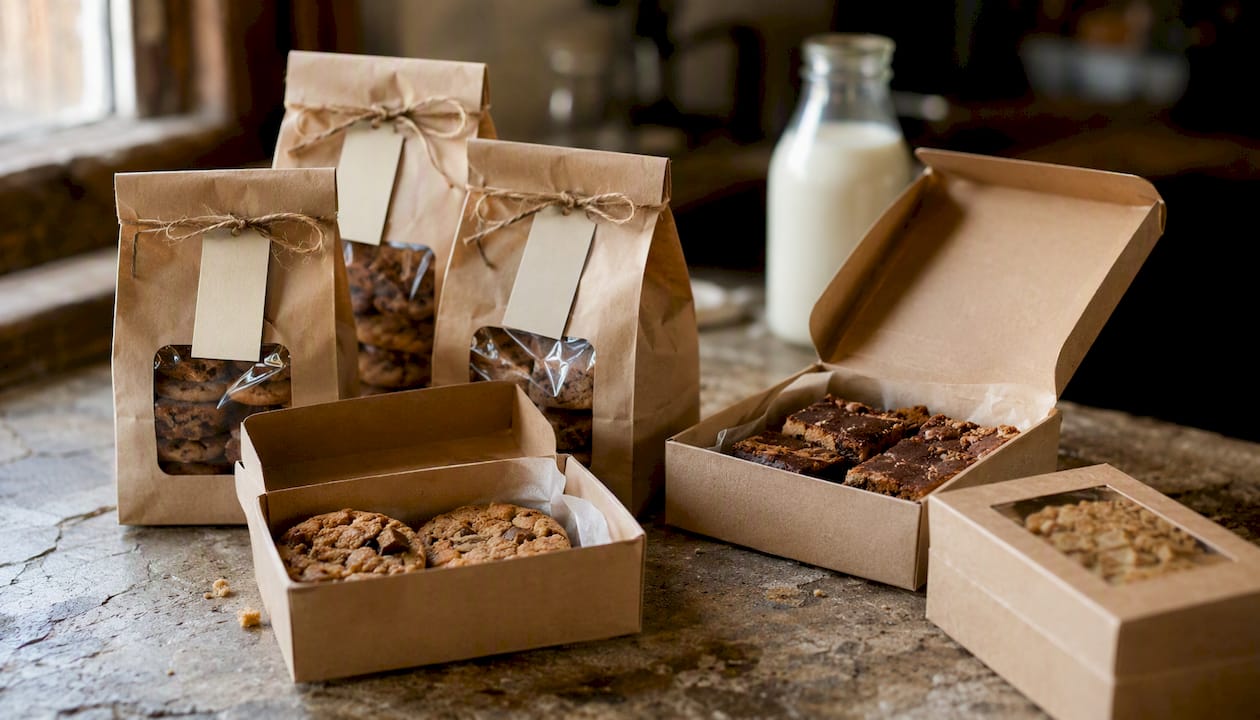
Loaves and quick breads: Cellophane or poly bread bag, twist tie or heat seal, paper label with allergen info. For gifting, a kraft box with a window works well.
Cakes and layer cakes: Cake board inside a cake box, corner supports for taller cakes, and a clear lid for visibility. Never stack anything on top.
Fragile items (macarons, decorated cookies): Individual cavity trays or bubble wrap inserts, rigid outer box, and a "fragile" label if handed off to a courier.
Pro Tip: For short local deliveries, a small insulated bag with a reusable ice pack keeps butter-based items from softening in summer heat. A non-slip mat in the car trunk prevents sliding. These two additions eliminate most delivery damage complaints.
Shelf-life labeling is both a legal requirement and a customer service move. Include a "best by" date on every item. Cookies and brownies typically hold 5–7 days at room temperature; most breads hold 3–5 days. Refrigeration instructions should appear on anything that benefits from it, even if the item doesn't require it for safety.
How do you take orders, accept payments, and manage pickup and delivery?
A clear order workflow prevents the two most common operational headaches: no-shows and double bookings.
Pre-orders vs. walk-up sales
Pre-orders are the better default for home bakers. You know exactly what to bake, when to bake it, and how much to buy. Walk-up sales work at markets but require you to overbake and accept some waste. The practical middle ground: take pre-orders for your weekly drop, then bring a small number of extras to a market or leave them available as "add-ons" for existing customers.
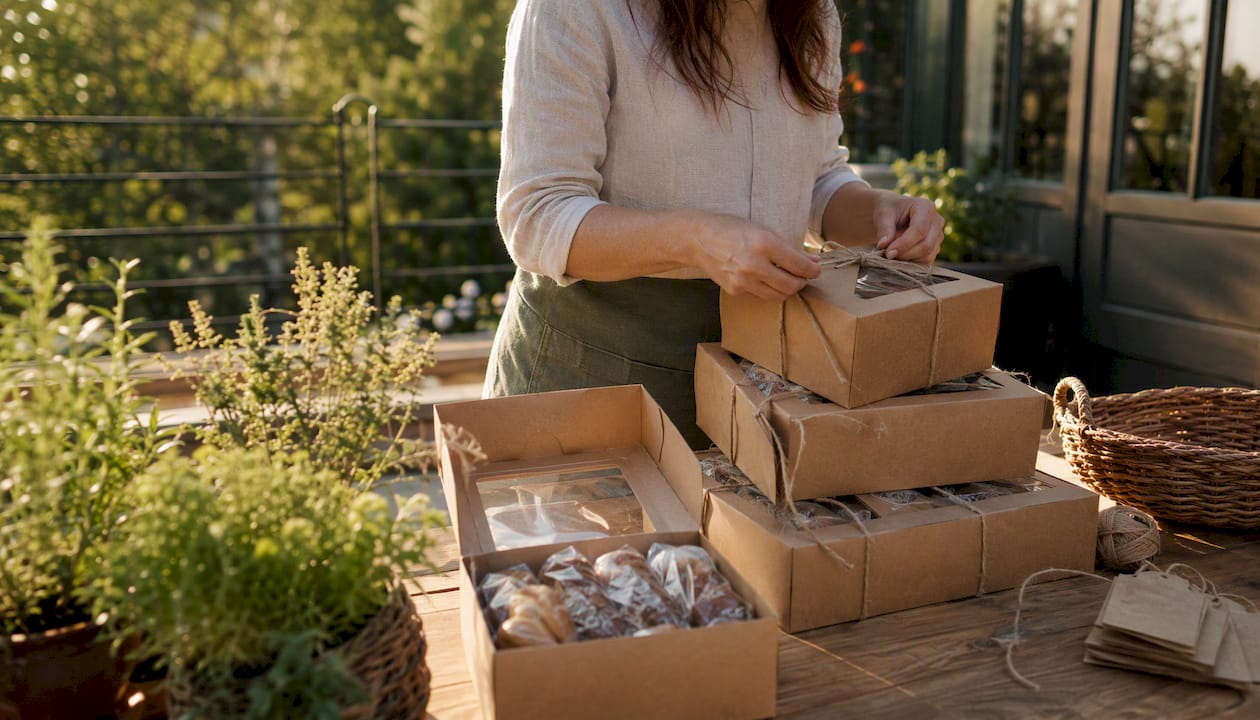
A simple order flow:
Order received → Confirmation sent with pickup window → Bake list finalized → Item ready notification sent → Customer picks up or delivery dispatched → Payment confirmed
Payment options
- Online checkout: Square, PayPal, or Stripe embedded in your storefront or sent as a payment link. Customers pay before pickup, which eliminates no-shows almost entirely.
- POS at markets: Square Reader or Clover Go for card payments at a booth. Both accept tap-to-pay and chip cards.
- Invoicing: Wave or PayPal invoices work for wholesale or large custom orders.
- Venmo/Cash App: Fine for trusted regulars, but don't rely on them for new customers. No payment protection and no order record.
Requiring payment at the time of order is the single most effective way to reduce no-shows. A customer who has already paid will show up or ask to reschedule. One who hasn't paid will sometimes just not appear.
Pickup scheduling
Set specific pickup windows rather than "anytime." Two 90-minute windows per week (say, Thursday 4–5:30 PM and Saturday 10–11:30 AM) are easier to manage than open-ended availability. Use a simple scheduling tool like Calendly or a Google Form with time-slot options to let customers self-select. Require a confirmation reply 24 hours before pickup.
Local delivery
For in-house delivery, route-planning apps like Google Maps or Circuit help you batch stops efficiently. Charge a flat delivery fee ($3–$6 is typical for local orders) or set a minimum order for free delivery. For higher volume, partnering with a local courier or a community driver (someone who already drives a regular route in your area) can extend your reach without adding hours to your day. Be clear about delivery windows in your listing so customers know when to expect their order.
How do you write product listings that actually get customers to buy?
A great photo and a clear description do most of the selling. Here's what each listing needs.
Photography basics
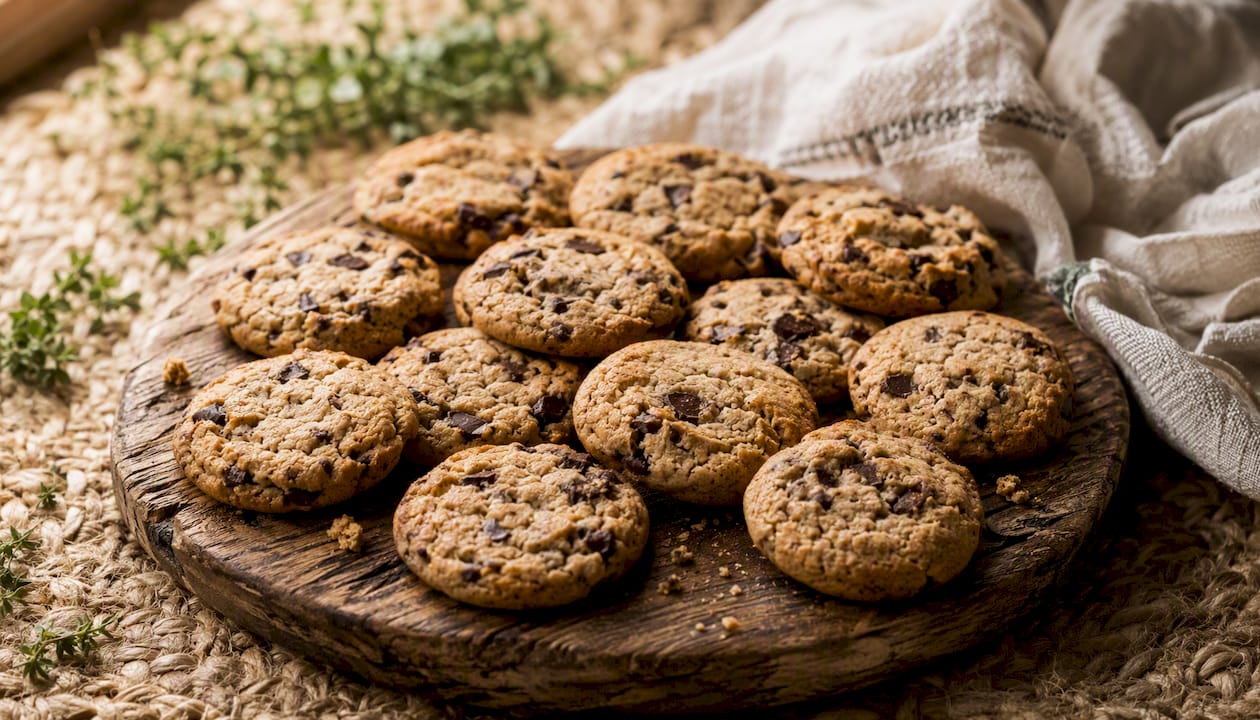
Natural light is your best tool. A window on an overcast day gives soft, even light with no harsh shadows. Shoot from directly above (flat lay) or at a 45-degree angle. Use a simple background: a white cutting board, a piece of linen, or a wooden surface. One hero shot plus one close-up of texture is enough for most listings. Your phone camera is fine; the light matters more than the equipment.
Listing template
Title: [Flavor/variety] + [product type] + [key differentiator or size] Example: "Brown Butter Chocolate Chip Cookies — Dozen, Pickup Available Thursday"
Selling line: One sentence that leads with flavor or texture, not just the name. Example: "Crispy edges, chewy centers, and a hint of toffee from browned butter."
Ingredient/allergen note: List the top 8 allergens present. Keep it short. Example: "Contains wheat, eggs, dairy, and soy. Made in a kitchen that also handles tree nuts."
Serving size and storage: "Serves 4–6. Best within 5 days at room temperature; freeze for up to 3 months."
Pickup/ordering note: "Pre-orders close Wednesday at noon for Thursday pickup, 4–5:30 PM."
Scarcity and availability cues
Batch counts work. "Only 8 boxes available this week" is honest and creates urgency without manipulation. Scheduled drops (a weekly or biweekly release of a specific item) build anticipation and train customers to check back. Made-to-order items should be clearly labeled as such, with a lead time stated upfront.
For local SEO in your descriptions, include your city or neighborhood name plus the product type: "fresh-baked sourdough in [City], available for local pickup." This helps your listing surface when someone nearby searches for what you make.
How do you find local customers and keep them coming back?
The most effective marketing for a home bakery is also the cheapest: show up consistently in the places your neighbors already look.
Tactics that actually move the needle for local bakers:
- Farmers markets and pre-order pickups: The fastest way to build a local customer base. Bring samples, collect emails at the booth, and hand out a card with your order link.
- Instagram and a link-in-bio order page: Post process shots and finished product photos 3–4 times per week. Your bio link should go directly to your order form or storefront, not your homepage.
- Neighborhood Facebook groups and Nextdoor: A single post announcing your weekly drop can reach hundreds of neighbors for free. Be genuine, not salesy.
- Email or text list: Ask every customer for their email or phone number at pickup. A simple weekly text ("This week's drop: lemon bars and sourdough, order by Wednesday") drives repeat sales better than any ad.
- Local partnerships: Coffee shops, gift shops, and yoga studios are often willing to display a small card or flyer for a local maker. Some will even carry a small consignment of packaged goods.
Marketing your online bakery business through targeted social posts, email lists, and community partnerships is a proven combination for building local awareness and driving pre-orders.
Repeat-customer strategies: Subscription boxes (a monthly assortment, pre-paid) lock in revenue and reduce planning uncertainty. A simple punch card (buy 5 dozens, get one free) works at markets. Scheduled weekly drops with a consistent release time train customers to check in regularly.
Metrics worth tracking: repeat purchase rate (what percentage of customers order again within 60 days), average order value, and how many social followers convert to actual orders after a post. These three numbers tell you more than follower count or likes.
A simple 12-week marketing calendar:
- Weeks 1–2: Set up your order link and post your first product photo. Announce in one neighborhood group.
- Weeks 3–4: Run your first pre-order drop. Collect emails from every buyer.
- Weeks 5–6: Post behind-the-scenes content (baking process, packaging). Send your first email to your list.
- Weeks 7–8: Introduce a second product. Ask satisfied customers for a review or testimonial.
- Weeks 9–10: Partner with one local business for a cross-promotion or flyer placement.
- Weeks 11–12: Review your repeat rate and average order value. Double down on what's working.
Where do you find official state cottage-food rules fast?
Start with three sources, in this order:
1. Your state's Department of Agriculture website. Search "[your state] Department of Agriculture cottage food" and look for a page titled something like "Cottage Food Operations" or "Home Food Processing." This is the primary legal source.
2. Your state's extension service. Extension offices publish practical, state-specific guidance and checklists for home food businesses. They translate the legal language into plain English and often include a list of allowed products, labeling templates, and links to the relevant statute.
3. Your county health department. State law sets the floor; counties sometimes add requirements. A five-minute phone call confirms whether your county requires any additional registration or inspection.
Verification workflow: Find the relevant statute or guidance page. Copy the URL and the key details: allowed product list, revenue cap, permitted sales venues, labeling requirements, and any online/shipping restrictions. Screenshot or print the page. Save it in a folder labeled with the date you checked. Rules change, so re-verify annually or whenever you hear about a legislative update in your state.
Three questions to ask your county health department when you call:
- Do I need a county permit or registration to sell cottage food in addition to the state requirement?
- Are there any local zoning or home-occupation rules that affect selling food from my home?
- If I sell at a farmers market in this county, does the market require any additional documentation from me?
What new home bakers usually get wrong (and how to avoid it)
Most home bakers who struggle in their first few months aren't struggling because their baking is bad. They're underpricing, taking orders through Instagram DMs with no system, and trying to offer 15 products at once instead of mastering three.
The income reality: a home bakery operating under cottage food rules is unlikely to replace a full-time income in year one. What it can do is generate meaningful side income, build a loyal local customer base, and teach you whether a full-scale bakery business is something you actually want. Starting with pre-orders at a farmers market, as the Side Hustle School guides recommend, is a genuinely low-risk way to test demand before you spend money on packaging, a website, or a commercial kitchen rental.
The product-line reality: a tight menu of three to five items you can make in your sleep is more profitable than a sprawling menu that requires you to buy 40 different ingredients. Customers don't need variety from a single baker. They need reliability and quality.
The order-system reality: the moment you take more than five orders a week, you need a real system. A shared Google Sheet, a simple order form, or a platform with built-in order management will save you from the chaos of tracking orders in your phone's notes app. Set it up before you need it.
Harvesthub gives local bakers a ready-made community to sell into
Home bakers who want to sell locally without building an audience from scratch have a real alternative to national marketplaces: Harvesthub, a community platform built specifically for local producers and the neighbors who want to buy from them.
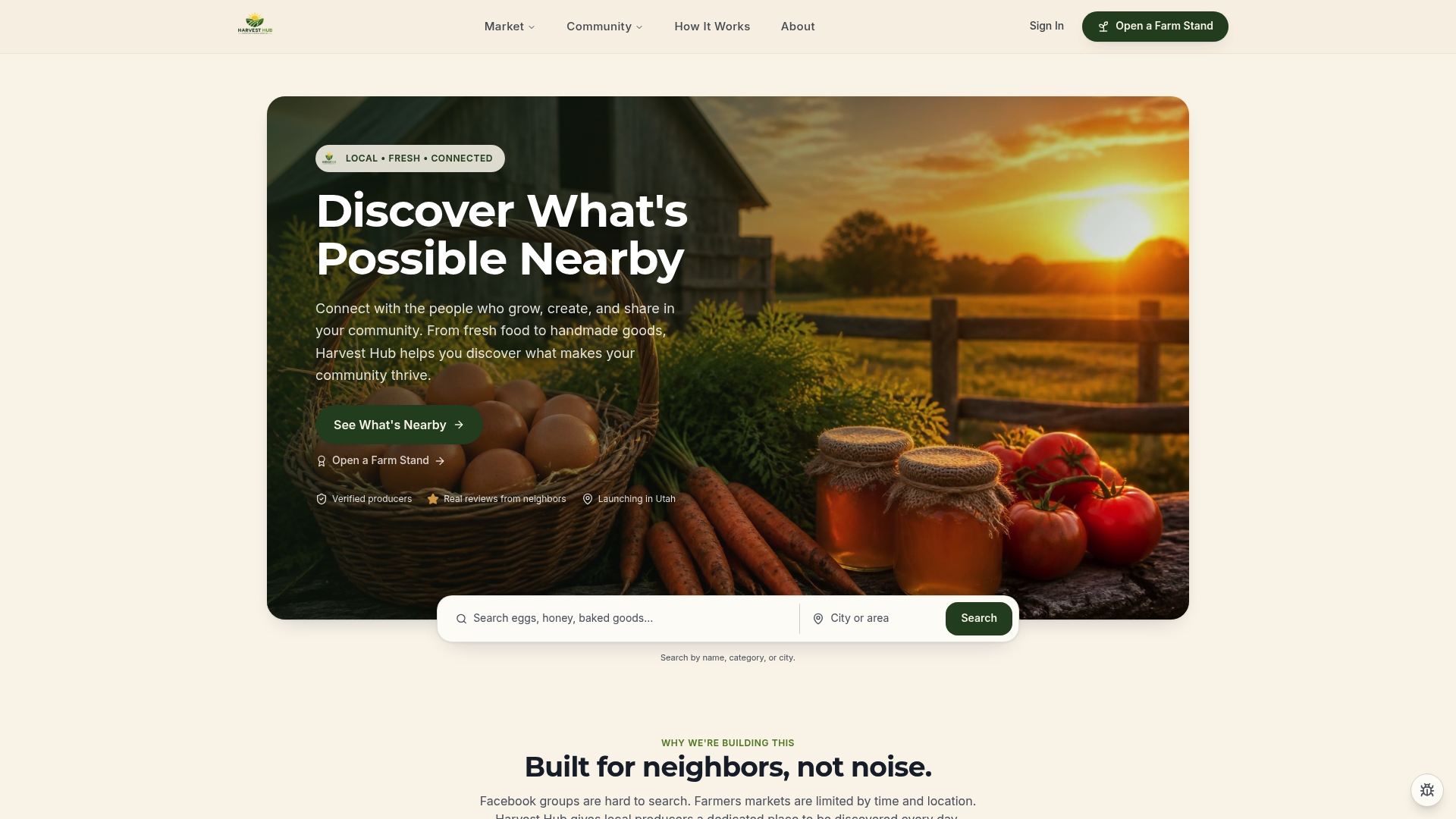
Where a national marketplace puts your cookies next to sellers from across the country, Harvesthub surfaces your listings to buyers in your own area who are already searching for local food. Your digital farm stand includes a shareable storefront link, pickup scheduling, verified profile, and real customer reviews — the trust signals that turn a first-time buyer into a repeat customer. Founding members who join the early-access program get premium features that make your farm stand more visible in local search.
The setup is straightforward: open your farm stand on Harvesthub, list your baked goods with pickup windows, and start appearing in local searches the same day. For a home baker whose customers live within five miles, that local reach matters more than any national platform's traffic numbers.
Authoritative resources to bookmark
These are the sources worth saving when you need the official rule or a deeper how-to.
For legal and compliance:
- Your state's Department of Agriculture website (search "[state] cottage food law")
- How to Sell Baked Goods From Home Legally — a practical overview of how cottage food rules vary across states
- Missouri Extension G6221 — a model for the kind of state-specific guidance your own extension office likely publishes
For food safety and handling:
- UMass Nutrition — food-safety guidance and links to training resources
- Oregon State University Extension — practical handling and food-safety tips for small producers
For business setup and marketing:
- Fit Small Business: How to Start a Bakery from Home — covers storefronts, payments, and pickup scheduling
- Shopify: Sell Baked Goods Online — practical steps for setting up an online storefront and payment processing
- Side Hustle School: Baking Side Hustle Guide — honest advice on starting at farmers markets and avoiding early pitfalls
- Johnson & Wales: Marketing Your Online Bakery — social, email, and partnership tactics for local bakers
Before selling at any event: contact the market manager directly and ask whether they require a copy of your cottage food registration, a certificate of insurance, or any county health documentation. Requirements vary by market, not just by state.
Sources
- How to Sell Baked Goods From Home Legally (2026)
- G6221 — University of Missouri Extension
- How to Start a Bakery from Home That Actually Sells
- Sell baked goods online — Shopify