
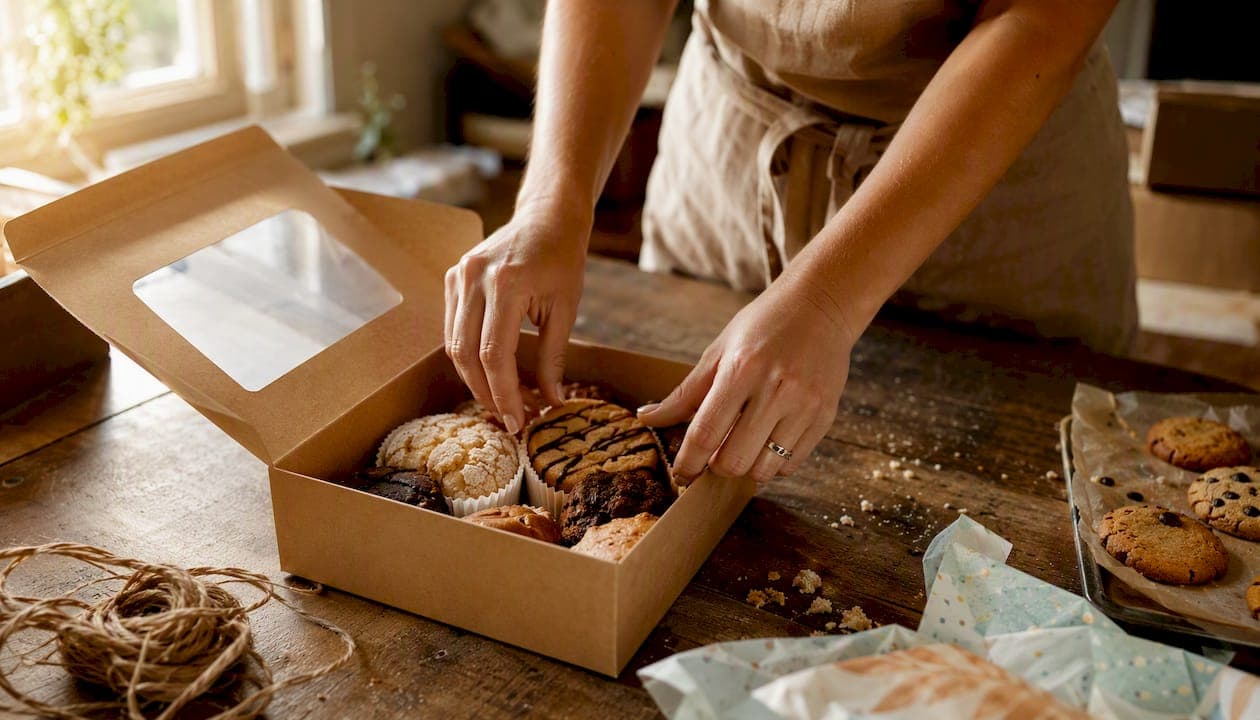
For most bakeries, the winning formula is simple: kraft window boxes with a greaseproof liner for cookies, brownies, and pastries; ventilated paper bags for artisan bread; clamshells for anything wet or delicate; and rigid inserts for cupcakes so frosting never touches cardboard. That combination covers a large majority of what a home bakery or small commercial kitchen ships or sells locally. Get those four formats right before you worry about anything fancier.
Three things to do this week, before you place a bulk order. First, request free or low-cost samples from two suppliers so you can compare paperboard weight and grease resistance side by side. Second, run a cooling test: box up your best-selling item warm, then again after full cooling, and compare condensation after two hours. Third, buy basic label stock now, printed with ingredients, allergens, and a packed-on date, even if your final branding isn't finished.
- Order 10 to 20 window box samples in your two most common sizes
- Grab a roll of greaseproof or glassine liner paper
- Test one warm-packed item against one fully cooled item
- Pick up basic kraft labels or a sticker roll for allergen disclosures
- Check your state's cottage food labeling rules before your next batch ships
Pro Tip: Cool baked goods to room temperature before sealing anything, even loosely. A batch of brownies packed 15 minutes too early can fog an entire box with condensation, and that moisture softens the greaseproof liner right when you need it most.
Key Takeaways
The right packaging for baked goods matches material and structure to the specific product, since a one-size-fits-all box or bag reliably fails on either freshness or presentation.
| Point | Details |
|---|---|
| Match format to product | Use window boxes with greaseproof liners for cookies and pastries, ventilated bags for bread, clamshells for wet items. |
| Cool before sealing | Let baked goods reach room temperature before boxing to prevent condensation and sogginess. |
| Test before bulk ordering | Order 10 to 20 samples and run cooling, stacking, and simulated delivery tests before committing. |
| Upgrade branding cheaply | Use stickers, sleeves, and tissue paper for a premium look without high print minimums. |
| List locally through Harvest Hub | Once packaging is dialed in, Harvest Hub lets small bakers open a digital farm stand for local pickup and delivery orders. |
A Few Honest Thoughts on Getting This Right
Most bakery owners overthink the design and underthink the physics. A gorgeous custom box with the wrong paperboard weight will still let oil bleed through by the time it reaches a customer's counter, and no amount of nice branding fixes that. Start with the boring stuff, the gsm rating, the liner, the cooling step, and only then move to stickers and ribbon.
Harvest Hub exists because packaging is only half the equation for a small producer. You can have flawless boxes and still struggle to get your baked goods in front of people who'd actually buy them regularly. Pragmatic testing and consistent branding matter, but so does having a real channel to reach neighbors looking for exactly what you're making. Keep your failed samples, keep iterating in small batches, and don't wait for perfect packaging before you start selling. Packaging is protection and marketing at the same time, and both get better with real orders, not more planning.
Table of Contents
- What Packaging Works Best for Baked Goods?
- Which Materials Actually Keep Baked Goods Fresh and Safe?
- How Should You Package Baked Goods to Preserve Freshness?
- Affordable Ways to Make Packaging Look Professional
- Where Should You Buy Bakery Packaging?
- What Should You Ask Suppliers Before You Order?
- What Do You Need to Put on a Baked Goods Label?
- What Does Bakery Packaging Typically Cost?
- How Do You Test Packaging Before Committing to a Full Order?
- A Simpler Way to Sell What You Bake Locally
- Frequently Asked Questions
- Sources
What Packaging Works Best for Baked Goods?
Different products fail in different ways, so the right packaging for baked goods depends on what you're protecting against: grease, moisture, crushing, or staleness. A cookie box and a bread bag solve completely different problems, and using one for the other's job is the most common mistake new bakery owners make.
The table below breaks down common formats by what they're actually good for, not just what they look like on a shelf.
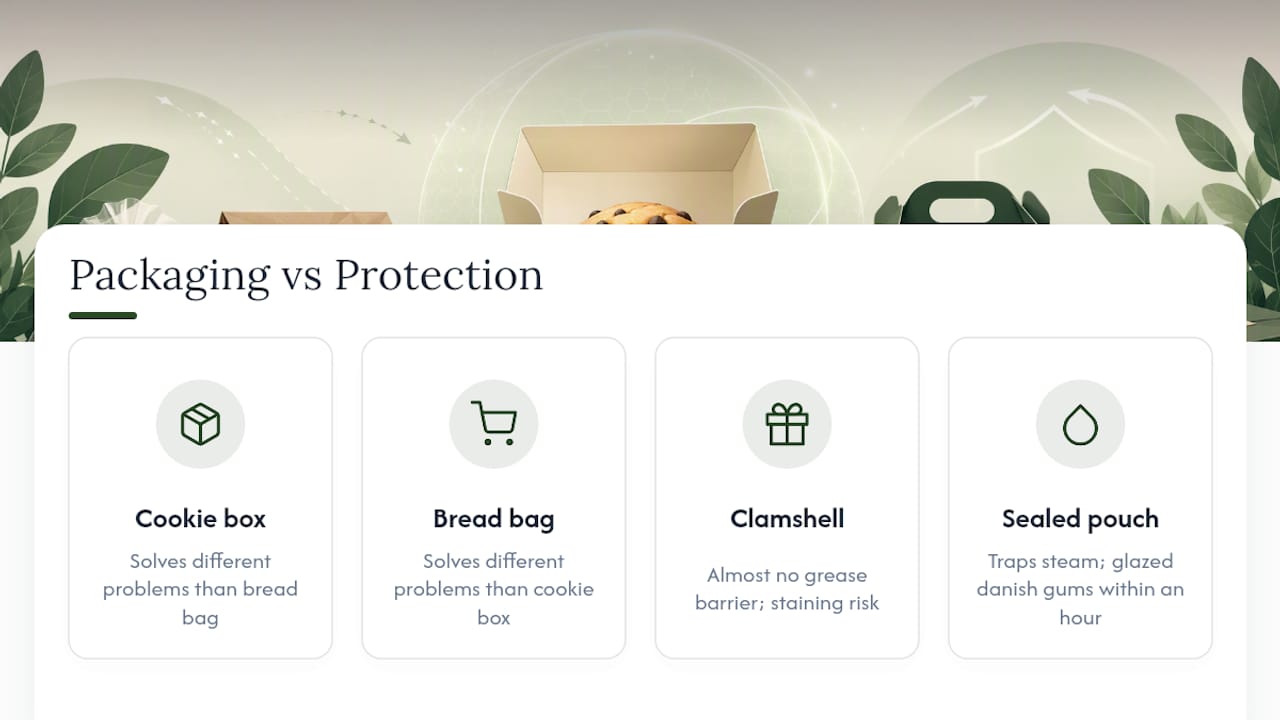
A few of these formats fail predictably. Sealed pouches trap steam around anything warm or moist, so a glazed danish in an airtight bag will sweat and turn gummy within an hour. Clamshells look great for cream-topped items, but they offer almost no grease barrier, so a greasy pastry can stain the plastic and look worse in transit than it did on the counter.
Which Materials Actually Keep Baked Goods Fresh and Safe?
Material choice determines whether your packaging fights grease, moisture, and bacteria, or just looks nice until it fails. Kraft and SBS (solid bleached sulfate) paperboard form the backbone of most bakery boxes, but the weight of that paperboard matters more than most sellers realize. Home bakery packaging guidance recommends paperboard in the 350 to 400 gsm range for boxes holding oily or stacked items, since lighter stock sags and lets oil migrate through the fibers.
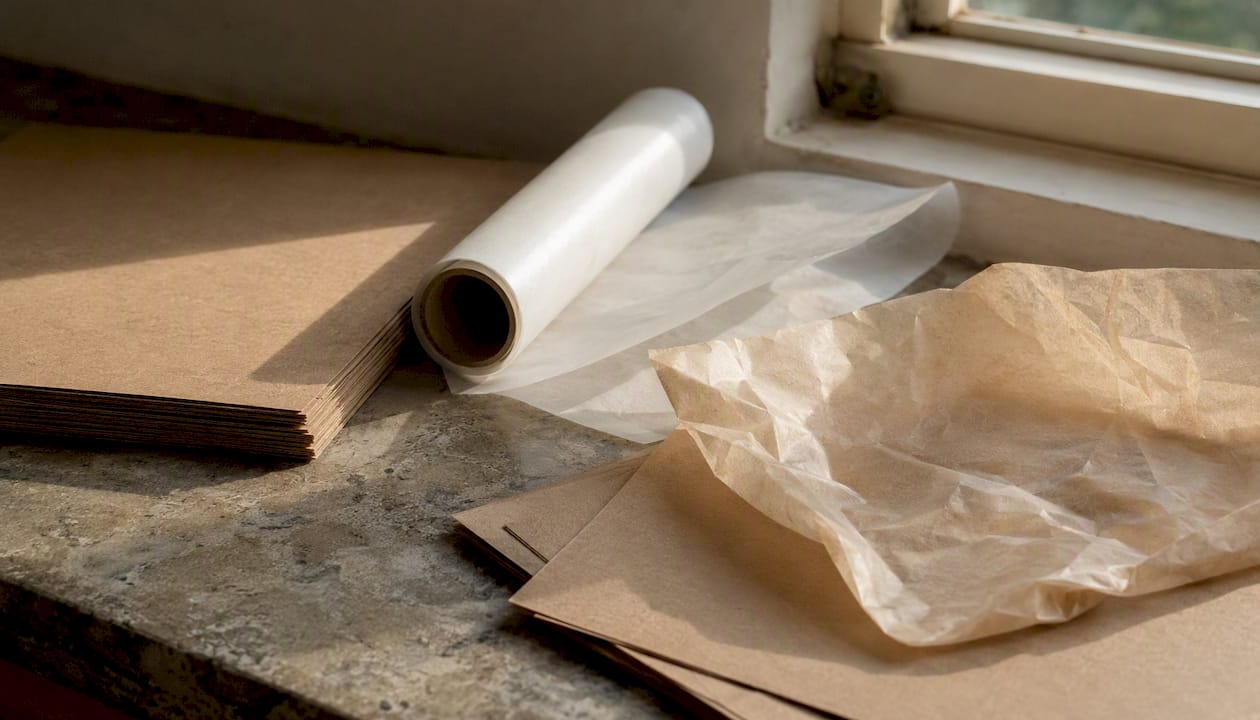
Greaseproof and glassine papers solve the oil problem directly. These papers are treated or calendared so fats don't soak through, which is why a bakery box with a plain kraft interior often looks fine for the first hour and disappointing by the time it reaches the customer. Glassine also works as a standalone wrap for individual cookies or pastries when a full box feels like overkill.
For plastic components, look for PET (sometimes labeled PETE) for clamshells and rigid containers, and PP (polypropylene) for films and some liners. Both are food-contact safe when manufactured to spec, but only PET is widely recyclable through curbside programs. PLA and other plant-based plastics compost under industrial conditions, though suitability depends heavily on the moisture and grease level of the product inside. A dry cookie in a PLA clamshell composts fine; a cream-filled pastry in the same container can compromise the material faster than expected.
Metalized mylar bags show up mostly for shelf-stable treats like granola bars or dried fruit snacks, where the goal is blocking light and oxygen over weeks, not days. They're overkill for anything meant to be eaten within a few days.
- Ask suppliers for a written food-contact statement, not just a verbal assurance
- Look for ASTM D6400 or ASTM D6868 certification language if a product claims to be compostable
- Request a spec sheet showing paperboard weight in gsm for any box holding oily items
- Order a small sample batch before committing to a bulk compostable order
Roughly a third of small bakery packaging failures trace back to using a plain kraft box with no grease barrier for an oily product, according to practical testing recommendations in home bakery packaging guides. A five-cent greaseproof liner solves that problem for the life of the box.
How Should You Package Baked Goods to Preserve Freshness?
Cooling, venting, and sealing choices matter more than the box itself. A perfect kraft box with a beautiful window still fails if you seal warm cookies inside it, because trapped heat becomes trapped moisture, and trapped moisture becomes a soggy bottom and a fogged window within the hour.
- Cool completely first. Shipping guidance for baked goods recommends full cooling before any packing step, and the same rule applies to same-day local sales. Ten extra minutes on a cooling rack prevents an entire batch from steaming inside its box.
- Line before you load. Add a greaseproof or glassine liner for anything with butter, oil, or frosting content before the product ever touches the box.
- Cushion for movement. Use tissue paper, shredded paper, or molded inserts to stop items from sliding and colliding during transport, especially for layered or frosted items.
- Choose ventilation or sealing based on the product, not habit. Crusty breads need airflow to keep their crust from going soft, while sealed packaging suits moist or oily items that need protection from drying out. Micro-perforated bags split the difference for items that need some airflow but not a fully open bag.
- Match the box to the route. A 10-minute local pickup tolerates far less structural rigor than a two-day shipment; save the heaviest, most protective packaging for the longest trips.
Stacking deserves its own attention. Non-slip liners at the base of a delivery box, along with dividers between layers of cookies or cupcakes, cut breakage dramatically compared to loose stacking. In hot weather, avoid sealed plastic containers for anything chocolate-based, since a car trunk can turn a clamshell into a small oven within 20 minutes.
Pro Tip: For glazed or iced items, wait until the glaze has fully set before boxing, then use a vented lid rather than a fully sealed one. The glaze itself acts like a moisture barrier, and trapping steam under it will streak or dull the finish before your customer even opens the box.
Affordable Ways to Make Packaging Look Professional
You don't need printed boxes with a 5,000-unit minimum to look like a real brand. Custom stickers, sleeves, and stamped kraft paper deliver a premium look at a fraction of the setup cost of full custom printing, and they're the right starting point for almost every small bakery.
- A single die-cut sticker on a plain kraft box instantly reads as "designed," not "generic"
- Belly bands or paper sleeves add color and branding without touching the box structure itself
- A folded card with your logo and a short thank-you note costs pennies and builds repeat customers
- Colored ribbon or bakers twine adds a finished look to boxes that would otherwise look bare
- Tissue paper in a brand color creates a small "reveal" moment when the box opens
Window boxes and small finish upgrades reliably increase impulse appeal and perceived value, which is exactly why a five-cent sticker on a kraft box often outperforms a plain, unbranded printed box that cost three times as much. Save fully custom printed boxes for when your order volume justifies the setup fee, typically once you're moving several hundred units a month of one specific size.
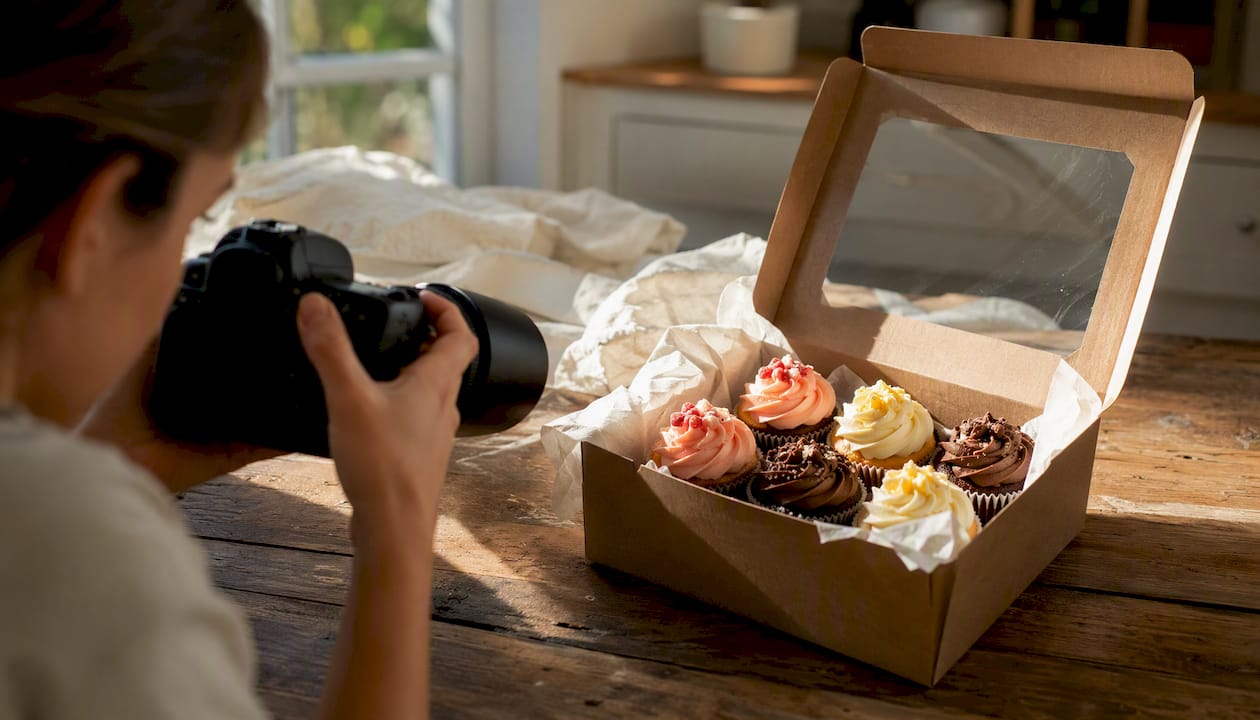
Before you settle on a window shape or placement, take real product photos through the packaging you're considering. Pro Tip: Photograph your product through three or four different window shapes and sizes before ordering. A window that looks great empty can crop out exactly the part of a cupcake or tart that makes it look appetizing. Good food product photography relies on soft, diffused light and a clean, accurate hero shot, and that same lighting setup will tell you instantly whether a window box actually flatters your product or just adds a hole in the cardboard.
Where Should You Buy Bakery Packaging?
Different suppliers serve different needs, and matching the right vendor type to your order size saves both money and headaches. Bulk wholesale catalogs, custom small-run printers, eco-specialists, and general marketplaces each solve a different problem.
- Wholesale distributors like WebstaurantStore and Paper Mart stock a wide range of boxes, bags, clamshells, and accessories such as cake boards and parchment paper. Large catalog suppliers commonly bundle disposable bakeware, pan liners, and packaging into one order, which is convenient for restocking multiple product lines at once, though minimum case quantities can be higher than a small bakery needs.
- Specialized bakery packaging sites like ClearBags and Good Start Packaging focus specifically on food-safe boxes and bags, often with better sample programs and clearer food-contact documentation than general marketplaces. Catalog sellers in this space stock vented bags, window boxes, and takeout containers sized specifically for small food businesses.
- General marketplaces like Amazon offer fast shipping and small order quantities, useful for testing a format before committing to a wholesale case, though pricing per unit is usually higher than buying direct from a packaging distributor.
- Custom small-run specialists like PackLegacy work well when you need a distinctive design or an unusual size but can't justify a 5,000-unit print minimum.
- Eco-focused suppliers carry compostable and plant-based options with certification documentation readily available, worth seeking out specifically if sustainability is part of your brand story rather than an afterthought.
Whichever category you order from, ask for samples before committing to a case. Most legitimate suppliers will send a handful of units for a nominal fee or free with a follow-up order, and that small step catches problems that spec sheets never reveal, like a window that fogs faster than expected or a hinge that cracks on the third fold.
What Should You Ask Suppliers Before You Order?
A quick checklist keeps every supplier conversation efficient and comparable, whether you're on a call, filling out an RFQ form, or just scrolling a product page.
- Confirm exact interior and exterior dimensions, not just a size name like "medium."
- Ask the maximum product weight the box or bag is rated to hold without deforming.
- Request the paperboard weight in gsm, or the plastic gauge, to gauge grease and structural resistance.
- Ask whether free or paid samples are available, and how many units come in a sample pack.
- Get the minimum order quantity for both stock and custom-printed versions.
- Ask for lead time on stock items versus custom print runs, since these can differ by weeks.
- Request per-unit pricing at both sample quantity and your expected bulk quantity.
- Ask directly for a food-contact statement and, if relevant, compostable certification numbers.
- Clarify the return or replacement policy for damaged or defective bulk shipments.
- Ask if sample fees are credited toward a future bulk order, since many suppliers will do this if asked.
Negotiating small runs is more common than most first-time buyers expect. Custom print shops often have unlisted "starter" tiers below their advertised minimum, especially for a single-color print on a stock box shape. It never hurts to ask whether a 250-unit run is possible even if the website says 1,000.
What Do You Need to Put on a Baked Goods Label?
A clear label builds trust and heads off customer complaints before they happen. At minimum, a small bakery label should include the product name, a full ingredient list, a clear allergen disclosure, the packed or packed-on date, and basic storage instructions like "refrigerate after opening" or "best consumed within 3 days."
- Product name, written plainly, not just a flavor name customers might not recognize
- Complete ingredient list in descending order by weight
- Allergen callouts for common triggers: nuts, dairy, eggs, gluten, soy
- A packed-on date, since "best by" dates are less useful than knowing exactly when it was made
- Storage instructions specific to the product, not a generic catch-all line
- Net weight, if your local rules require it for the product category
Keep labels large enough to read without squinting, and place them where they won't be covered by a bow, sticker, or fold in the box. Grease and humidity degrade cheap paper labels fast, so a laminated or waterproof sticker stock is worth the extra cent or two per unit for anything oily or refrigerated.
Labeling rules vary by state and by whether you're selling under a cottage food license or a commercial kitchen permit, so treat this section as a starting checklist rather than a full legal reference; confirm specifics with your local health department or state cottage food program before your first sale.
What Does Bakery Packaging Typically Cost?
Packaging cost scales with material, structure, and customization. The ranges below reflect typical per-unit pricing at moderate order volumes, not guaranteed quotes from any specific supplier.
A basic kraft box without a window can run as low as a few cents per unit at bulk quantity, while a fully custom printed box with a die-cut window and foil accents can reach several dollars each at low volume. Run your sample test across two conditions that matter most: a simulated one-mile local pickup with normal jostling, and a simulated ten-mile delivery with stops, temperature exposure, and stacking. Record appearance, grease bleed, physical movement inside the box, and any denting or crushing after each test. Those four measurements tell you almost everything you need to know before committing to a bulk order.
How Do You Test Packaging Before Committing to a Full Order?
A simple, repeatable test plan catches problems before they reach a customer, and it takes less time than most bakery owners expect.
- Order 10 samples of your top candidate format from each supplier under consideration.
- Pack your actual product, not a stand in, since crumb structure and moisture content vary by recipe.
- Run a cooling and venting check: box one item warm and one fully cooled, then compare condensation after two hours.
- Simulate a short local trip by driving the packed box around for 15 to 20 minutes over normal road conditions.
- Simulate a longer delivery by stacking three boxes and leaving them in a warm car for an hour.
- Photograph the product immediately after packing and again after each test stage.
- Track specific failures: grease bleed, window fog, structural crushing, frosting transfer, or bag tearing.
- Score each result on a simple scale from 1 to 5 for appearance, structural integrity, moisture control, and transport resilience.
- Compare total scores across suppliers or formats before placing a bulk order.
Pro Tip: Keep every failed sample in a labeled bag with notes on what went wrong. Six months from now, when a supplier changes their box stock or you're evaluating a new format, that failure log saves you from repeating the same expensive mistake.
A format that scores well on appearance but poorly on moisture control is telling you something specific: it's the right look with the wrong liner, not necessarily the wrong box. Use that distinction to negotiate a liner swap with your supplier rather than starting your search over completely.
A Simpler Way to Sell What You Bake Locally
You've read about a dozen packaging suppliers here, from wholesale catalogs to custom small-run printers, and every one of them solves the same problem: getting your baked goods into a box safely. None of them solve the next problem, which is getting that box in front of a customer without renting a farmers market table or building your own website from scratch.
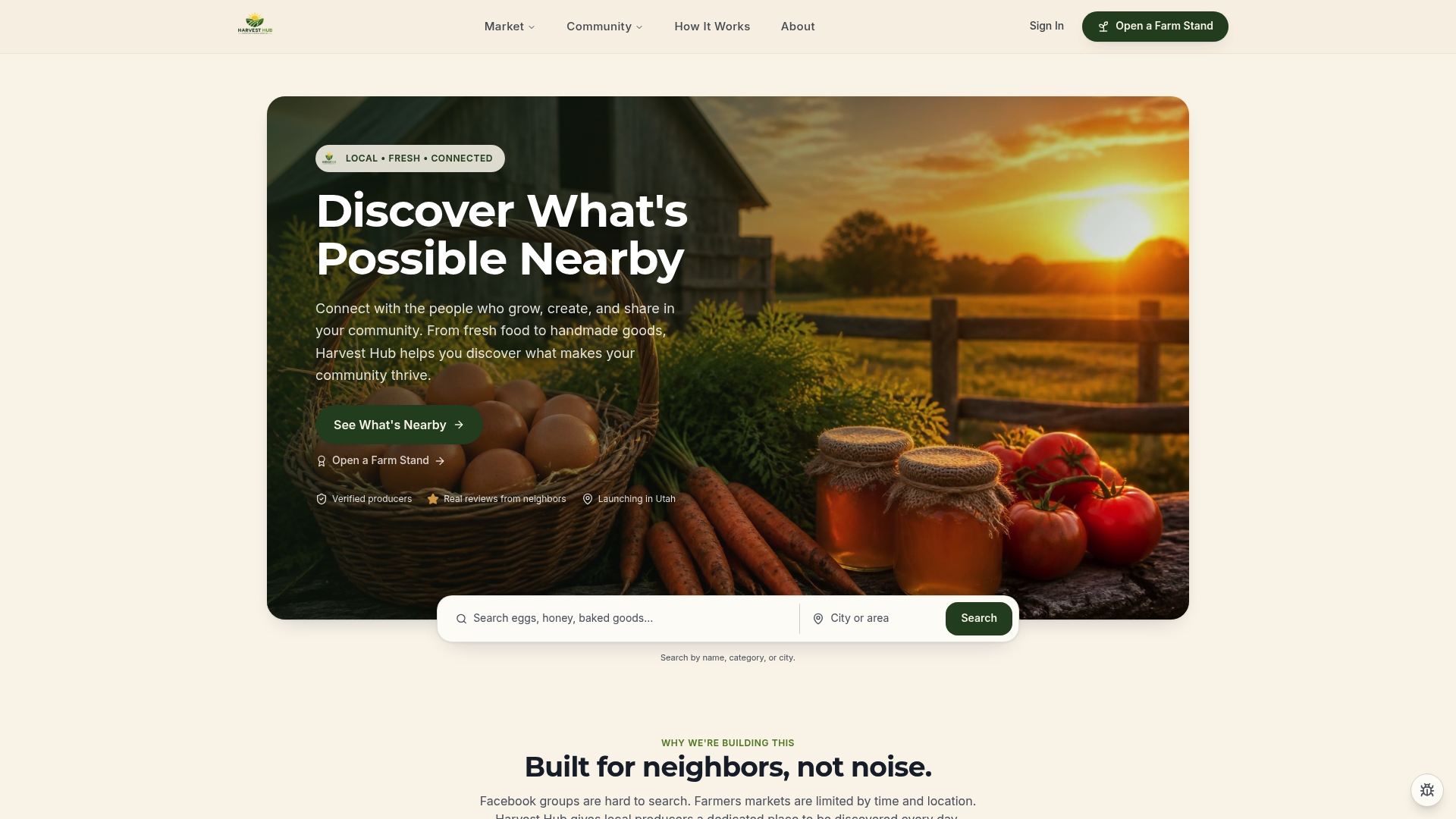
Harvest Hub is a community marketplace built for exactly this gap. Local bakers, home producers, and small food entrepreneurs create a digital farm stand, list their packaged goods with photos and descriptions, and reach neighbors searching by map for fresh local products, open every day instead of one Saturday morning a month. Verified profiles and real reviews build the same trust a farmers market table earns over years, without the setup, teardown, or weather risk. If you sell eggs, bread, jam, or seasonal treats alongside your baked goods, one storefront covers all of it.
If you're ready to put your packaging to work, open a farm stand on Harvest Hub and list your first batch today.
Frequently Asked Questions
What is the best packaging for baked goods on a small budget? Plain kraft boxes with a greaseproof liner and a single branded sticker deliver the best balance of cost and presentation for most home bakeries, typically running well under a dollar per unit.
How do you package bread to keep it fresh? Use a ventilated or micro-perforated paper bag rather than a sealed plastic bag, since crusty bread needs airflow to avoid going soft, while a fully sealed bag traps moisture against the crust.
Should I use compostable packaging for wet or moist baked goods? Compostable materials work well for dry items like cookies but can underperform for moist cakes or cream-filled pastries, since compostable material suitability depends on the moisture and grease level of the product inside it.
How many packaging samples should I order before committing to a bulk purchase? Order 10 to 50 samples depending on the format, and test them under real conditions including a simulated delivery route, before placing a full bulk order.
Do I need special packaging to ship baked goods long distance? Yes, and you should only ship items with enough shelf life to survive transit unless you're using cold chain shipping, since shipping guidance recommends cooling completely and confirming shelf life before packing anything for transit.
What should be on a baked goods label? At minimum, include the product name, full ingredient list, allergen disclosures, a packed-on date, and storage instructions, and confirm any additional requirements with your local health department.
Sources
A handful of sources are worth bookmarking as you refine your packaging choices over the next few months.
- 12 Bakery Packaging Ideas That Make Customers Choose Your Desserts
- 6 Delightful Home Bakery Packaging Ideas for Small Businesses
- How to Ship Baked Goods & Cakes - WebstaurantStore
- Bakery Food Packaging Ideas: Complete Guide
- Packaging for Baked Goods: Tips for Freshness & Appeal
- Food product photography (blog)
Always request an actual sample and a written food-contact statement before trusting any supplier's marketing copy about compostability or grease resistance.