
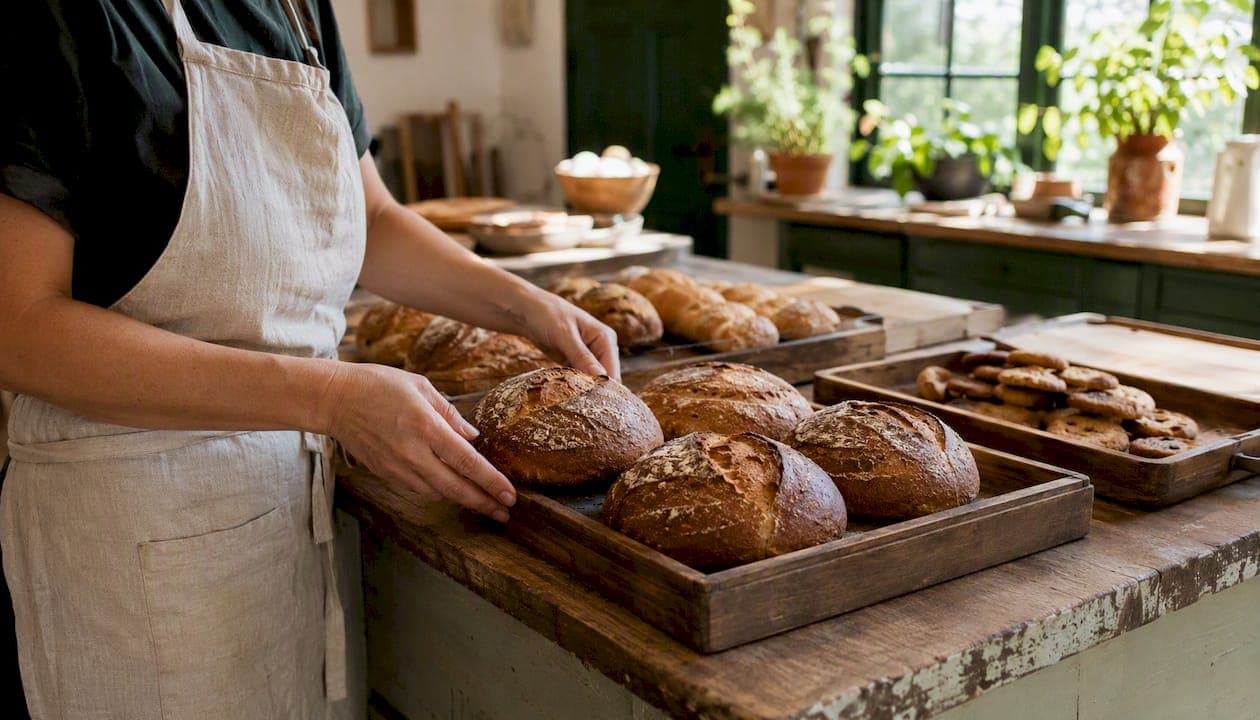
Most home bakers in the U.S. do need some form of legal authorization before selling a single cookie — but whether that means a full license, a simple registration, or just a labeling requirement depends entirely on your state. Here's what to do first:
- Look up your state's cottage food or home-processor rules. Search "[your state] cottage food law" or visit your state's Department of Agriculture or Department of Health website. Every state has its own framework, and the rules can change.
- Check whether your menu includes potentially hazardous foods. Cream-filled pastries, cheesecakes, and custard-based items are treated differently than shelf-stable cookies and breads. If your products require refrigeration, standard cottage food exemptions likely won't cover you.
- Gather your documents early. Most states ask for label samples, a product list, proof of food-safety training, and sometimes a completed application form before you can legally sell.
If your state's page isn't immediately obvious, search "[state name] department of agriculture home bakery" or "[state name] cottage food permit" and look for a .gov URL. Bookmark it — you'll return to it often.
Key Takeaways
Getting a home bakery license in the U.S. requires checking your state's specific cottage food rules, preparing compliant labels, completing food-safety training, and securing liability insurance before your first sale.
| Point | Details |
|---|---|
| State rules vary significantly | Look up your state's Department of Agriculture or Health page before assuming any exemption applies to your products. |
| Labels must meet state and federal standards | Include ingredients, allergens per FDA guidance, net weight, business contact, and any required home-kitchen statement. |
| Fees range from $0 to ~$100 annually | Iowa's HFPE license runs ~$50/year; Georgia's cottage food license runs ~$100/year with a pre-operational inspection. |
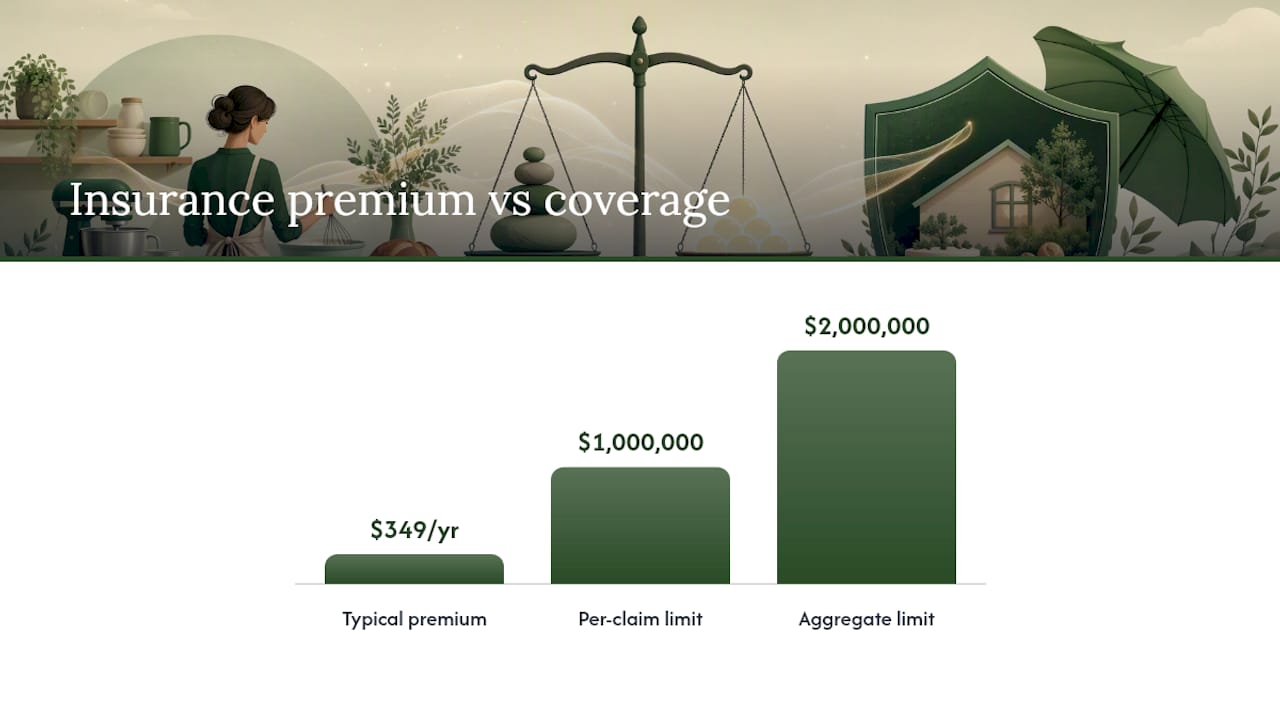
| Insurance is required by markets, not just law | FLIP's home bakery policies typically run $299–$399/year; most markets require a COI before you can sell. |
| Harvesthub extends your reach after licensing | Licensed home bakers can open a digital farm stand on Harvesthub to sell locally every day, not just on market days. |
Table of Contents
- What foods qualify under cottage food and home-bakery rules?
- Where can you legally sell home-baked goods?
- What labeling rules apply to home-baked goods?
- How do you apply for a home bakery permit or registration?
- What do inspectors check in a home kitchen?
- When do you need a commercial license instead?
- What food-safety training do home bakers need?
- How do rules differ by state? Ohio, New York, and Washington examples
- What are the legal risks of selling without a license?
- The part of cottage food compliance most bakers get wrong
- Harvesthub: list your licensed baked goods with local buyers every day
- Sources
What foods qualify under cottage food and home-bakery rules?
Most cottage food laws cover non-potentially hazardous baked goods: products that are shelf-stable at room temperature and don't require refrigeration to stay safe. Think cookies, brownies, quick breads, yeast breads, dry mixes, certain hard candies, and fruit jams in states that permit them.
Common permitted items:
- Cookies, bars, and brownies
- Breads, rolls, and muffins (without cream or custard fillings)
- Dry baking mixes and granola
- Hard candies and toffee (see small-batch candy production guidance for how TCS rules affect confectionery items)
- Fruit jams and jellies (where state law allows)
- Roasted nuts and dried herbs
Prohibited or restricted items (potentially hazardous):
- Cream-filled pastries, éclairs, or Boston cream pies
- Cheesecakes and custard-based desserts
- Anything with cream cheese frosting that requires refrigeration
- Meat-containing products (meat pies, savory hand pies)
- Canned low-acid vegetables
The term "potentially hazardous food" refers to items that require time/temperature control for safety (TCS). These foods support bacterial growth at room temperature and must be kept at specific temperatures to remain safe. State regulators use TCS classification to draw the line between what a home baker can sell and what requires a licensed commercial facility.
Pro Tip: If a product sits in a gray zone — pumpkin pie, cream cheese frosting, ganache-filled chocolates — don't guess. Call your state's Department of Agriculture or local health department and ask directly. Get the answer in writing if you can. Specialty inclusions like toffee bits or ganache can shift a product's risk classification; check how specialty inclusions affect product classification before listing borderline items.

Where can you legally sell home-baked goods?
Direct sales to the end consumer are the core of nearly every cottage food law in the country. Wholesale and retail consignment are frequently restricted or outright prohibited under cottage food rules, so your sales channel choices matter as much as your product list.
Common permitted channels:
- Direct pickup from your home (where local zoning allows)
- On-premises sales at your residence
- Farmers markets and craft fairs (often the most popular channel)
- Roadside stands (subject to local zoning and county rules)
- Community events and pop-ups
Common restrictions to watch for:
- Wholesale to grocery stores or restaurants is prohibited in most cottage food states
- Out-of-state shipping is restricted or banned in many states — online sales that cross state lines are a legal gray area
- Farmers markets frequently require vendors to carry their own liability insurance and provide a certificate of insurance (COI) naming the market as an additional insured
- Some counties layer their own rules on top of state law, so a state-level permit doesn't automatically satisfy every local requirement
Texas offers one of the more permissive models: under expanded CFPO rules, producers can use a registry number in place of a home address on labels and operate under a higher annual gross income threshold. That kind of flexibility is the exception, not the rule — most states keep cottage food sales tightly local.
Before you set up at a market, confirm three things: your state's rules, the market's own vendor requirements, and your county health department's policies. All three can differ.
What labeling rules apply to home-baked goods?
Most states require a specific set of label elements before you can legally sell a cottage food product. Getting the label right isn't just a compliance checkbox — it's often the first thing an inspector or market manager checks.
Standard label checklist:
- Product name (what the item is)
- Ingredients in descending order by weight (most to least)
- Major allergen callout per the FDA's federal labeling guidance — the FDA's list includes milk, eggs, fish, shellfish, tree nuts, peanuts, wheat, soybeans, and sesame
- Net weight or volume
- Business name and contact information (address, phone, or email — some states allow a registration number instead of a street address)
- Required state statement — many states mandate a line such as: "Made in a home kitchen that is not subject to public health inspection"
The allergen section deserves extra attention. FDA guidance requires that major allergens appear either in the ingredient list (e.g., "enriched wheat flour") or in a separate "Contains:" statement after the ingredient list. Both formats are acceptable; what's not acceptable is omitting the disclosure entirely.
Some states publish sample label templates on their official pages — Ohio and Washington, for example, include label examples in their cottage food guidance. Always cross-check your label against the current version of your state's official page, since wording requirements do get updated.
Pro Tip: Texas allows cottage food producers to use a registry number on labels instead of a full home address. If privacy is a concern, check whether your state offers a similar option before printing labels with your street address.
How do you apply for a home bakery permit or registration?
The application process typically requires a completed form, your product list and label samples, proof of food-safety training, and payment of any applicable fee. Here's the standard sequence:
- Find the correct state agency. Most states route home-bakery applications through the Department of Agriculture; some use the Department of Health. Search your state name plus "cottage food registration" or "home food processing license."
- Confirm eligibility and allowed products. Review the permitted food list before you invest time in an application. If your products don't qualify, you'll need a different license type.
- Prepare your labels and product list. Draft labels that meet your state's requirements and compile a complete list of every product you plan to sell.
- Complete required food-safety training. Many states require at least one person in the operation to hold a food-safety certificate before registration is approved.
- Submit the application and fee. Mail or upload the completed form, supporting documents, and payment.
- Schedule an inspection if required. Some states (Georgia is a clear example) require a pre-operational home-kitchen inspection before issuing a license.
- Keep copies of everything. Store your approval letter, registration number, certificates, and label versions somewhere you can find them quickly.
What fees and timelines look like across states
Fees vary widely. Iowa's Home Food Processing Establishment (HFPE) license carries an annual fee of approximately $50 and requires at least one person to complete food-safety training; the state also sets a $50,000 annual sales cap. Georgia's cottage food regulations require registration, a pre-operational inspection, and an annual license fee of approximately $100. Some states charge nothing at all but still require a formal registration or notification.
| State | Annual Fee (example) | Inspection Required | Sales Cap |
|---|---|---|---|
| Iowa | ~$50 | No pre-op inspection listed | $50,000 |
| Georgia | An annual fee is required | Yes, pre-operational inspection required | Varies by rule |
| Texas | No fee listed | No | A higher gross income threshold applies |
Processing times range from a few days for a simple online registration to several weeks when a physical inspection is scheduled. Apply well before your first planned market date.
What do inspectors check in a home kitchen?
When an inspection is required, inspectors focus on sanitation, storage, and contamination prevention — not on whether your kitchen looks like a commercial bakery. The standard is cleanliness and basic food-safety practice, not industrial capacity.
Typical items on an inspector's checklist:
- Cleanable, non-porous surfaces in the food-prep area
- Working hot water at the sink
- Adequate refrigeration (required if you handle any TCS ingredients, even temporarily)
- Separate storage for food and non-food items (cleaning supplies, pet food)
- Evidence of insect and rodent control
- Properly labeled products ready for review
- Accessible handwashing facilities with soap and paper towels
- Waste disposal setup that prevents contamination
Before an inspection, run through this prep list:
- Deep-clean all prep surfaces, equipment, and storage areas
- Document where ingredients are stored and how they're organized
- Photograph your workspace — before and after cleaning
- Have your training certificates, label samples, and registration documents on hand
- Remove any non-food items from the prep and storage zones
Pro Tip: Keep a simple baking log: date, batch number, ingredients used, and lot numbers where available. Consistent batch records and process control demonstrate that you're running a repeatable, safe operation — and they're exactly what an inspector wants to see. A few minutes per bake session can prevent a lot of friction later.
When do you need a commercial license instead?
You typically need to move beyond cottage food rules when you produce potentially hazardous foods, exceed your state's annual sales threshold, want to sell wholesale, or when local rules require a commercial facility for specific products. Crossing any one of those lines usually means a commercial food-establishment license, a commissary arrangement, or both.
Cottage food vs. commercial food establishment: key differences
| Dimension | Cottage / Home Bakery | Commercial Food Establishment |
|---|---|---|
| Allowed foods | Non-potentially hazardous only | TCS and non-TCS foods permitted |
| Inspection level | None or pre-operational only | Regular scheduled inspections |
| Labeling | State cottage food statement required | Full commercial labeling standards |
| Insurance | Not legally required by most state laws | Often required by lenders, landlords, or buyers |
| Wholesale / retail | Generally prohibited or heavily restricted | Permitted with appropriate license |
Options when you outgrow cottage food rules:
- Rent a commissary or licensed commercial kitchen by the hour. Many cities have shared-use kitchens available for small producers. You pay for time, not a full lease.
- Join a licensed shared-use kitchen cooperative. Some food incubators offer membership models with lower monthly costs than hourly rentals.
- Work with a co-packer or contract bakery. A co-packer produces your products in their licensed facility under your brand. You lose some control over production but gain scale and compliance.
- Apply for a full food-establishment license. If volume justifies it, licensing your own commercial space gives you the most flexibility.
Hourly commissary rates vary by market, but shared-use kitchens in mid-sized cities often run between $15 and $35 per hour. A co-packer relationship typically requires minimum order quantities and a production agreement, so it suits bakers who have consistent, high-volume demand.
What food-safety training do home bakers need?
Many states require at least one person in a home-bakery operation to complete a food-safety course before registration is approved, and many farmers markets require proof of training even when the state doesn't. Getting certified before you apply puts you ahead of both requirements.
Common courses and what they cover:
- ServSafe Food Handler (National Restaurant Association): covers basic food safety, personal hygiene, cross-contamination, and temperature control. Widely accepted and available online.
- ServSafe Food Manager Certification: a more rigorous exam-based credential; some states require this level for licensed operations.
- State-run cottage food courses: several state departments of agriculture offer their own short online courses specifically for cottage food producers. These are often the fastest path to satisfying a state requirement.
- Allergen awareness courses: short online modules covering FDA's major allergen list and labeling requirements; useful even when not required.
- Label and packaging workshops: offered by some state extension services and food business incubators; practical for getting label wording right before you print.
Keep digital and physical copies of every certificate. Bring them to market applications, inspections, and venue sign-ups — market managers ask for them more often than most new vendors expect.
Check your state's official page to confirm which specific course or certification it accepts. A ServSafe Food Handler certificate satisfies most state cottage food requirements, but a handful of states specify their own course. Certifications typically need renewal every three to five years, so note your expiration date when you file it away.
How do rules differ by state? Ohio, New York, and Washington examples
Rules vary enough between states that what's legal in one place can be a violation in another. Three representative approaches show the range:
Ohio — Agriculture Department licensing model Ohio routes home-bakery oversight through the Ohio Department of Agriculture. The state's home bakery rules set operational expectations and application pathways, and some operations require licensing and inspection depending on product type and sales volume. Check the Ohio Department of Agriculture's official home bakery page for current permitted foods, application forms, and fee schedules.
New York — Home Processor Exemption model New York uses a Home Processor Exemption framework administered by the New York Department of Agriculture and Markets. Certain baked goods qualify for the exemption, which comes with a specific permitted-food list and its own registration pathway. New York's approach is more restrictive than some states on which products qualify, so review the permitted list carefully before assuming your products are covered.
Washington — Cottage Food Permit model Washington issues a Cottage Food Permit through the Washington State Department of Agriculture for non-potentially hazardous foods made in a home kitchen and sold directly to consumers. The permit comes with specific labeling and sales rules. Washington's model is a clean example of a permit-based system where the state issues a formal document you can present to markets and venues.
Finding your state's page: If your state isn't listed here, search "[your state] cottage food" or "[your state] home food processing" and look for a .gov domain. Verify the page belongs to the state's Department of Agriculture or Department of Health — not a third-party summary site. Bookmark the official page and download a PDF of any forms you submit, since state pages do get updated.
| State | Official Page Title | Agency |
|---|---|---|
| Ohio | Home Bakery | Ohio Department of Agriculture |
| New York | Home Processing | NY Dept. of Agriculture and Markets |
| Washington | Cottage Food | WA State Department of Agriculture |
| Iowa | Home Food Processing Establishments | Dept. of Inspections, Appeals, & Licensing |
| Texas | Texas Cottage Food Production | Texas DSHS |
What are the legal risks of selling without a license?
Enforcement varies by state and county, but the consequences of selling without proper authorization are real. Common outcomes include fines, stop-sale orders, product seizure, and a requirement to cease operations until you move to a licensed facility. In cases involving a foodborne illness complaint, liability exposure can extend well beyond a regulatory fine.
Recordkeeping items to maintain from day one:
- Sales logs (date, product, quantity, buyer contact where required by state)
- Ingredient sources and supplier receipts
- Batch dates and batch numbers
- Complaint logs (any customer concern, however minor)
- Copies of current labels and any prior label versions
- Training certificates and renewal dates
- Insurance documents and COI copies
When to call your local health department: If you're unsure whether a specific product or sales channel is covered by your state's cottage food rules, call the local health department and ask. Get the answer in writing. Regulators generally prefer to answer questions before a violation occurs rather than after.
When to consult an attorney: If you're entering wholesale contracts, facing a recurring complaint, or structuring a business entity (LLC, partnership), a food-business attorney can identify liability exposure that a state registration form won't cover. An LLC limits personal liability for business debts but doesn't protect against uninsured product liability claims — a point worth understanding before your first market day. A product liability policy with $1M/$2M limits, combined with an LLC structure, is the practical combination most small home bakers use to manage both risks, according to cottage baker liability insurance guidance.
On insurance: State cottage food laws rarely require liability insurance as a legal condition of registration. Markets and venues are a different story. FLIP's home bakery insurance program reports typical annual policy pricing in the $299–$399 range, and many markets require vendors to present a COI naming the market as an additional insured before they can set up a table. Securing coverage before your first event is far easier than scrambling for it the morning of.
The part of cottage food compliance most bakers get wrong
The paperwork is the easy part. Most states have clear forms, reasonable fees, and straightforward labeling rules. What trips up new home bakers isn't the registration — it's the assumption that registration is the finish line.
A cottage food license or registration is a starting point, not a permanent green light. State rules change. Sales thresholds get revised. A product you've been selling for two years might get reclassified when a state updates its permitted-food list. The bakers who stay out of trouble are the ones who treat compliance as an ongoing practice rather than a one-time task.
Two things I'd tell anyone starting out: first, get product liability insurance before your first market day, not after. Markets will ask for it, and the cost is low enough that there's no good reason to wait. Second, start with a short, focused menu of clearly non-hazardous products. A tight menu is easier to label correctly, easier to explain to an inspector, and easier to scale once you know what sells. Expanding into borderline products — cream cheese frosting, custard fillings — is a decision to make after you understand your state's rules cold, not before.
Harvesthub has been a practical next step for several licensed home bakers looking to reach local buyers beyond their immediate neighborhood. A digital farm stand keeps your products visible seven days a week, which a Saturday farmers market simply can't match.
Harvesthub: list your licensed baked goods with local buyers every day
Once you're licensed and labeled, the next challenge is finding buyers consistently — not just on market days. Harvesthub is a community marketplace where licensed home bakers can open a digital farm stand and reach local customers every day of the week, not just when a physical market is running.
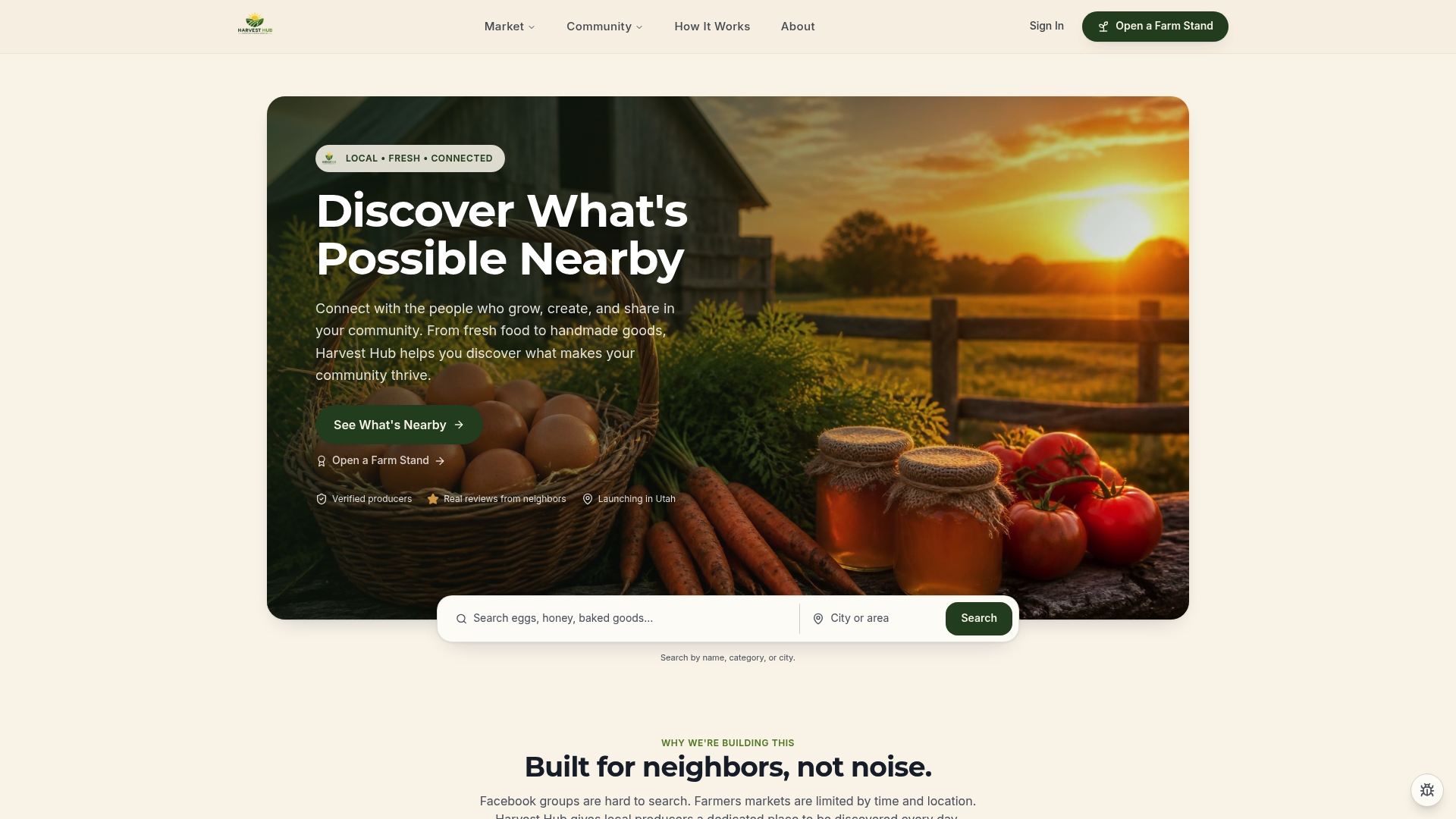
Harvesthub connects local producers directly with buyers in their community through verified profiles, real reviews, and a map-based search that makes it easy for neighbors to find what you're selling. Producers set up their own digital storefront, list their products, and manage orders on their schedule. Buyers browse for free; sellers access expanded features through a Producer Pro subscription.
Using Harvesthub does not replace your state registration, cottage food license, or food-safety obligations. You must be legally authorized to sell in your state before listing products. Once you are, setting up your farm stand takes minutes and puts your baked goods in front of local buyers who are actively looking for exactly what you make.
Sources
Start with your state's official page, then cross-reference federal labeling guidance for allergen and ingredient requirements.
Primary official sources:
- Fda
- Texas Cottage Food Production | Texas DSHS
- Home Food Processing Establishments | Department of Inspections, Appeals, & Licensing
- GA R&R - GAC - Subject 40-7-19 COTTAGE FOOD REGULATIONS
If your state isn't listed: Search "[your state] cottage food" or "[your state] home food processing" and filter results to .gov domains only. Your state's Department of Agriculture or Department of Health is the authoritative source — third-party summaries can be outdated or inaccurate.
This article is general information, not a substitute for advice from a qualified lawyer. Consult a qualified legal professional about your own circumstances before acting on anything here.