
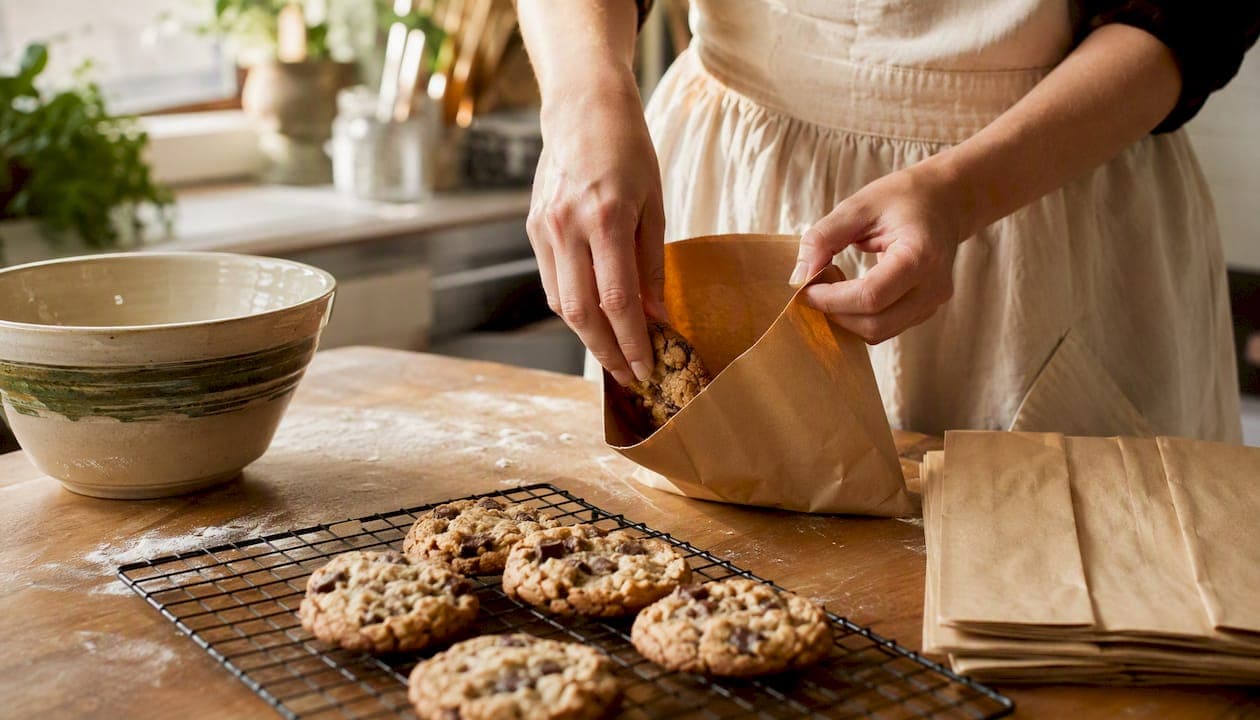
Cottage food laws let you legally sell certain low-risk, non-TCS (time/temperature control for safety) foods made in your home kitchen directly to consumers, with limited or no licensing required. The rules vary significantly by state, so your first three moves are: (1) pull up your state department of agriculture or health agency page, (2) confirm your specific product appears on the allowed list or falls outside the prohibited categories, and (3) read your state's labeling and sales-cap requirements before you list or sell a single item. The National Agricultural Law Center, your state department of agriculture, and the FDA Food Code are the primary verification sources, not blog summaries.
Key Takeaways
Cottage food laws permit home-kitchen sales of non-TCS foods in all 50 states, but allowed products, sales caps, labeling requirements, and permit rules vary enough that reading your state's primary statute is the only reliable compliance step.
| Point | Details |
|---|---|
| Product eligibility first | Confirm your product is non-TCS and appears on your state's allowed list before anything else. |
| Labeling is non-negotiable | Every label needs product name, ingredients, allergens, net weight, producer address or registration number, and the required state disclaimer. |
| Sales caps vary widely | Annual gross sales limits range from under $25,000 in some states to $250,000 in Florida; track your revenue against your state's cap. |
| Permits depend on your state | Some states require nothing; Washington requires a permit and home kitchen inspection; always check your state agency page directly. |
| Harvesthub connects you to buyers | Once compliant, list your cottage food products on Harvesthub to reach local buyers through a verified digital farm stand open every day. |
Table of Contents
- What do cottage food laws actually cover?
- Core rules most states share
- Where to find your state's rules
- How to launch a compliant cottage food business
- When cottage food limits force a change
- Three states that show how different the rules can get
- What's changing in cottage food regulations right now
- Why compliance is the foundation, not the ceiling
- Your local farm stand starts here
- Sources
What do cottage food laws actually cover?
"Cottage food" is the legal term most states use for foods produced in a residential kitchen and sold directly to consumers without the commercial kitchen licensing that applies to restaurants or food processors. The defining legal boundary is the TCS threshold. TCS foods, as defined in the FDA Food Code, are those that require time or temperature controls to prevent bacterial growth: think cut melons, cooked rice, meat, dairy-based custards, and anything with a water activity or pH level that supports pathogen growth. Non-TCS foods, by contrast, are shelf-stable at room temperature and low-risk enough that most states permit them under cottage food statutes.
What foods are typically allowed?
Common allowed foods include:
- Baked goods without cream, custard, or meat fillings (cookies, breads, cakes, muffins, brownies)
- Jams, jellies, and preserves made with high-sugar recipes
- Dry mixes (pancake mix, spice blends, hot cocoa mix)
- Candy and fudge
- Honey and maple syrup
- Roasted coffee and dried tea blends
- Dried herbs and spices
- Granola and trail mix
Commonly prohibited items include meat products, dairy-based items (fresh cheese, cream fillings), seafood, cut produce, low-acid canned vegetables, and acidified foods. The National Agricultural Law Center confirms that meat, dairy, seafood, and cut produce are excluded under the vast majority of state statutes.
Positive lists vs. negative lists
States structure their allowed-foods rules in one of two ways. A positive list state publishes an explicit approved-foods list; if your product isn't on it, it isn't allowed. A negative list state prohibits specific categories and allows everything else. Knowing which approach your state uses cuts research time considerably: in a positive-list state, check the approved-foods list first; in a negative-list state, look for specific prohibitions and confirm your product doesn't fall into them. Food Business Pros' 50-state directory documents both approaches across all states.
The Harvard Food Law and Policy Clinic also notes that states use different program names, including "cottage food," "home kitchen," "food freedom," and "home bakery," and each label can imply a different scope and regulatory structure. Always read the actual statute, not just a third-party summary.
Callout: The FDA Food Code's TCS definition is the scientific foundation most states borrow from when drawing the line between allowed and prohibited cottage foods. If your product requires refrigeration to stay safe, assume it's TCS until your state's statute says otherwise.
Core rules most states share
All 50 states and Washington, D.C. now have some form of cottage food law, but the details vary enough that you can't assume one state's rules apply to another. Five variables determine compliance in almost every state:
- Allowed foods (positive or negative list, TCS exclusions)
- Permitted sales venues (direct-to-consumer, farmers markets, online with delivery limits, wholesale generally prohibited)
- Annual gross sales cap (ranges from no cap in some states to strict limits in others)
- Permit, registration, and inspection requirements
- Labeling and allergen disclosure
Typical sales caps and permit requirements vary widely between states. Some states have very low caps without permit requirements, others require registration or permits with varying sales limits, and a few allow high or uncapped sales figures. Because these limits differ significantly, you should always confirm your state's current sales cap and permit requirements on the official agency page rather than relying on general estimates.
Labeling requirements
Nearly every state requires the same core label elements. A compliant cottage food label typically includes:
- Product name
- Complete ingredient list (in descending order by weight)
- Allergen declaration (the "Big 9" under FALCPA: milk, eggs, fish, shellfish, tree nuts, peanuts, wheat, soybeans, sesame)
- Net weight or volume
- Name and address of the producer (some states now allow a state registration number in lieu of a home address, a privacy protection Texas adopted under SB 541)
- Required disclaimer language such as: "Made in a home kitchen that is not inspected by the [State] Department of Agriculture."
Producers frequently run into trouble on the address-disclosure rule. Newer statutes sometimes allow a state registration number instead of a home address to protect privacy, per Food Business Pros.
Food safety training
Some states require a food handler certification or an accredited food safety course before you can operate. This requirement is more common in states that allow expanded product categories, including certain TCS foods. When states do allow limited TCS sales from home, they typically require both registration and accredited food handler training, plus specific label or handling instructions such as "keep refrigerated at 41°F or below," as outlined in Texas DSHS guidance.
Where to find your state's rules
No single third-party guide replaces reading your state's actual statute. That said, several authoritative compilers make the research faster.
| Resource | What it provides | Best used for |
|---|---|---|
| National Agricultural Law Center | Legal analysis, recent statutory changes, trend tracking | Understanding legal framing and recent legislative shifts |
| Food Business Pros 50-State Directory | State-by-state summaries, sales caps, venue rules | Quick comparison across states before diving into statutes |
| Harvard Food Law and Policy Clinic (CHLPI) | Academic analysis of program structures and nomenclature | Understanding why states use different program names |
| State department of agriculture or health | Primary statutes, approved-foods lists, permit forms, labeling language | Definitive compliance verification before you sell |
How to navigate a state agency page
When you land on your state's department of agriculture or health website, search for "cottage food," "home kitchen," "food freedom," or "home bakery." Look specifically for:
- The statute or regulation citation (e.g., "Texas Health & Safety Code §437.001")
- An approved foods list or prohibited-foods list
- Registration or permit application forms and associated fees
- Labeling language the state requires verbatim on your label
- A FAQ page that addresses common product-eligibility questions
If your state's site doesn't have a dedicated cottage food page, search the state code directly using the department's statute search tool.
How to launch a compliant cottage food business
Follow these steps in order. Skipping ahead, especially past the labeling and registration steps, is where most new producers get tripped up.
-
Confirm product eligibility. Check whether your state uses a positive or negative list. If positive, find your product on the approved list. If negative, confirm your product doesn't fall into a prohibited category (TCS, meat, dairy, etc.).
-
Draft your label. Use the labeling checklist above. Write out the exact disclaimer language your state requires. If your state allows a registration number instead of your home address, note that option for step 3.
-
Register or apply for a permit (if required). Some states require nothing; others require a simple online registration; a few require a permit application with an inspection. Look for form names like "Cottage Food Permit Application," "Home Kitchen Registration," or "Food Freedom Registration." Fees, where they exist, typically range from no charge to a modest annual fee depending on the state.
-
Complete required food safety training. If your state mandates a food handler course or a specific accredited program, complete it before your first sale. Keep your certificate on file.
-
Check local zoning and business registration. Your city or county may have zoning rules about operating a food business from a residential address. Some municipalities require a home occupation permit separate from any state food permit. Check with your local planning or zoning office.
-
Confirm sales tax obligations. Cottage food sales tax treatment varies by state. Some states exempt food sales; others tax prepared foods. Check with your state department of revenue, not just the agriculture department.
-
Set up your sales venues. Confirm which venues your state permits: direct-to-consumer at your home, farmers markets, online orders with local delivery or pickup, or events. Wholesale to retail stores is prohibited under most state laws.
-
Get liability insurance. Cottage food statutes don't shield you from civil liability. A home-based food business rider on your homeowner's or renter's policy, or a standalone product liability policy, protects you if a customer has an adverse reaction.
-
Keep records. Track gross annual sales against your state's cap. If you approach the limit, you'll need to either stop selling for the year or transition to a licensed commercial operation.
Sample label template checklist:
- Product name (e.g., "Lemon Poppy Seed Loaf")
- Ingredient list in descending order by weight
- Allergen statement ("Contains: wheat, eggs")
- Net weight (e.g., "Net Wt. 12 oz. (340g)")
- Producer name and address (or state registration number if permitted)
- Required disclaimer (exact wording from your state statute)
When cottage food limits force a change
Three situations typically signal it's time to move beyond a cottage food setup.
Approaching your sales cap. If your gross sales are tracking toward your state's annual limit, you have two choices: stop selling for the year or transition to a licensed commercial operation. Running over the cap isn't a minor paperwork issue; it can void your cottage food status entirely and expose you to enforcement action.
Adding TCS products. Want to sell cheesecakes, cream-filled pastries, or smoked meats? Those are TCS foods in most states. A few states, including Texas under SB 541, now allow certain TCS items with registration and training, but most states still require a commercial kitchen license and a food processor or retail food establishment permit for anything that needs refrigeration.
Selling wholesale or into retail. Cottage food laws almost universally restrict sales to direct-to-consumer channels. The moment you want to supply a grocery store, restaurant, or distributor, you're operating outside cottage food territory and need a commercial food processor license.
Practical alternatives when you scale:
- Rent a licensed commercial kitchen. Shared commercial kitchens (sometimes called incubator kitchens) let you produce under a commercial license without building your own facility. Look for "shared kitchen," "incubator kitchen," or "commissary kitchen" in your area.
- Apply for a food processor or retail food establishment license. Your state department of agriculture or health issues these. Expect a plan review, facility inspection, and annual renewal fees.
- Work with a co-packer. A co-manufacturer produces your recipe under their license. You supply the formula; they handle production and compliance. This works well for scaling a single product line.
Pro Tip: Before investing in a commercial kitchen lease, call your state department of agriculture and ask specifically what license class covers your product and production volume. The answer often determines whether a shared kitchen or a dedicated facility makes more financial sense.
Three states that show how different the rules can get
Washington: permit, inspection, and a $35,000 cap
Washington is one of the stricter states. The Washington State Department of Agriculture (WSDA) requires a Cottage Food Permit, which includes a home kitchen inspection as part of the permitting process. The gross annual sales cap sits at $35,000. Permitted operators must keep their approved product list current with WSDA and can only sell direct-to-consumer. If you're in Washington and want to add a new product, you typically need to update your permit, not just start selling. The inspection requirement makes Washington's process more involved than most states, but it also means permitted operators carry a level of verified credibility.
Florida: $250,000 cap and broad online sales
Florida sits at the other end of the spectrum. Under FDACS rules, Florida allows cottage food operators to produce certain low-risk foods at home and sell them directly or online, with a relatively high gross annual cap. The trade-off: cottage foods cannot be sold wholesale under any circumstances in Florida. Online sales are permitted, but the transaction must remain direct-to-consumer. Florida's relatively light regulatory touch and high cap make it one of the more accessible states for home producers who want to grow a meaningful business before transitioning to a commercial setup.
Texas: expanded TCS permissions and privacy-friendly labeling
Texas made significant changes under SB 541, expanding cottage food rules to allow some TCS foods under registration and training requirements. Texas also updated labeling options to permit producers to use a state registration number in place of their home address, providing privacy protection for online sellers. The Texas DSHS page is one of the more detailed state agency resources available, with explicit guidance on which TCS foods are now permitted and what training is required. Texas illustrates the direction many states are moving: more products allowed, more privacy protections, but more accountability through registration and training.
California takes a different structural approach entirely, maintaining two classes of cottage food operations. Class A operations sell directly to consumers with no permit required; Class B operations can sell through third-party retailers and require a county permit. Each class has its own sales limits and approved-foods list, making California's tiered model worth studying if you're considering a state that structures permissions by sales channel rather than just by product type.
What's changing in cottage food regulations right now
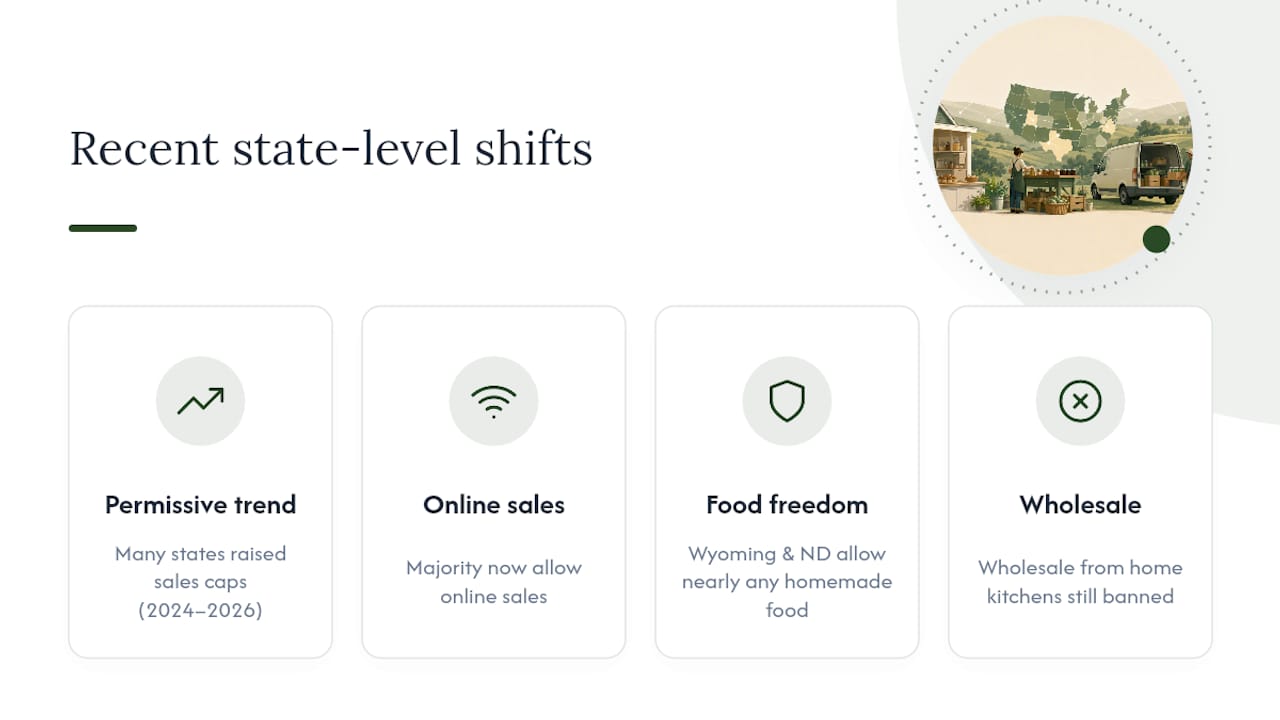
The legislative trend over the past two to three years has moved consistently in one direction: more permissive. Food Business Pros' state-by-state tracking documents that many states raised sales caps between 2024 and 2026, a majority now allow some form of online sales, and a smaller but growing group have expanded TCS allowances or adopted "food freedom" acts.
Food freedom acts, adopted in states like Wyoming and North Dakota, go further than traditional cottage food laws by allowing direct sales of nearly any homemade food with minimal oversight, relying on informed consumer consent rather than product-category restrictions. These acts represent a philosophical shift: instead of the state defining which products are safe enough for home production, the buyer acknowledges the unregulated nature of the product.
Several states have also introduced or passed legislation addressing the home address disclosure issue, following Texas's lead in allowing registration numbers on labels. This change reflects a real concern among home producers, particularly those who sell online, about publishing their residential address on every product.
What hasn't changed: wholesale restrictions remain nearly universal. No state's food freedom or cottage food expansion has opened the door to wholesale distribution from a home kitchen. That line stays firm.
The National Agricultural Law Center tracks statutory changes and publishes analysis of major state-level shifts, making it the most reliable single source for understanding where the law is moving rather than just where it currently stands.
Why compliance is the foundation, not the ceiling
Cottage food laws get framed as a barrier, and I understand why. When you've spent a weekend perfecting a jam recipe and you just want to sell it at the farmers market, reading through state statutes feels like overkill. But here's what I've seen working with local producers: the ones who skip the labeling step or ignore the sales cap don't just risk a fine. They risk losing the customer trust they spent months building.
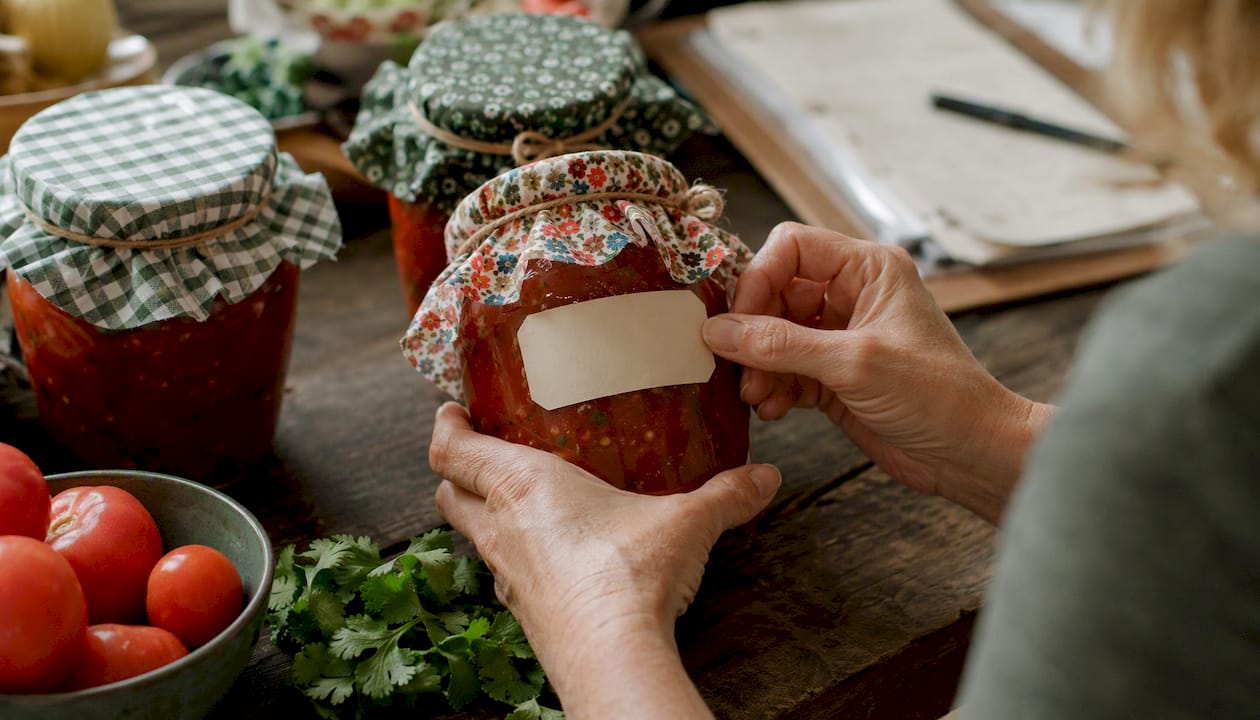
A label that includes the required disclaimer isn't just a legal obligation. It tells your customer exactly what they're buying and from whom. That transparency is what separates a credible home producer from an anonymous jar on a table. Harvesthub was built around that same principle: verified profiles, real reviews, and producers who stand behind their products. The platform connects compliant producers with local buyers who are specifically looking for that kind of accountability.
Compliance also protects your ability to grow. A producer who stays within their state's rules and keeps clean records has a clear, documented path to a commercial license when the time comes. One who operates in a gray area has a much harder conversation with a state inspector.
Your local farm stand starts here
Once you're clear on your state's cottage food regulations, the next challenge is getting your products in front of local buyers every day, not just on farmers market Saturdays. Harvesthub gives compliant home producers a digital farm stand that's open 24/7, with verified profiles and real neighbor reviews that build the trust your label alone can't. You can list your baked goods, jams, dry mixes, and other approved products, set up local pickup or delivery, and connect directly with buyers in your area who are actively searching for what you make.
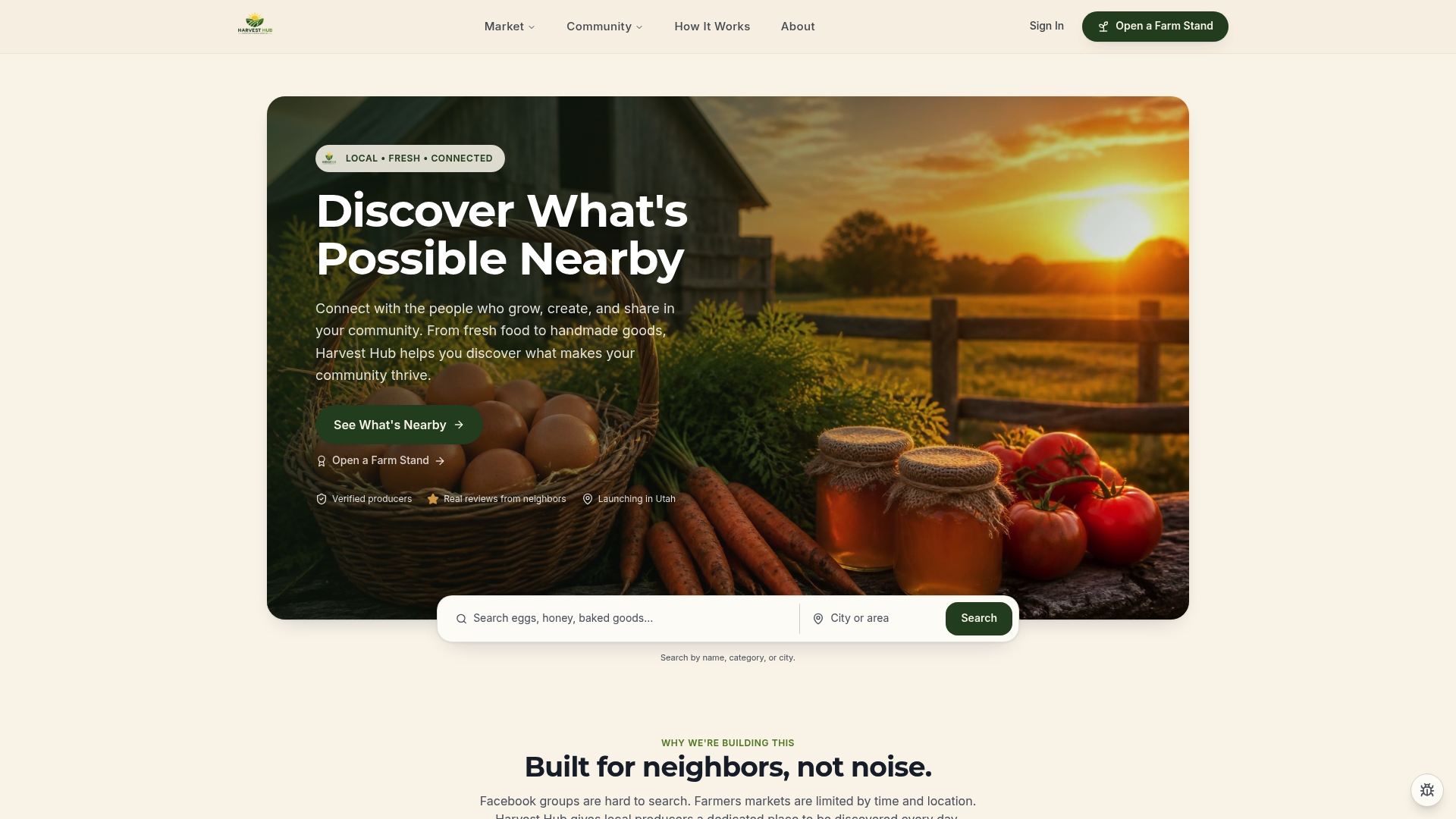
Producers like those at Moon Farms Country Market use Harvesthub to present their full product lineup with the kind of detail and transparency that turns a first-time buyer into a regular. Open your farm stand on Harvesthub and start reaching local buyers today.
Sources
These are the primary sources to consult before you sell. Third-party summaries, including this article, are starting points. The statute and your state agency's guidance page are the final word.
National compilers and legal analysis:
- Cottage Food Laws: Recent Trends and Major State Changes – National Agricultural Law Center
- Cottage Food Laws by State: Complete 2026 Guide + 50-State Directory - Food Business Pros
- Cottage Foods — Florida Department of Agriculture and Consumer Services (FDACS)
- Cottage Food — Washington State Department of Agriculture (WSDA)
- Texas Cottage Food Production — Texas Department of State Health Services (DSHS)
- Cottage Food Operations — California Department of Public Health (CDPH)
State agency pages used in this article:
What to look for on any state agency page: the statute citation, an approved or prohibited foods list, registration or permit application forms, required label disclaimer language, and a FAQ section addressing product-eligibility questions.
This article is general information, not a substitute for advice from a qualified lawyer. Consult a qualified legal professional about your own circumstances before acting on anything here.